
10 Fun Games That Teach Problem Solving Skills for Kids
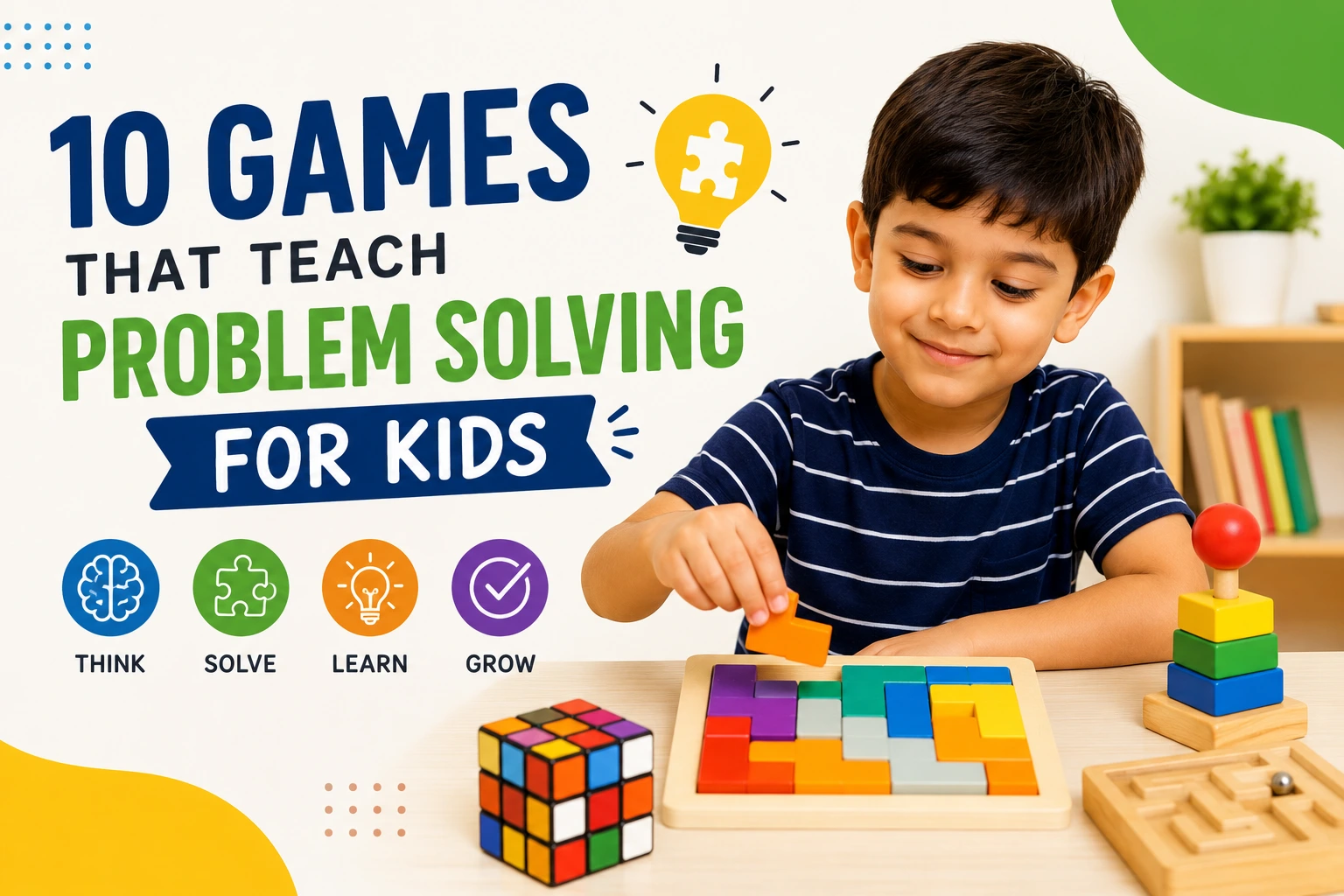
Discover 10 engaging games that help kids build problem-solving, critical thinking, creativity, and decision-making skills through fun learning activities.




Children thrive when learning feels like play. That’s why problem-solving games for kids are such powerful tools. They combine fun with critical thinking, creativity, and persistence. In this guide, we’ll explore what these games are, why they matter, and highlight 10 engaging activities that double as thinking games kids love.
What are Problem Solving Games?
Parents often ask: what are problem solving games? Simply put, they are playful activities designed to help children analyse situations, test ideas, and find solutions. These games encourage logical reasoning, creativity, and resilience. Unlike rote learning, they challenge kids to think critically, make decisions, and adapt when faced with obstacles.
They are not just entertainment – they are logic games for kids that strengthen the brain while keeping children engaged.
10 Games That Build Thinking Skills
Here are ten carefully chosen games to improve thinking skills that nurture problem-solving abilities:
-
Sudoku: A number-based puzzle that teaches sequencing, logic, and patience. Kids learn to spot patterns and think ahead.
-
Tangram Puzzles: Shape puzzles that boost spatial awareness, geometry skills, and creativity.
-
Chess: A timeless strategy game that sharpens foresight, planning, and logical reasoning.
-
Maze Challenges: Navigating mazes improves decision-making, persistence, and adaptability.
-
LEGO Building: Constructing models fosters creativity, engineering skills, and solution-oriented thinking.
-
Escape Room Games: Collaborative adventures that encourage teamwork, critical thinking, and time management.
-
Crossword Puzzles: Boosts vocabulary, memory, and logical deduction while being fun brain teasers.
-
Coding Games: Platforms like Scratch introduce kids to computational thinking and structured problem-solving.
-
Board Game Clue: A detective-style game that teaches reasoning, deduction, and hypothesis testing.
-
Memory Match: Strengthens focus, recall, and attention to detail – perfect brain games for children.
Why These Games Matter
These activities are more than just play. They provide lasting benefits:
-
Critical thinking: Kids learn to evaluate options and make reasoned choices.
-
Creativity: Games like LEGO and coding encourage imagination and innovation.
-
Real-world preparation: Problem-solving skills transfer to everyday challenges, from schoolwork to social situations.
-
Interactive learning: Children stay engaged because the process feels fun, not forced.
-
Cognitive development: Memory, focus, and logical reasoning are strengthened through repeated play.
Depth of Learning Through Play
Each of these logic games for kids taps into different aspects of cognitive growth:
-
Analytical skills: Sudoku and chess demand structured reasoning.
-
Spatial intelligence: Tangram puzzles and LEGO building enhance visualization and design thinking.
-
Language and memory: Crossword puzzles and memory match sharpen vocabulary and recall.
-
Collaboration: Escape room games teach teamwork and communication.
-
Persistence: Maze challenges and coding games encourage trial-and-error learning, building resilience.
By rotating these activities, parents can ensure children develop a balanced set of problem-solving skills.
Final Thoughts
The journey through these problem-solving games for kids shows how play can be a powerful tool for learning. From puzzles like Sudoku and Tangrams to creative activities like LEGO building and coding games, each one helps children strengthen their ability to think critically, make decisions, and explore solutions.
These activities are not just fun – they are effective thinking games kids enjoy, and they double as valuable brain games for children that nurture memory, focus, and creativity. By incorporating them into everyday routines, children develop resilience, confidence, and logical reasoning.
Ultimately, these playful challenges highlight the importance of logic games for kids, which provide a strong foundation for problem-solving skills that will benefit them throughout life.
Frequently Asked Questions
1. Why are problem-solving games important for kids?
Problem-solving games help children develop critical thinking, creativity, decision-making, and patience from an early age. These games encourage kids to analyse situations, try different solutions, and learn from mistakes in a fun and pressure-free way. Over time, these skills also support academic learning and real-life confidence.
2. What types of games improve problem-solving skills in children?
Games that involve puzzles, strategy, memory, building, logical thinking, and teamwork are excellent for problem-solving development. Activities like treasure hunts, block building, board games, maze challenges, Sudoku, Rubik’s Cube, and coding games can all strengthen a child’s thinking abilities while keeping learning enjoyable.
3. At what age should children start problem-solving activities?
Children begin developing problem-solving skills from a very young age through play and exploration. Simple sorting games, shape puzzles, and matching activities are suitable for toddlers, while older children can gradually move towards strategy games, STEM activities, and more complex challenges.
4. How do games help children learn better?
Games make learning interactive and engaging. Instead of memorising information, children actively think, experiment, and discover solutions on their own. This improves concentration, memory, logical thinking, and confidence while making learning feel exciting rather than stressful.
5. Can problem-solving games improve academic performance?
Yes, problem-solving games can support academic growth by strengthening skills like logical reasoning, focus, creativity, and decision-making. These abilities are especially useful in subjects such as mathematics, science, coding, and reading comprehension.
6. Are digital games good for problem-solving development?
Some digital games can help improve strategic thinking, planning, and decision-making when chosen carefully and used in moderation. Educational apps, coding games, and logic-based activities can support cognitive development, but it is equally important for children to engage in physical and social play activities offline.
7. How much time should kids spend on problem-solving games?
The ideal balance depends on the child’s age and routine. Short, meaningful sessions of interactive games are often more effective than long hours of screen time. The focus should be on quality learning experiences that encourage curiosity, creativity, and active participation.
8. What are the best offline problem-solving games for kids?
Some of the best offline games include jigsaw puzzles, LEGO building, scavenger hunts, chess, block stacking, maze games, memory matching cards, and storytelling challenges. These activities encourage independent thinking, teamwork, and hands-on learning.
9. How can parents encourage problem-solving skills at home?
Parents can encourage problem-solving by allowing children to explore solutions independently instead of giving immediate answers. Asking open-ended questions, involving kids in simple daily decisions, introducing puzzles and creative activities, and encouraging curiosity can help children become more confident thinkers.
10. Do problem-solving games help with social development too?
Yes, many problem-solving activities involve teamwork, communication, patience, and collaboration. Group games teach children how to share ideas, listen to others, handle challenges calmly, and work together towards a common goal — all of which are valuable life skills.