

8 Problem Solving Games to Play With Your Preschooler
Discover 8 engaging problem solving games for preschoolers that help develop critical thinking, creativity, and decision-making skills, setting them up for future success.




As parents and caregivers, we always want the best for our preschoolers. One of the most valuable skills to develop at an early age is problem-solving. Children who develop strong problem-solving abilities tend to do well in school, adapt better to challenges, and become confident decision-makers. An effective and enjoyable way to nurture these skills is by engaging your preschooler in fun and educational problem solving games.
Problem-solving games help preschoolers learn how to think critically, develop creativity, and enhance their ability to overcome obstacles. If you are looking for fun ways to nurture your child’s problem-solving skills, here are 8 problem solving games you can play with your preschooler.
- Puzzle Games
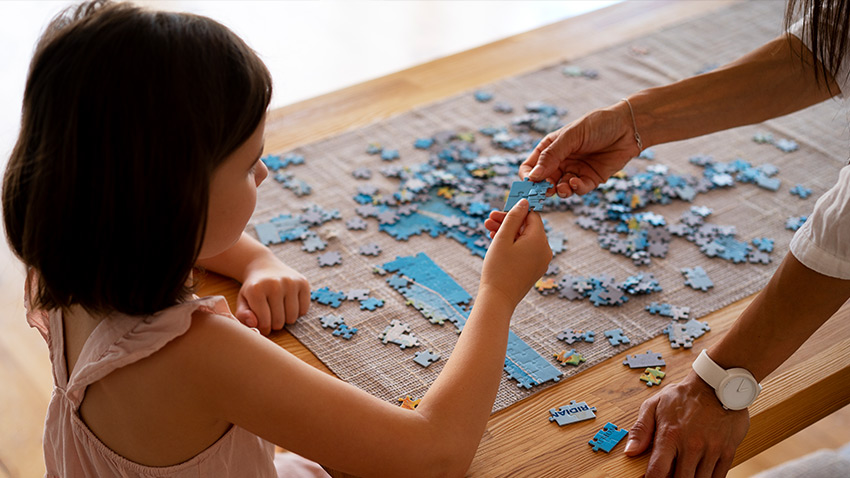
Puzzles are one of the most common and effective problem-solving skills games for young children. They come in various forms—shape puzzles, jigsaw puzzles, and even digital puzzles. The challenge of fitting pieces together encourages kids to think critically and improve their hand-eye coordination. Start with simple puzzles and gradually increase the complexity as your child’s problem-solving skills develop.
- Building Blocks
Building blocks, like LEGO or wooden blocks, provide a fantastic opportunity for preschoolers to think creatively. They learn to follow instructions or create their own structures, experimenting with balance, shapes, and spatial relationships. This kind of play teaches children how to approach problems step-by-step and evaluate their options. It’s one of the best problem solving games to spark creativity and innovation.
- Sorting and Matching Games
Sorting games help preschoolers recognize patterns, group objects based on characteristics, and use logic to solve problems. You can create your own sorting game by giving your child a mix of colored buttons, shapes, or even everyday objects and asking them to sort them by size, color, or shape. This encourages decision-making and builds critical thinking, a key element of problem solving.
- Treasure Hunt
A treasure hunt is a fantastic game to play with your preschooler while improving their problem solving abilities. Hide some small toys or treats around your home or garden, and give your child clues to find them. The clues could be riddles, pictures, or simple directional hints. This activity encourages problem-solving skills, as children have to interpret clues and think logically to solve each puzzle. It's an exciting and interactive way to develop their analytical thinking.
- Memory Games
Memory games are not only fun but also effective in improving problem-solving abilities. You can use a deck of cards or create your own memory game with pictures of animals, objects, or colors. To play, lay the cards face down, and each player takes turns flipping two cards over to find a matching pair. As your preschooler tries to remember the positions of different cards, they develop their ability to recall, reason, and think critically.
- Obstacle Course
Create a simple obstacle course in your living room or backyard, using cushions, chairs, or cones. Ask your child to navigate the course, solving physical problems such as how to balance, jump, or crawl. This active problem solving game helps preschoolers build physical and cognitive skills as they determine the best ways to complete each challenge. It also promotes resilience, as children learn to keep trying until they overcome the obstacles in their path.
- Cooking Together
Believe it or not, cooking is an excellent problem-solving activity for preschoolers. You can start by choosing simple recipes such as making sandwiches, baking cookies, or preparing fruit salads. Give your child age-appropriate tasks such as measuring ingredients or following step-by-step instructions. As they follow the recipe, they’ll have to solve problems related to timing, mixing, and adjusting. Cooking also offers hands-on opportunities for preschoolers to learn about measurements, fractions, and following sequences.
- "What Comes Next?" Games
In these problem solving games, you give your preschooler a sequence of events or objects and ask them to predict what comes next. For example, you can show them a series of pictures such as a red apple, green apple, red apple, and ask, “What comes next?” This simple activity helps your child recognize patterns and develop their logical thinking skills. You can also use everyday activities like routines (e.g., brushing teeth, putting on shoes) as opportunities to play “What Comes Next?”
Why Problem solving games Matter
Problem solving skills are essential for every child's development, as they help kids learn how to think through challenges, explore possibilities, and make decisions independently. By playing fun and educational solving games, your preschooler will be better equipped to handle real-life challenges and will develop the confidence to tackle any problem that comes their way.
Incorporating problem-solving games into your child's routine doesn’t require much. Whether it's a quick game of memory or an outdoor treasure hunt, these simple activities can foster curiosity, creativity, and critical thinking—skills that will serve your child well for a lifetime.
By focusing on fun and engaging games, you can help your preschooler build the foundation for becoming a creative, confident, and capable problem solver. And the best part? You get to spend quality time with your child while helping them develop crucial life skills.
So, the next time you want to engage your preschooler, try incorporating one of these problem solving skills games into your day. Not only will they have fun, but they’ll also develop important skills that will help them succeed in the future.