

How to Build Independence in Toddlers: 6 Simple Ways
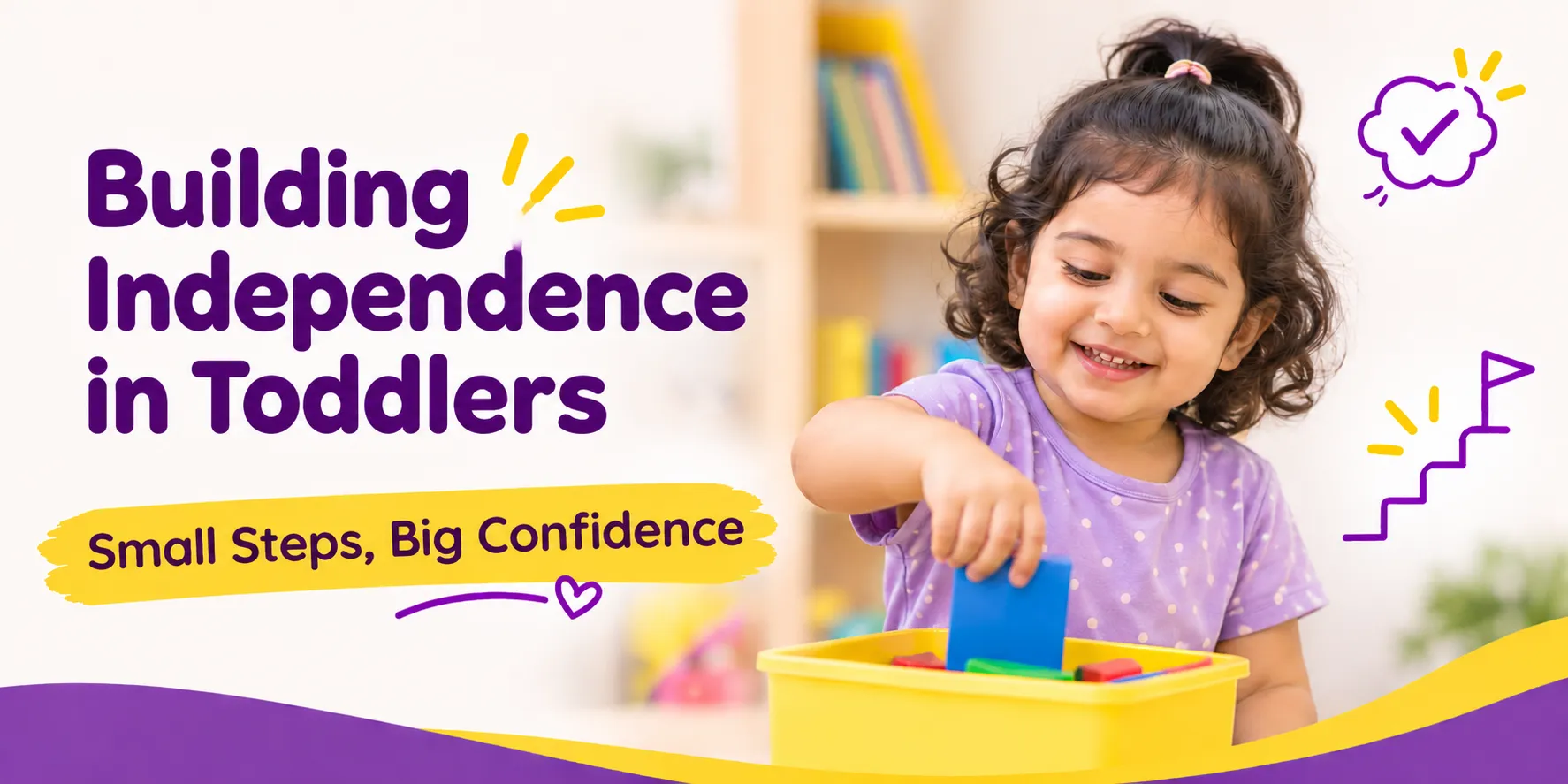
Discover 6 simple ways to build independence in toddlers. Learn how everyday activities, small choices and positive encouragement develop confidence.




Building Independence in Toddlers: Small Steps, Big Confidence
“Let me do it!”
If you have a toddler at home, you probably hear this often. From holding a spoon to choosing their clothes, toddlers have a natural desire to do things by themselves. These small attempts at independence are an important part of growing up.
Building independence does not mean expecting toddlers to manage everything on their own. It means giving them age-appropriate opportunities to try, learn, make mistakes, and succeed—with a caring adult nearby.
Building independence in toddlers starts with everyday activities such as eating with a spoon, choosing between two outfits, putting away toys, and washing their hands. These simple toddler independence activities help children practise decision-making, develop self-help skills, and gradually become more confident in their abilities.
Why Is Independence Important for Toddlers?
When toddlers are encouraged to do simple things for themselves, they begin to develop confidence, responsibility, problem-solving skills, and decision-making abilities. More importantly, they start believing, “I can do this.”
These early experiences also help children develop self-help skills, emotional confidence and a sense of responsibility, which support their growing ability to participate in everyday routines.
These early experiences lay the foundation for becoming confident and capable learners.
6 Simple Ways to Encourage Independence in Toddlers
Give Toddlers Time to Try Things Independently
It may be quicker to put on your toddler’s shoes or tidy up their toys yourself, but giving them a little extra time to try can make a big difference. Step in when they genuinely need help rather than at the first sign of difficulty.
Offer Small Choices to Build Decision Making Skills
Toddlers love having a say. Instead of asking, “What do you want to wear?” try, “Would you like the blue T-shirt or the yellow one?”
Two simple choices give children a sense of control without overwhelming them.
Involve Toddlers in Everyday Household Tasks
Daily routines offer wonderful opportunities for learning. Toddlers can put toys back in a basket, place dirty clothes in the laundry basket, carry napkins to the table, water a plant, or arrange books on a shelf.
You can also turn these activities into simple toddler independence activities by making them part of a daily routine. For example, encourage your child to put away their toys after playtime or place their shoes in the same spot every day.
These may seem like tiny jobs to adults, but to a toddler, they can feel like important responsibilities.
Encourage Self-Care and Self-Help Skills
Allow your toddler to practise eating independently, washing their hands, drinking from a cup, brushing their hair, or attempting to dress themselves. The result may not always be perfect—and that is perfectly fine.
Let Toddlers Make Mistakes and Learn
Spills, mismatched shoes, and toys placed on the wrong shelf are all part of the process. Instead of immediately correcting every mistake, gently guide your child and allow them to try again.
Praise Effort Rather Than Perfection
Encourage persistence with words such as, “You kept trying!”, “You did that by yourself!”, or “You worked hard on that.”
When children know their effort matters, they become more willing to take on new challenges.
How to Balance Independence and Supervision in Toddlers
Toddlers still need plenty of support, supervision, and reassurance. Independence grows best when children feel safe enough to explore but know that a trusted adult is nearby when they need help.
Always choose activities that match your child's age and abilities. Keep small objects, sharp items, hot surfaces and household cleaning products out of reach, and supervise activities that involve water, food preparation or other potential hazards.
The goal is not to rush children into growing up. It is to gradually give them the confidence to discover what they can do for themselves.
Every “I Did It!” Matters
Independence is built through ordinary moments—a toddler putting away a toy, choosing a book, washing their hands, or trying again after something goes wrong.
So, the next time your toddler says, “I can do it!”, give them the space to try.
Because behind every little “I did it!” is a child learning to say, “I believe in myself.”
At preschool, children get opportunities to practise these skills beyond their home routines. Through age-appropriate, play-based activities, group interactions and everyday classroom experiences, they gradually learn to make choices, participate independently and explore their abilities. At Kidzee, the Péntemind – The Learning Minds pedagogy focuses on nurturing different aspects of a child's overall development.
Looking for a preschool that encourages your child's curiosity, confidence and overall development? Explore Kidzee's Playgroup programme and discover how age-appropriate, play-based learning supports your child's early learning journey.

FAQs
At what age should toddlers start learning independence?
What are some simple independence activities for toddlers?
How can parents encourage an independent child without being too controlling?
At what age should toddlers start learning independence?
How can parents encourage an independent child without being too controlling?
What are some simple independence activities for toddlers?