

Early Math Skills: Building Number Sense Before Kindergarten
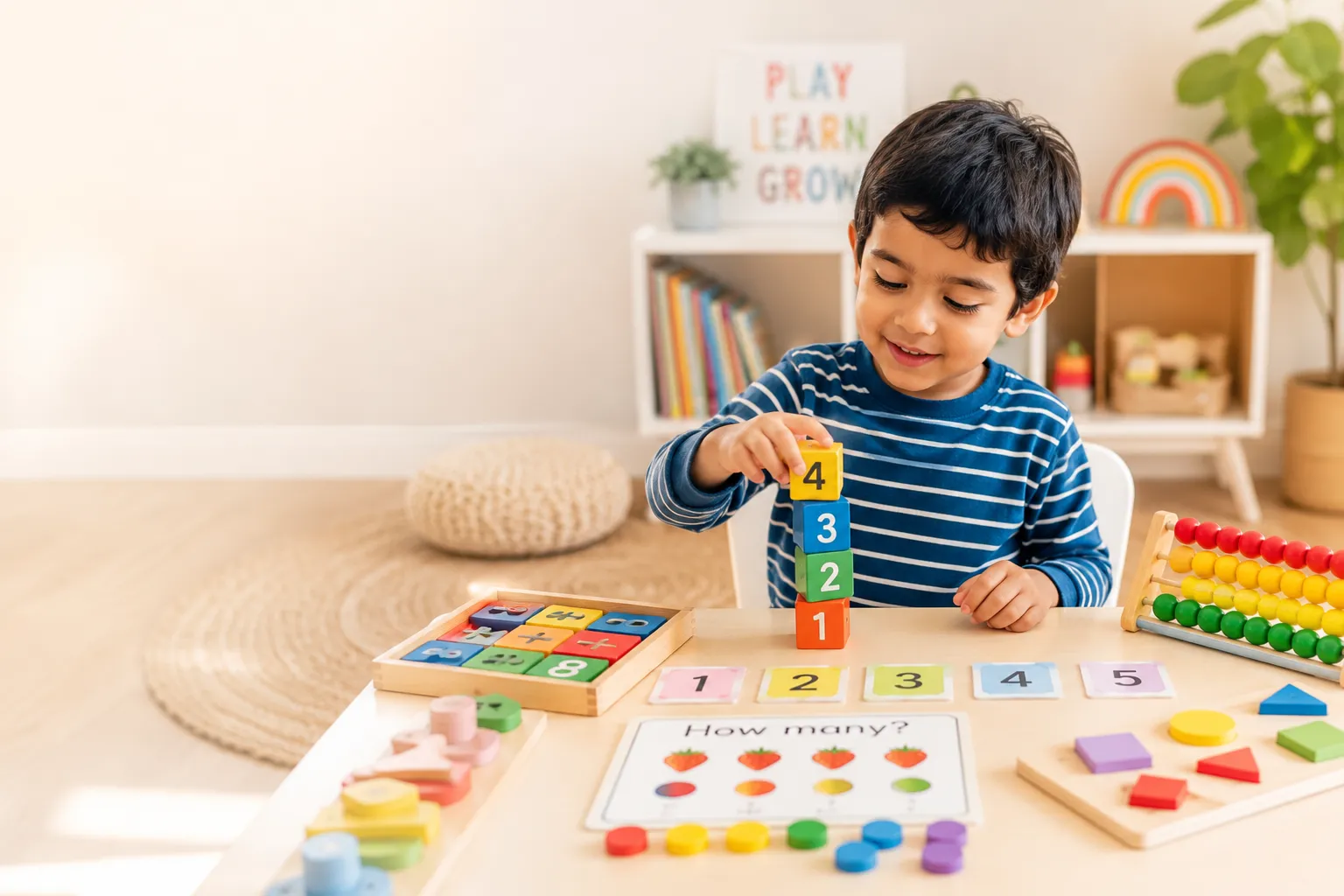
Learn how to build number sense before kindergarten through fun, everyday activities. Discover early math skills, counting strategies, and preschool number concepts that support future learning success.




As a parent, you want to give your child the best start in life. You want them to be successful and happy in all aspects, including their education. And a crucial part of their education is developing a strong foundation in mathematics, particularly number sense. Number sense is the ability to understand and work with numbers, and it forms the basis for all math skills.
While some may think that number sense will develop naturally as a child grows, research has shown that it is actually a skill that needs to be actively nurtured and developed. And what better time to start than during the formative years of early childhood?
In this article, we will explore the importance of building number sense before kindergarten and how you can help your child develop this essential skill.
Why is building number sense before kindergarten important?
1. Creates a strong foundation for future math skills
Number sense is the foundation for all math skills. It involves understanding basic concepts such as quantity, number relationships, and patterns. These concepts are vital for more complex math skills, such as addition, subtraction, multiplication, and division. By building a strong number sense before kindergarten, your child will have a solid base for learning these skills in the future.
2. Boosts confidence in math
For many children, math can be an intimidating subject. However, when they have a strong number sense, they are more likely to feel confident and capable when approaching math problems. This confidence will not only benefit them in their academic journey but also in their everyday life as they encounter numbers and mathematical concepts.
3. Develops critical thinking skills
Developing number sense involves problem-solving and critical thinking skills. Children need to understand how numbers work and how they can manipulate them to solve problems. This type of thinking is essential not only for math but also for many other areas of life.
4. Prepares children for kindergarten and beyond
As children enter kindergarten, they are expected to have a basic understanding of numbers and mathematical concepts. By building number sense before kindergarten, your child will be better prepared for the curriculum and can potentially excel in math throughout their school years.
How can you help your child develop number sense before kindergarten?
1. Play with numbers in everyday activities
You don't need to sit down and do formal math lessons with your child to help them develop number sense. It can be incorporated into everyday activities, such as counting objects around the house, measuring ingredients while baking, or even counting the number of steps it takes to get from one room to another. These activities make learning fun and natural for your child.
2. Use concrete materials
Young children learn best through hands-on experiences. Using concrete materials like blocks, counters, and toys can help them understand numbers and quantity. You can have them sort objects by size or colour, count how many blocks they have, or create patterns using different coloured blocks. These activities not only develop number sense but also fine motor skills and hand-eye coordination.
3. Encourage estimation
Estimation is an essential skill in developing number sense. It involves making an educated guess about a quantity or measurement without actually counting or measuring it. You can encourage your child to estimate how many crackers are left in a package or how many toys are in a bin. This will help them develop a sense of number and quantity.
4. Read books about numbers
There are many children's books that focus on numbers and mathematical concepts. Reading these books with your child can help them understand numbers in a fun and engaging way. Some great examples include "One fish, two fish, red fish, blue fish" by Dr. Seuss and "Ten Black Dots" by Donald Crews.
5. Play math games
Children love games, and incorporating math into these games can be an effective way to develop number sense. You can play simple games like "I Spy" to help your child understand number relationships or "Memory" to practice counting and matching. There are also many online games and apps that focus on developing number sense.
6. Make connections to everyday life
Help your child see how numbers are relevant in their everyday life. You can point out numbers on street signs, clocks, or even grocery items while shopping. This will help them understand the practical use of numbers and how they are used in the real world.
7. Be patient and have fun
Remember that every child develops at their own pace. Be patient and don't push your child too hard. Learning should be fun and enjoyable for both you and your child. If your child is struggling with a concept, find a different approach or take a break and come back to it later.
In conclusion, building number sense before kindergarten is crucial for your child's academic and personal development. By incorporating simple activities and games into your daily routine, you can help your child develop this essential skill in a fun and natural way. With a strong number sense, your child will have a solid foundation for future math skills, boost their confidence in math, and develop critical thinking skills that will benefit them in all areas of life. So, start early, have fun, and watch your child's number sense grow!
Strengthen Early Math Skills with Kidzee
At Kidzee, we help children develop foundational math and problem-solving skills through play-based learning, hands-on activities, and interactive experiences. Our preschool programmes encourage children to explore numbers, patterns, measurement, and logical thinking in fun and engaging ways, preparing them for future academic success.
FAQs:
1. What is number sense and why is it important before kindergarten?
Number sense is a child's ability to understand numbers, quantities, patterns, and basic mathematical relationships. It goes beyond counting and helps children recognise how numbers work in everyday situations. Strong number sense before kindergarten supports problem-solving, logical thinking, and future success in mathematics and academic learning.
2. At what age should children start developing number sense?
Children begin developing number sense from an early age, often between 2 and 5 years, through everyday experiences such as counting objects, recognising patterns, comparing quantities, and identifying numbers. Early exposure to mathematical concepts helps build confidence and lays the foundation for future learning.
3. How can parents build number sense at home?
Parents can build number sense by involving children in simple activities such as counting toys, sorting objects by size or colour, identifying numbers during daily routines, and playing number-based games. Everyday experiences like cooking, shopping, and setting the table also provide valuable opportunities to explore early math concepts naturally.
4. What are the signs of strong number sense in preschoolers?
Children with strong number sense can recognise numbers, count objects accurately, compare quantities, identify patterns, understand concepts like more and less, and solve simple everyday math problems. They often demonstrate curiosity about numbers and use mathematical thinking during play and daily activities.
5. What are the best number sense activities for preschool children?
Effective number sense activities include counting games, number hunts, block building, sorting and matching exercises, board games, pattern recognition activities, and hands-on learning with everyday objects. Play-based math experiences help children develop mathematical understanding in a fun and meaningful way.
6. How is number sense different from learning to count?
Counting is only one part of number sense. Number sense includes understanding what numbers represent, recognising quantities, comparing values, identifying patterns, and applying math concepts in real-life situations. Children with strong number sense understand the meaning behind numbers rather than simply memorising them.
7. Why is number sense important for kindergarten readiness?
Number sense helps children enter kindergarten with confidence in foundational math concepts such as counting, number recognition, measurement, sorting, and problem-solving. These skills make it easier for children to understand more advanced mathematical concepts as they progress through school.
8. Can play-based learning improve number sense in children?
Yes, play-based learning is one of the most effective ways to develop number sense. Activities such as building blocks, puzzles, board games, pretend play, and outdoor exploration encourage children to use counting, measurement, comparison, and pattern recognition skills in enjoyable and meaningful ways.
9. How do preschool programmes support early math development?
Quality preschool programmes introduce number sense through hands-on activities, interactive games, storytelling, music, and real-world learning experiences. Children learn to recognise numbers, count objects, identify patterns, and solve simple problems while building confidence in mathematics.
10. What everyday activities help children learn numbers naturally?
Daily activities such as counting stairs, measuring ingredients while cooking, sorting laundry, comparing quantities during shopping, and identifying numbers on clocks, calendars, and house addresses help children develop number sense naturally. These real-life experiences make early math learning meaningful and easy to understand.