

Gut Health in Kids: 8 Simple Ways to Support Healthy Digestion
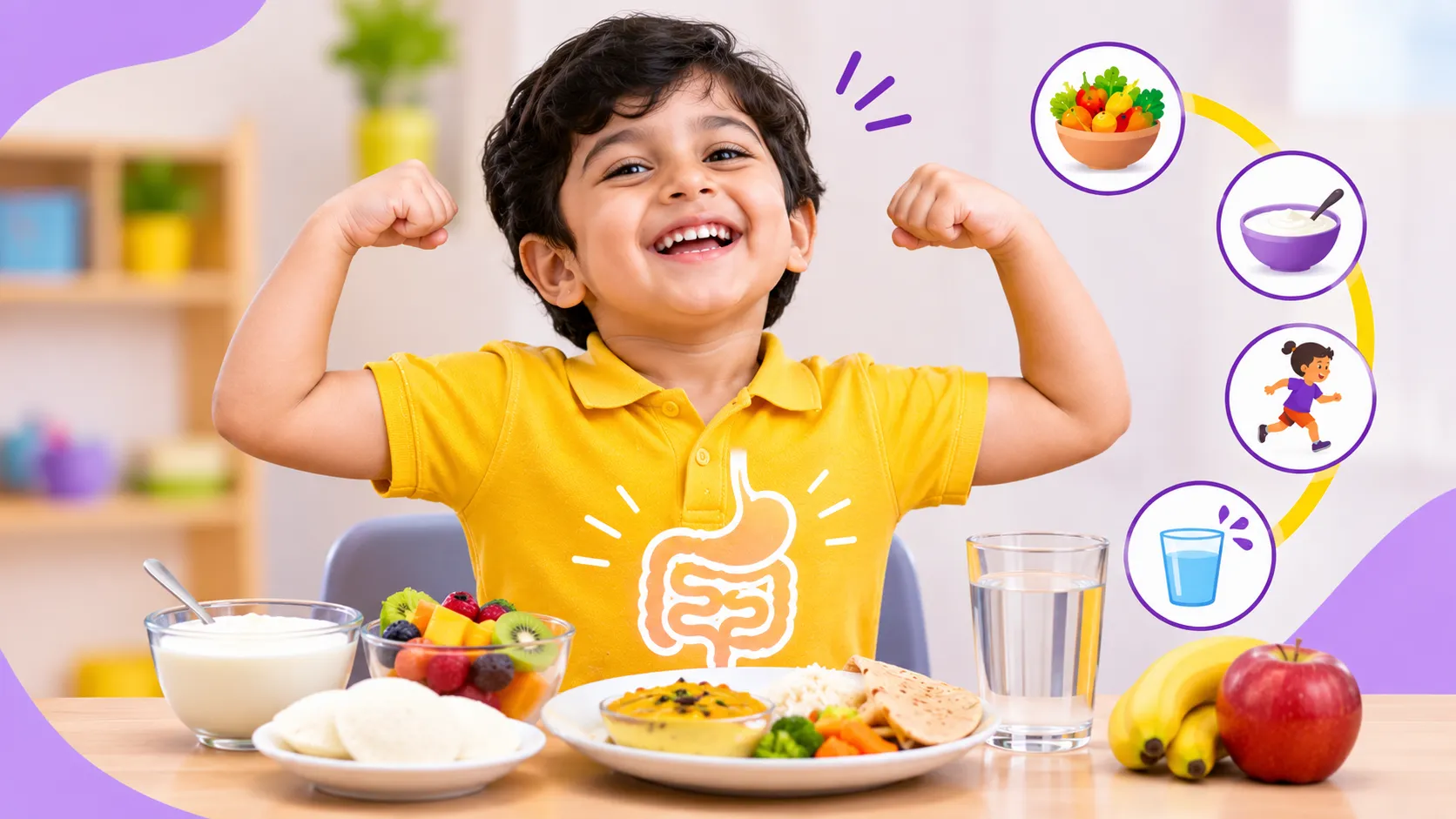
Why is gut health important for children? Discover gut-friendly foods, the role of the gut microbiome and 8 simple ways to support healthy digestion.




From digesting food to supporting immunity, your child's gut does much more than you might think. In fact, a healthy gut plays an important role in your child's overall growth, development and wellbeing.
The preschool years are a time of rapid growth, when children are developing healthy eating habits and their digestive system continues to mature. Looking after gut health during these early years can support not only digestion, but also nutrition, immunity and overall health.
Gut health in children refers to how well their digestive system functions and the balance of microorganisms living in their gut. A varied diet containing fruits, vegetables, whole grains and pulses, along with adequate water and regular physical activity, can support healthy digestion. These everyday habits help children build a positive foundation for digestive health as they grow.
What Is Gut Health?
The gut refers to the digestive system, which helps break down food, absorb nutrients and remove waste from the body.
Inside the gut live trillions of tiny microorganisms, including bacteria, viruses and fungi, collectively known as the gut microbiome. Many of these microorganisms are beneficial and help maintain a healthy balance within the digestive system.
The gut microbiome begins developing from birth and continues to change throughout early childhood, making these early years an important time to build healthy habits.
Why Is Gut Health Important for Children?
A healthy gut microbiome does much more than support digestion. It contributes to several aspects of your child's overall health by helping to:
- Support healthy digestion and regular bowel movements.
- Improve the absorption of nutrients needed for growth.
- Strengthen the immune system.
- Protect against harmful germs.
- Help produce certain vitamins and other beneficial compounds.
- Support healthy growth and development.
- Promote overall wellbeing.
Scientists are also studying the gut-brain connection—the communication between the digestive system and the brain.
While emerging research suggests that a healthy gut may influence overall health and wellbeing, many questions are still being explored. It's therefore important not to overstate these findings.
Researchers are also exploring the gut-brain connection, which describes communication between the digestive system and the brain. Studies suggest that the gut microbiome may influence aspects of brain function and wellbeing. However, this is an evolving area of research, and its implications for children's health are still being studied.
Simple Ways to Support Your Child's Gut Health
Offer a Variety of Gut-Friendly Foods
A diverse diet helps nourish the beneficial bacteria in your child's gut.
Include plenty of:
- Fruits and vegetables.
- Whole grains such as oats, millets and brown rice.
- Pulses and legumes like dal, beans and chickpeas.
- Milk, curd and other unsweetened dairy foods.
- Nuts and seeds (prepared safely for young children).
Offering a variety of foods over time is more important than expecting children to eat everything in one meal.
Different plant foods contain different types of fibre and nutrients. Offering a variety over time helps children get a broader range of nutrients and provides different types of fibre that gut microorganisms can use.
Include Fibre-Rich Foods in Your Child's Diet
Fibre supports healthy digestion, and some types of fibre also act as prebiotics—providing food for beneficial gut bacteria.
Good sources include:
- Fruits such as apples, pears and bananas.
- Vegetables.
- Whole grains.
- Beans and lentils.
Increase fibre gradually and encourage plenty of water to help prevent constipation.
Try adding vegetables to dal, serving fruit as a snack, offering oats or millet porridge at breakfast, and including beans or chickpeas in family meals.
Increase fibre gradually rather than making a sudden change to your child's diet. Offer enough water throughout the day, as fluids help fibre do its job.
Include Suitable Fermented Foods
Traditional fermented foods can be part of a healthy diet.
Examples include:
- Plain curd (yoghurt).
- Homemade buttermilk (for older preschoolers).
- Idli, dosa and chillas made from naturally fermented batter.
Some fermented foods may provide beneficial microorganisms, although not all retain live cultures after processing or cooking.
Fermented foods such as plain curd and buttermilk can be included as part of a balanced diet. Foods made using fermented batter, such as idli and dosa, also add variety to family meals. However, cooking can reduce or eliminate live microorganisms, so not every fermented food provides live probiotic cultures.
Make Water a Part of Everyday Routines
Water supports healthy digestion and helps prevent constipation.
Offer water at regular intervals, particularly after outdoor play, during hot weather and alongside meals. Keep a child-sized water bottle accessible so children gradually learn to drink water independently.
Make Time for Active Play Every Day
Physical activity doesn't just strengthen muscles—it also supports healthy digestion and regular bowel movements.
Running, climbing, dancing and outdoor play contribute to both gut health and overall wellbeing. Active play supports general health and helps establish healthy daily routines. Encourage children to move throughout the day rather than expecting them to follow a formal exercise routine.
Build Healthy Toilet Habits Early
Encourage your child to use the toilet when they feel the urge rather than holding it in. A regular toilet routine, especially after meals, can help promote healthy bowel habits and reduce constipation.
For toilet-trained children, sitting on the toilet for a few minutes after meals can help establish a regular routine. Make sure your child is comfortable, has support for their feet and does not feel rushed or pressured.
Limit Highly Processed Foods
Highly processed foods that are high in added sugars, salt and unhealthy fats should be occasional choices rather than everyday foods.
Home-cooked meals prepared with a variety of fresh ingredients are generally better for supporting overall gut health.
Use Antibiotics Only When Prescribed
Antibiotics are important medicines when prescribed for bacterial infections, but they should only be used under medical advice.
Because antibiotics can temporarily affect beneficial gut bacteria as well as harmful ones, avoid giving them unless prescribed by your child's doctor and always complete the full course as directed.
What Are Prebiotics and Probiotics?
Prebiotics are types of dietary fibre that beneficial gut microorganisms can use as food. They are found naturally in foods such as bananas, onions, garlic, beans and whole grains.
Probiotics are live microorganisms that may offer health benefits when consumed in appropriate amounts. Some fermented foods, including certain types of curd and yoghurt, contain live cultures.
Children do not automatically need probiotic supplements to maintain good gut health. Whether a supplement is appropriate depends on the child's health and individual needs, so parents should consult a paediatrician before introducing one.
When Should You Consult a Paediatrician About Your Child's Gut Health?
Every child occasionally experiences digestive discomfort. However, consult your paediatrician if your child has:
- Persistent constipation.
- Persistent diarrhoea.
- Ongoing stomach pain.
- Blood in the stool.
- Poor weight gain or growth.
- Persistent vomiting.
- Significant changes in appetite.
- Frequent bloating that doesn't improve.
Most digestive concerns can be managed successfully, especially when identified early.
Occasional digestive discomfort is common in childhood. However, persistent symptoms, blood in the stool, ongoing abdominal pain, vomiting or changes in growth should not be ignored. Seek medical advice promptly if these occur. Severe pain, signs of dehydration or significant bleeding require urgent medical assessment.
Common Myths About Gut Health
My child needs probiotic supplements every day.
Not necessarily. Most healthy children can support a healthy gut through a varied, balanced diet. Probiotic supplements should only be used if recommended by your child's doctor.
Detox drinks or gut-cleansing products improve gut health.
Healthy children do not need detoxes, gut cleanses or special gut-health products. There is no good scientific evidence that these improve gut health. A balanced diet rich in fibre and minimally processed foods is usually all that's needed.
Constipation is normal and children will outgrow it.
Occasional constipation is common, but persistent constipation should not be ignored. Early management can prevent discomfort and complications.
Skipping meals helps the digestive system rest.
Young children need regular, balanced meals and snacks to support healthy growth and development. Skipping meals may make it harder for them to meet their nutritional needs.
Every stomach ache means something serious.
Most stomach aches in children are temporary and related to minor illnesses, constipation or dietary changes. However, persistent, severe or recurrent symptoms should always be assessed by a healthcare professional.
Building Healthy Gut Habits for Life
Children develop lifelong eating habits during the early years. Offering a variety of nutritious foods, encouraging regular mealtimes, staying active and making family meals enjoyable all help create a strong foundation for lifelong digestive health.
Remember, it's perfectly normal for children to need multiple exposures before accepting a new food.
Patience, consistency and positive encouragement are far more effective than pressure.
In Conclusion
A healthy gut supports healthy digestion, growth, immunity and overall wellbeing.
After all, healthy habits begin from the inside out—and a healthy gut helps children grow, play and thrive

FAQs
What is gut health in children?
Which foods are good for gut health in kids?
Does curd help improve gut health in children?
Do children need probiotic supplements?
How can I improve my child's digestion naturally?
What are the signs of poor gut health in children?
What is gut health in children?
Does curd help improve gut health in children?
How can I improve my child's digestion naturally?
Which foods are good for gut health in kids?
Do children need probiotic supplements?
What are the signs of poor gut health in children?