
How to Build a Daily Routine for Your Toddler | Parent Guide
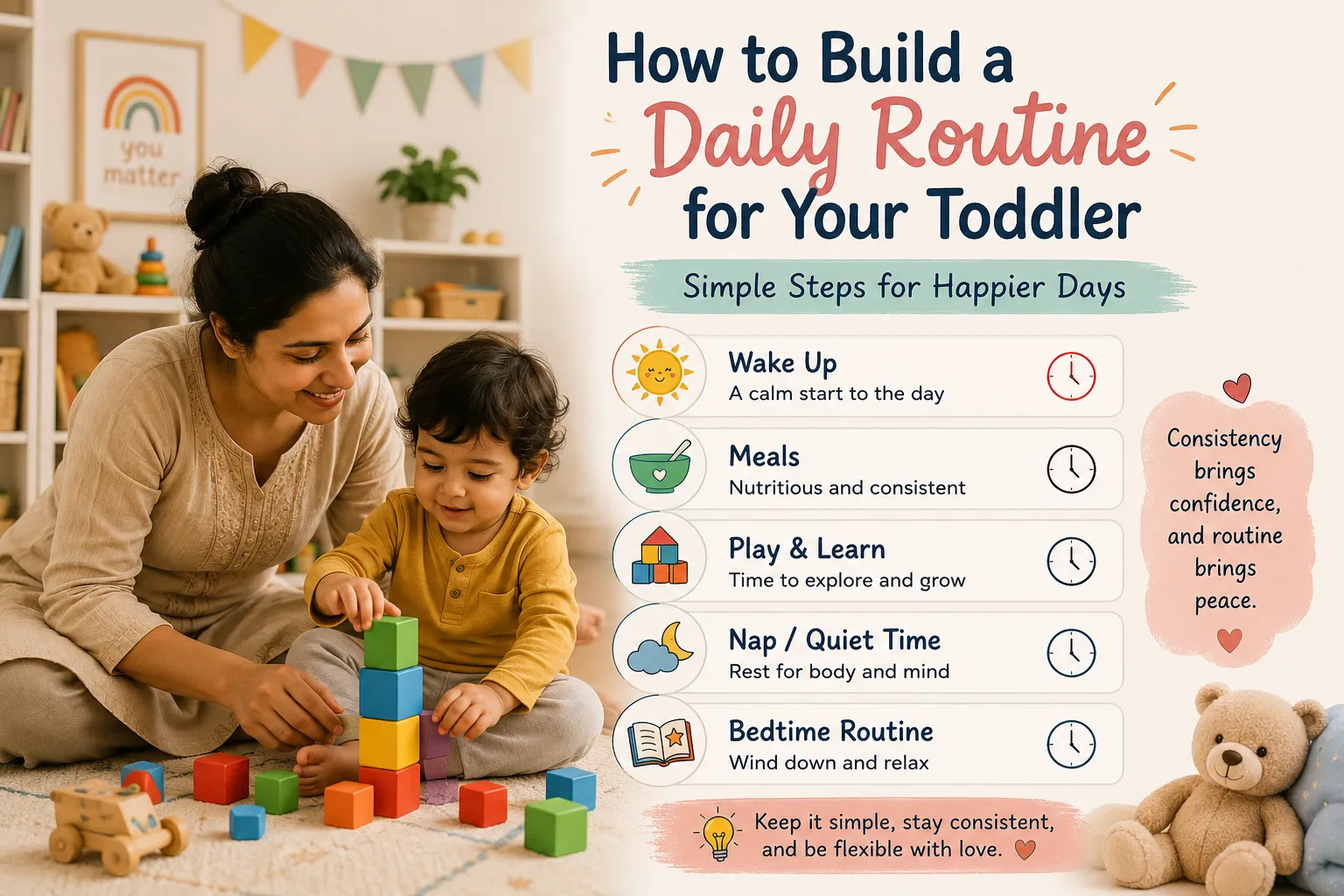
Learn how to build a daily routine for your toddler with practical tips for sleep, meals, play, transitions, and bedtime to encourage healthy development.




Key Takeaways
-
A consistent toddler routine helps improve sleep, mealtimes, emotional regulation and daily transitions.
-
Simple daily anchors like waking up, meals, naps and bedtime provide children with a sense of security.
-
Flexibility is just as important as consistency—routines should adapt to real life without losing their structure.
-
Predictable routines support healthy toddler development while reducing power struggles and meltdowns.
Building a routine for a toddler is simple - wake up, eat, play, sleep, repeat!
In reality? It’s more about waking up at 5:17 a.m. for reasons only your toddler knows, refusing the breakfast banana because it is ‘too yellow’, crying for the park five minutes before naptime and collapsing just before you head out for it.
The good news is toddlers do thrive on routines! With some patience, repetition, and a sense of humour (your survival tools) you can bring order to this (beautiful!) chaos.
Why routines matter
Toddlers thrive well on predictability - a routine gives them security. When they know what comes next, they feel in control—which, ironically, reduces control battles.
A consistent routine helps with:
-
Fewer meltdowns
-
Better sleep patterns
-
Easier mealtimes
-
Smoother transitions between activities
Routines are the invisible scaffolding of your day. Without it, everything collapses. With it, things wobble along. Research in early childhood development consistently shows that predictable routines help children feel safe, build healthy habits and develop self-regulation skills.
Start simple
One common mistake is jumping from ‘no routine’ to a colour coded timetable full of reminders and backup activities and snacks.
Toddlers do not need a corporate project plan.
In fact, the moment they sense structure being imposed seriously, they immediately refuse to cooperate – ‘yeh siddhanton ki ladai hai!’
Start with basics:
-
Wake up
-
Meals
-
Nap/ Quiet time
-
Bedtime
Once these anchors are stable, you can build around them gradually.
Expect resistance
Toddlers are professional routine testers.
The moment you say, “let’s go to bed,” they will develop:
-
Sudden urgent thirst (Himalayan water in their specific yellow cup filled halfway with room temperature)
-
Deep philosophical questions about life
-
Olympic sprint energy
-
Emotional attachment to random objects like plastic lids
In Indian homes, resistance is also a group activity—grandparents, parents, siblings and the child form a bedtime committee with zero final agreement.
This is normal. The goal is not zero resistance, its consistency despite resistance.
They key is to build ‘anchors’, fixed cues that lead them towards the goal, not push them towards it.
Morning routine
Keep it simple:
-
Wake up
-
Diaper change / toilet routine
-
Brush teeth (negotiation begins immediately)
-
Breakfast
-
Short ritual: a song, cuddle, or ‘good morning world’ moment
Yes, your child may insist on wearing the same cartoon t-shirt for the 4th day. Let it go. Save your energy for the bigger battle involving vegetables.
Meal routines
Toddlers are famously unpredictable eaters.
Monday - Fresh air and smiles;
Tuesday - Toast cut into exactly seven triangles;
Wednesday – Bowlful of your dietician certified pumpkin soup.
Some structure helps:
-
Fixed meal and snack times
-
Same eating place as much as possible
-
No pressure to eat or finish
-
Consistent exposure to healthy food with varied flavours
Allowing them to eat what they please, when they please because they are ‘growing’ may not be the best strategy always.
Nap or rest time
Even when naps disappear (a tragic developmental upgrade), quiet time still matters:
-
Same timing daily
-
Same calming steps
-
Same phrase: “It’s rest time”
They may not sleep, but they will gradually understand the concept of quiet time.
Bedtime routine
Keep it steady:
-
Wash or wipe-down
-
Pyjamas (negotiation phase)
-
Tooth brushing (Olympic-level sport)
-
Lights dimmed
-
Cuddle + lullaby or calm talk
Avoid new exciting activities before bedtime as it increases energy levels. A predictable bedtime routine can improve both the quality and duration of your toddler's sleep over time.
Keep transitions predictable
Most meltdowns happen while switching between activities.
Park to home. Play to dinner. Bath to bedtime. Each feel like emotional injustice to toddlers engrossed in the middle of having fun.
What helps:
-
5-minute warnings (repeated for full effect)
-
Simple countdowns (5 more… now 3…get ready)
-
Repeated phrases (first hands, then dinner)
Eventually, these become familiar cues.
Visual cues
Toddlers understand visuals better than explanations.
A simple chart works:
-
Sun = wake up
-
Plate = food
-
Blocks = play
-
Moon = sleep
It doesn’t need to be Pinterest-perfect!
Flexibility is not failure
No matter how good your routine is, real life will interrupt it:
-
Nap will shift
-
Dinner becomes plain roti + conversation
-
Bedtime includes a sudden dinosaur TED Talk
In Indian households especially, flexibility is not optional—it is survival. Guests arrive, calls happen, bells ring just as the eyes shut, siblings join uninvited.
Routines must bend, not break.
Expect regression (toddlers love plot twists)
Just when things settle, your toddler will:
-
Stop liking food they loved yesterday
-
Refuse naps they once demanded
-
Declare brushing teeth a human rights issue
This is development, not failure. Continue to stick gently to the routine.
Final thoughts
Your routine will rarely look like what you read in books and blogs. And that’s fine.
A good toddler routine is not about perfection—it’s about gentle predictability repeated often enough to hold your day together. Some days it flows smoothly, on some days it collapses. Over time, consistency wins—slowly, quietly, steadily.
Somewhere between spilled meals, repeated “1 more minute, mamma,” and one too many negotiations over that favourite dirty t-shirt, you’ll find a rhythm that works -warm, familiar, and just structured enough to get everyone through the day.
Frequently Asked Questions
What is the best daily routine for a toddler?
A good toddler routine includes consistent wake-up and bedtime schedules, regular meals and snacks, active play, quiet or nap time, and calming bedtime rituals. The exact timings may vary, but consistency is more important than perfection.
Why are routines important for toddlers?
Daily routines help toddlers feel secure because they know what to expect. Predictable routines also support better sleep, smoother transitions, emotional regulation, healthy eating habits, and growing independence.
At what age should toddlers start following a routine?
Children begin benefiting from simple routines in infancy, but between the ages of one and three years, consistent daily routines become especially valuable for supporting healthy development and behaviour.
How can I get my toddler to follow a routine without tantrums?
Use predictable cues, visual schedules, countdowns, and consistent daily anchors instead of forcing transitions. Toddlers often resist change, but gentle repetition and patience help routines become familiar over time.
References & Further Reading
-
American Academy of Pediatrics – HealthyChildren.org: Daily routines and healthy sleep habits
-
Centers for Disease Control and Prevention (CDC): Developmental milestones for toddlers
-
UNICEF: Early Childhood Development Resources