

How to Choose the Right Preschool: 9 Expert Tips for Parents
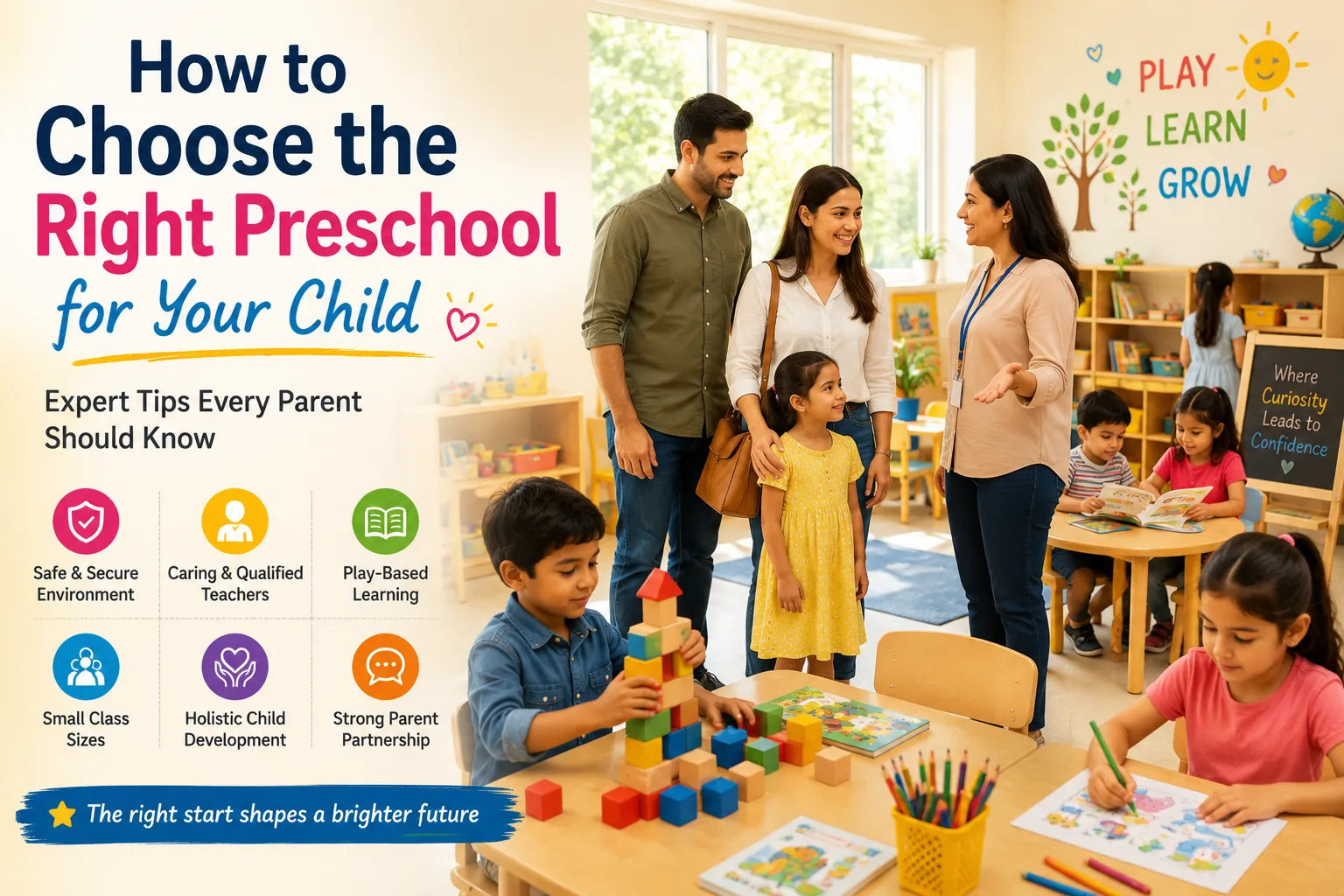
Wondering how to choose the right preschool? Learn what to look for in a preschool, compare early education centres, and make confident admission decisions.




Choosing the right preschool for your child is one of the most important decisions a parent can make. Preschool education sets the foundation for a child's academic, social, and emotional development. It is crucial to find a preschool that meets your child's individual needs and provides a nurturing and stimulating environment for their growth. However, with so many options available, the task of choosing the right preschool can be overwhelming. In this blog, we will discuss some essential factors to consider when selecting a preschool for your child.
1. Consider your child's needs:
Every child is unique, and it is essential to consider your child's needs when choosing a preschool. Some children may thrive in a structured environment, while others may do better in a more relaxed setting. Consider your child's personality, learning style, and any specific needs they may have, such as allergies or special education requirements. This will help you narrow down your options and choose a preschool that caters to your child's individual needs.
2. Location and Convenience:
When it comes to preschool, convenience is key. Look for preschools that are located near your home or workplace, making it easier for drop-offs and pick-ups. Consider the distance from your home to the preschool and the traffic during rush hours. You don't want to spend hours commuting every day, which can be exhausting for both you and your child.
3. Curriculum and Teaching Methods:
Preschool education is not just about playing and having fun; it also involves learning fundamental skills that will prepare children for elementary school. When choosing a preschool, it is vital to consider its curriculum and teaching methods. Look for a program that offers a balance of structured learning activities and free play. Inquire about their teaching philosophy, how they approach discipline, and how they handle challenging behaviours. Comparing different early education centres can help you understand which curriculum best suits your child's learning style.
4. Classroom & Learning Environment:
The preschool classroom should be a safe, clean, and well-organised learning space or corner that encourages learning and creativity. Observe the classroom during a visit and see if it is child-friendly with age-appropriate toys, books, and learning materials. Pay attention to the teacher-child ratio, as a smaller group size allows for more individual attention and a better learning experience for your child.
5. Qualified and Experienced Teachers:
The quality of teachers is crucial in a preschool environment. They play a significant role in a child's development and can make or break their experience. As a parent, you want to ensure that your child is in the hands of caring, qualified, and experienced teachers. Inquire about their educational qualifications, experience working with young children, and ongoing professional development. A well-trained teacher will not only support your child's academic growth but also help them develop essential social and emotional skills.
6. Health and Safety Measures:
Keeping your child safe and healthy is of utmost importance when choosing a preschool. Inquire about the health and safety protocols followed by the preschool, including measures for illness, emergencies, allergies, and accidents. Ask about the cleanliness of toys and learning materials, as well as the frequency of handwashing and sanitisation. A safe and healthy environment will give you peace of mind while your child is in school.
7. Parental Involvement:
A preschool that encourages parental involvement can make the transition from home to school easier for both you and your child. Inquire about how the preschool involves parents in their child's education, such as through parent-teacher conferences, volunteer opportunities, or workshops. Regular communication between the preschool and parents can also help you stay updated on your child's progress and address any concerns promptly.
8. Cost and Additional Fees:
Before making a decision, it is essential to know the cost of tuition and any additional fees that may be required, such as registration or supply fees. Consider your budget and see if the cost of the preschool aligns with it. Inquire about any financial aid or scholarship options that may be available. These are valuable preschool admission tips that can help you avoid unexpected expenses.
9. Reputation and Reviews:
Lastly, do your research and gather feedback from other parents whose children have attended the preschool you are considering. Check online reviews and ratings, ask for referrals, and talk to parents in the neighbourhood. This is one of the most effective preschool admission tips and an important part of the nursery school selection process, helping you make a confident and informed decision.
Choosing the right preschool for your child is a crucial step in their educational journey. By considering these factors, you can ensure that your child receives the best possible early education. Remember to trust your instincts and choose a preschool that feels like the right fit for your child. After all, a happy and confident child is the ultimate goal of any preschool education.
FAQs: How to Choose the Right Preschool
1. How do I choose the right preschool for my child?
Choosing the right preschool starts with understanding your child's personality, learning style, and developmental needs. Visit multiple schools, observe the classroom environment, evaluate the curriculum, meet the teachers, and review safety measures. The best preschool is one that provides a nurturing environment while supporting your child's academic, social, and emotional growth.
2. What should I look for in a preschool?
When deciding what to look for in a preschool, consider:
-
Qualified and caring teachers
-
A safe, clean, and child-friendly environment
-
Age-appropriate learning materials
-
Balanced curriculum with play-based learning
-
Small teacher-to-child ratios
-
Strong health and safety practices
-
Open communication with parents
These factors help ensure your child has a positive early learning experience.
3. What are the most important preschool admission tips?
Some essential preschool admission tips include:
-
Start researching schools early.
-
Visit the preschool in person.
-
Ask about the curriculum and teaching philosophy.
-
Understand admission timelines and documentation requirements.
-
Review fee structures and additional costs.
-
Read parent reviews and testimonials.
-
Observe how teachers interact with children.
Planning ahead can make the admission process much smoother.
4. When should I start looking for a preschool?
Most experts recommend beginning your preschool search 6 to 12 months before your child is expected to start. Popular schools often have limited seats and early admission deadlines, so researching and applying early gives you more options.
5. How can I find the best preschool near me?
To find the best preschool near you:
-
Search online and compare ratings.
-
Read parent reviews.
-
Visit school websites.
-
Schedule campus tours.
-
Speak with other parents in your neighbourhood.
-
Compare curriculum, facilities, safety measures, and teacher qualifications.
Choosing a nearby preschool also makes daily travel easier for both parents and children.
6. Why are early education centres important?
Early education centres provide children with a structured environment where they develop language, cognitive, social, emotional, and motor skills. They also help children build confidence, independence, and school readiness through age-appropriate learning experiences.
7. What is the ideal teacher-to-child ratio in a preschool?
A lower teacher-to-child ratio allows educators to provide more personalised attention, better supervision, and stronger emotional support. While the ideal ratio varies by age and local regulations, smaller class sizes generally create a better learning environment for preschoolers.
8. How important is play-based learning in preschool?
Play-based learning is one of the most effective preschool teaching approaches. It encourages creativity, communication, collaboration, problem-solving, and emotional development while helping children learn naturally through exploration and hands-on experiences.
9. How do I compare different nursery schools?
When comparing nursery schools, evaluate:
-
Curriculum and teaching methods
-
Teacher qualifications
-
Safety and hygiene standards
-
Classroom environment
-
Learning resources
-
Parent communication
-
School reputation
-
Fees and admission process
Taking a checklist during school visits can help you compare schools objectively.
10. What questions should parents ask during a preschool visit?
Some important questions include:
-
What teaching philosophy do you follow?
-
How do you support children's emotional development?
-
What safety and emergency procedures are in place?
-
What is the teacher-to-child ratio?
-
How do you communicate with parents?
-
How do you manage behavioural challenges?
-
What does a typical school day look like?
These questions help parents understand whether the preschool is the right fit.
11. What are the signs of a good preschool?
A good preschool typically has:
-
Happy, engaged children
-
Warm and experienced teachers
-
Clean, safe classrooms
-
Age-appropriate learning materials
-
Structured routines balanced with free play
-
Strong parent-school communication
-
Positive reviews from families
These indicators reflect a high-quality learning environment.
12. Why is preschool important for child development?
Preschool lays the foundation for lifelong learning by helping children develop language, literacy, numeracy, social, emotional, and problem-solving skills. It also builds confidence, independence, curiosity, and resilience, making the transition to primary school smoother.
13. Is location important when choosing a preschool?
Yes. Choosing a preschool close to home or work reduces travel time, creates a consistent daily routine, and makes drop-offs and pick-ups more convenient. A nearby preschool can also help children feel more connected to their local community.
14. How do I know if a preschool is the right fit for my child?
The right preschool aligns with your child's personality, interests, and learning needs. During your visit, observe whether your child feels comfortable, whether teachers are warm and responsive, and whether the environment encourages curiosity, creativity, and exploration.
15. How does preschool prepare children for primary school?
Preschool develops essential school readiness skills, including communication, listening, early literacy, numeracy, problem-solving, teamwork, emotional regulation, and independence. These foundational skills help children transition confidently into formal schooling while fostering a lifelong love of learning.