



How to Prepare Your Child for Their First Day of School | Parent Tips
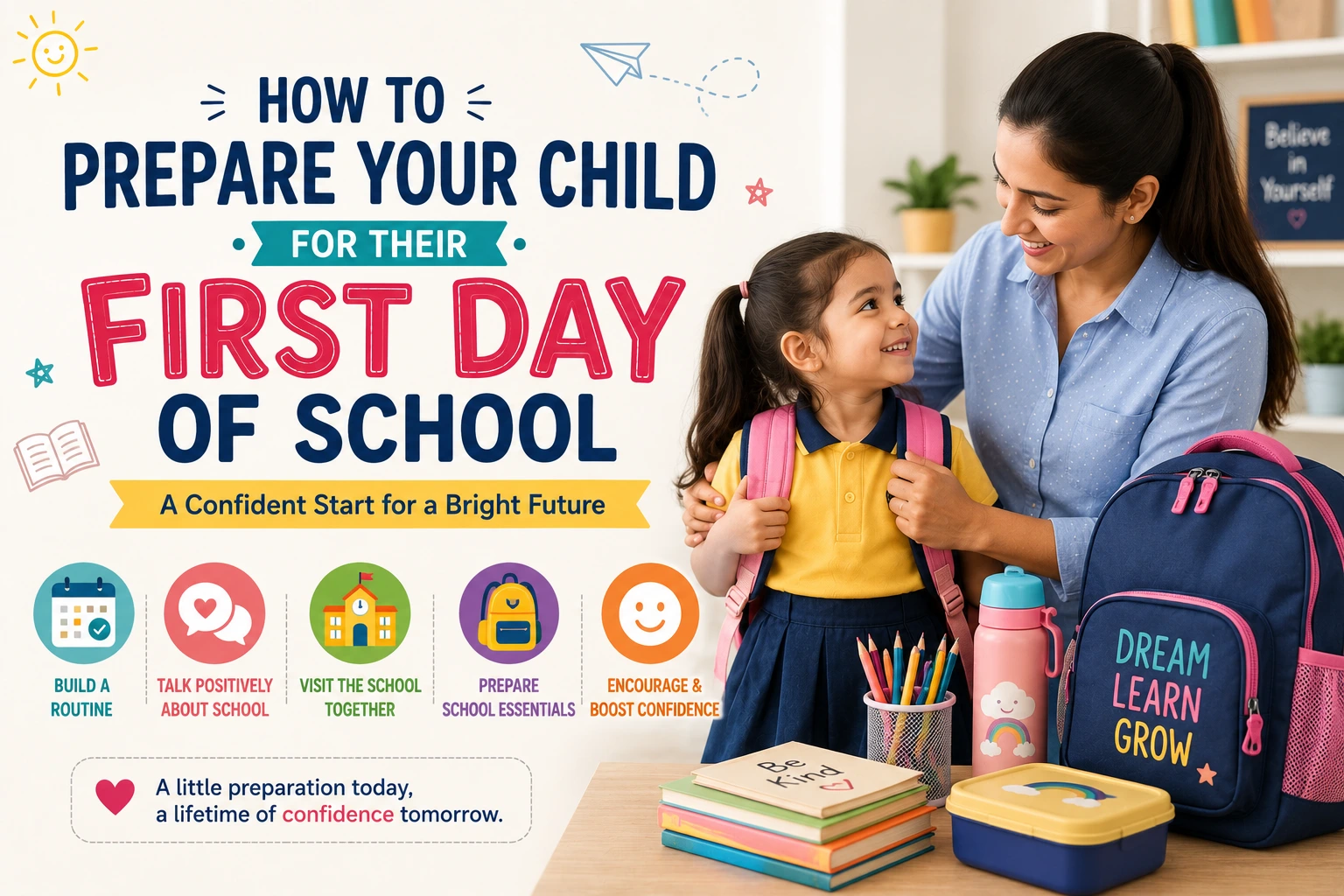
Discover practical tips to prepare your child for their first day of school with confidence. Learn how to ease anxiety, build routines, and create a positive school experience.




There’s something truly special about a child’s first day of school. Tiny backpacks, neatly packed lunch boxes, little hands holding tightly onto their parents; it’s a moment filled with excitement, pride, and often, a few nervous tears too.
For many parents, this milestone brings one important question: how to prepare my child for school in a way that feels positive and comforting?
The truth is every child experiences this transition differently. Some children eagerly walk into the classroom, while others may feel shy, anxious, or overwhelmed by the new environment. With thoughtful first day of school preparation, parents can help children feel safe, confident, and emotionally ready for this beautiful new chapter.
In this blog, we’re sharing practical and gentle school readiness tips that can make your child’s first school experience joyful and stress-free.
Start Talking About School Early
Children feel more comfortable when they know what to expect. A few weeks before school begins, start having cheerful conversations about school life.
Talk about:
-
meeting new friends,
-
listening to stories,
-
singing rhymes,
-
playing games,
-
and learning exciting new things.
The goal is to build curiosity rather than pressure. When school is introduced as a happy and welcoming place, children naturally begin to feel excited about it.
You can also read storybooks about starting school to help your child emotionally connect with the experience.
Create a Simple Routine Before School Begins
One of the most effective school readiness tips is helping children become familiar with routines before the first day arrives.
A sudden change in sleep schedules and morning habits can feel overwhelming for young children. Starting early allows them to adjust gradually and comfortably.
A week or two before school starts:
-
set a regular bedtime,
-
wake your child up at school timing,
-
practice getting dressed independently,
-
and create calm morning habits.
These small changes help children feel secure and prepared when school officially begins.
Visit the School Together
For children, unfamiliar places can sometimes feel intimidating. Visiting the school before the first day can make a huge difference in helping them feel relaxed.
Walking around the campus, seeing the classroom, and meeting the teacher can turn the “unknown” into something familiar and safe.
This simple step is especially helpful for reducing school anxiety kids commonly experience during transitions.
Even pointing out fun spaces like the playground or activity room can build excitement and comfort.
Encourage Independence Through Small Everyday Tasks
Preparing for school is not only about academics. Emotional confidence and independence are equally important.
Encourage your child to do small tasks on their own, such as:
-
opening their lunch box
-
opening their water bottle
-
wearing shoes
-
washing hands
-
putting toys away after playtime
These little achievements help children feel capable and confident in a classroom environment.
When children believe “I can do this myself,” school becomes much less intimidating.
A Preschool Preparation Checklist for Parents
A little preparation at home can make the first school morning calm and organized instead of rushed and stressful.
Here’s a simple preschool preparation checklist to help parents stay ready:
Essentials to Keep Ready
-
School bag
-
Water bottle
-
Lunch box
-
Extra set of clothes
-
Comfortable shoes
-
Labelled belongings
-
Tissues/Napkins
Emotional Readiness
-
Talk positively about school
-
Practice short separations
-
Encourage social interaction
-
Build confidence with praise and encouragement
Healthy Habits
-
Early bedtime
-
Nutritious breakfast
-
Reduced screen time before sleep
Remember, children often pick up on their parents’ emotions. Staying calm and positive helps children feel reassured too.
Understanding School Anxiety in Kids
It’s completely normal for children to feel nervous before starting school. Some children may cry during drop-off, become clingy, or suddenly grow quiet.
Managing school anxiety kids experience requires patience, consistency, and reassurance.
Instead of lengthy emotional goodbyes, try creating a short and comforting goodbye routine, perhaps a hug, a smile, and a simple phrase like: “I’ll see you soon. Have a wonderful day!”
Children usually settle much faster when goodbyes are calm and confident.
Most importantly, trust the process. Adjustment takes time, and every child moves at their own pace.
What to Do First Day of School
Parents often wonder, what to do first day of school to make the experience smoother and happier.
The most important thing is to keep the day calm, positive, and pressure-free.
On the morning of school wake up a little early, avoid rushing, serve a healthy breakfast, and speak encouragingly to your child.
A cheerful smile from parents can be incredibly reassuring for little ones.
After school, spend time listening to your child talk about their day. Instead of asking too many questions, try gentle prompts like:
-
“What made you smile today?”
-
“Did you enjoy story time?”
-
“What was your favourite activity?”
Celebrating small moments helps children build positive associations with school.
Every Child Adjusts Differently
One of the most important things for parents to remember is that adjustment is a journey, not a race.
Some children settle into school immediately, while others may need a few days or even weeks to feel fully comfortable. That is perfectly okay.
Patience, encouragement, and emotional support are the most valuable gifts parents can offer during this phase.
With love, routine, and reassurance, children slowly begin to see school as a safe and joyful place where they can learn, play, explore, and grow.
Final Thoughts
The first day of school is the beginning of a beautiful adventure, one filled with learning, friendships, creativity, and growth.
Thoughtful first day of school preparation can help children step into this new environment with confidence and excitement instead of fear.
By following gentle school readiness tips, staying emotionally supportive, and using a practical preschool preparation checklist, parents can make this milestone a happy and memorable experience for the whole family.
After all, the goal isn’t just preparing children for school; it’s helping them fall in love with learning from the very beginning.
FAQs
1. How can I prepare my child emotionally for their first day of school?
The best way to prepare a child emotionally for their first day of school is by building familiarity, creating positive conversations about school, and maintaining calm routines at home. Parents can reduce first-day anxiety by talking about what school will look like, reading school-themed storybooks, and encouraging children to express their feelings openly. Emotional reassurance and predictable routines help children feel safe, confident, and excited about starting school.
2. What should parents do if their child cries on the first day of school?
If a child cries on the first day of school, parents should stay calm, offer reassurance, and avoid long emotional goodbyes. Short, confident drop-offs help children adjust more quickly to new environments. Most children settle down within a few minutes once they begin interacting with teachers, activities, and classmates. Consistency and positive reinforcement play a major role in reducing separation anxiety in young children.
3. How do I reduce school anxiety in preschool children?
Parents can reduce preschool anxiety by introducing school routines gradually before the first day. Visiting the school campus, meeting teachers, practising classroom habits, and talking positively about learning experiences can help children feel more comfortable. Avoid showing stress or nervousness in front of children, as they often mirror parental emotions during transitions.
4. What are the signs that a child is ready for preschool or school?
A child may be ready for preschool when they can follow simple instructions, communicate basic needs, interact with other children, and participate in structured activities independently. Emotional readiness, curiosity, social confidence, and the ability to adapt to routines are important school readiness indicators in early childhood development.
5. How can parents create a healthy school routine before the first day?
Parents can prepare children for school by establishing healthy sleep schedules, meal timings, study habits, and morning routines at least 1–2 weeks before school starts. Consistent bedtime routines and reduced screen time help children wake up refreshed, emotionally balanced, and mentally prepared for classroom learning.
6. Why is the first day of school important for child development?
A child’s first day of school is an important milestone that shapes early learning experiences, emotional confidence, and social development. Positive first-day experiences can improve classroom participation, communication skills, independence, and long-term interest in learning. Early school exposure also helps children develop adaptability and relationship-building skills.
7. How can preschool programmes help children adjust to school life?
Quality preschool programmes help children adjust to school life by introducing structured routines, interactive learning, social interaction, and classroom behaviour in a nurturing environment. Preschool education supports communication skills, emotional development, confidence, and independence, making the transition to formal schooling smoother and less stressful for both children and parents.