
How to Start a Preschool in India | Complete Guide
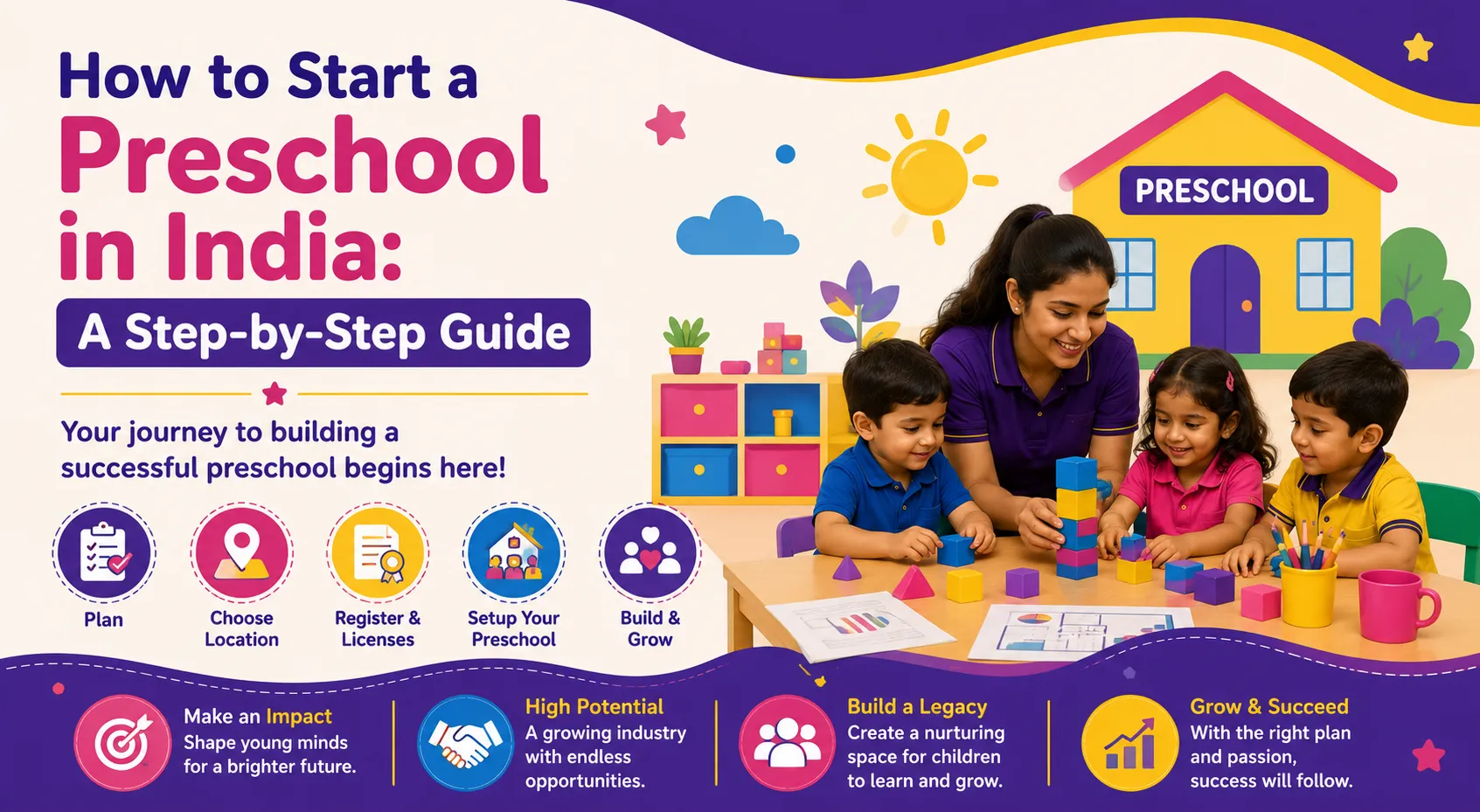
Thinking of starting a preschool in India? Here's a practical, step-by-step breakdown of what it actually takes — from planning to opening day.




India's early childhood education sector has been growing steadily, driven by more working parents, rising awareness of structured early learning, and preschools expanding well beyond metro cities into smaller towns. If you're considering starting a preschool, here's what the journey actually looks like.
1. Decide Your Business Model: Independent vs. Franchise
The first decision that shapes everything else is whether you build a preschool from the ground up or partner with an established brand through a franchise.
Starting independently means you control the curriculum, branding, and pricing — but you're also building everything from zero: brand trust, teacher training systems, admissions marketing, and operational processes. A franchise model, on the other hand, gives you a tested curriculum, brand recognition, staff training, and operational support from day one, in exchange for a franchise fee and ongoing royalty.
Neither is inherently "better" — it depends on how much you value speed-to-market and support versus full creative control.
2. Choose Your Location Carefully
Preschools are hyperlocal businesses. Proximity to residential neighborhoods, visibility, ease of pickup/drop-off, and safety of the surrounding area all matter more than raw footfall. Increasingly, demand is strong in Tier 2 and Tier 3 cities too, not just metros, as more parents in smaller towns look for structured early learning options.
3. Understand Space and Infrastructure Requirements
Preschools need age-appropriate infrastructure: safe classrooms, outdoor or play space where possible, child-friendly furniture, washrooms suited to young children, and clear safety measures (CCTV, secure entry/exit). Requirements vary depending on whether you're going independent or following a franchise brand's specifications.
4. Plan Your Investment
Costs vary widely based on city, space size, and whether you're building independently or through a franchise. Broad cost categories to plan for include:
- Space (rent or purchase)
- Interior setup and safety infrastructure
- Curriculum licensing or development
- Staff hiring and training
- Marketing and admissions drives
- Franchise fees, if applicable
Rather than relying on a single "starting cost" figure — which varies too much by location to be meaningful — it's worth getting a location-specific estimate before committing.
5. Get the Right Approvals and Registrations
Requirements vary by state and municipality, but generally include business registration, fire and safety clearances, and compliance with local childcare regulations. If you're going the franchise route, the franchisor typically guides you through this process since they've done it before across multiple cities.
6. Build (or Adopt) a Curriculum
Early childhood curriculum design has moved toward holistic, experiential learning rather than rote academics — a shift also supported by India's National Education Policy (NEP) 2020, which emphasizes play-based early learning. If you're building independently, this is a significant undertaking; franchise brands bring this curriculum ready-made.
7. Hire and Train Staff
Preschool educators need specific training in early childhood pedagogy and child safety — this isn't a role you can staff the way you would a typical office job. Franchise brands typically provide structured teacher training as part of the package.
8. Plan Your Admissions and Marketing
Local visibility matters enormously — think signage, community outreach, school fairs, referral programs, and a strong local digital presence (Google Business Profile, local SEO, parent reviews). This is often the most underestimated part of launching a preschool.
The Bottom Line
Starting a preschool in India is a genuinely promising business opportunity given rising demand, but success depends on getting location, infrastructure, curriculum, and admissions marketing right — areas where a lot of first-time entrepreneurs struggle without support. This is exactly the gap a franchise partnership is designed to close.
If you'd rather skip the trial-and-error and start with a proven curriculum, brand, and training system already in place, explore the Kidzee Preschool Franchise Opportunity to see how it works.