
How to Teach Responsibility to Kids: 7 Simple Ways for Parents
Learn how to teach responsibility to kids with 7 simple, age-appropriate ideas. Explore chores, routines and activities that build independence.




Responsibility is a life skill children begin developing long before they are old enough to manage things on their own. Simple experiences such as putting toys away, carrying their water bottle, helping set the table or looking after their belongings teach children that their actions matter.
Learning how to be responsible takes time. Young children need patient guidance, consistent routines and opportunities to take on small tasks suited to their age. With encouragement from parents and teachers, these everyday experiences can help children become more independent, confident and considerate of others.
Responsibility is one of the most valuable life skills a child can develop. It helps children become dependable, confident, and independent while preparing them for future challenges. The good news is that responsibility isn't something children learn overnight it is built through everyday experiences, small tasks, and consistent encouragement.
From putting away toys to helping set the table, there are countless opportunities for teaching responsibility to children in ways that are fun and age-appropriate. The earlier children begin practicing responsibility, the more naturally it becomes a part of their daily lives.
Here are seven practical ways to teach responsibility to children from an early age.
1. Start with Small Responsibilities
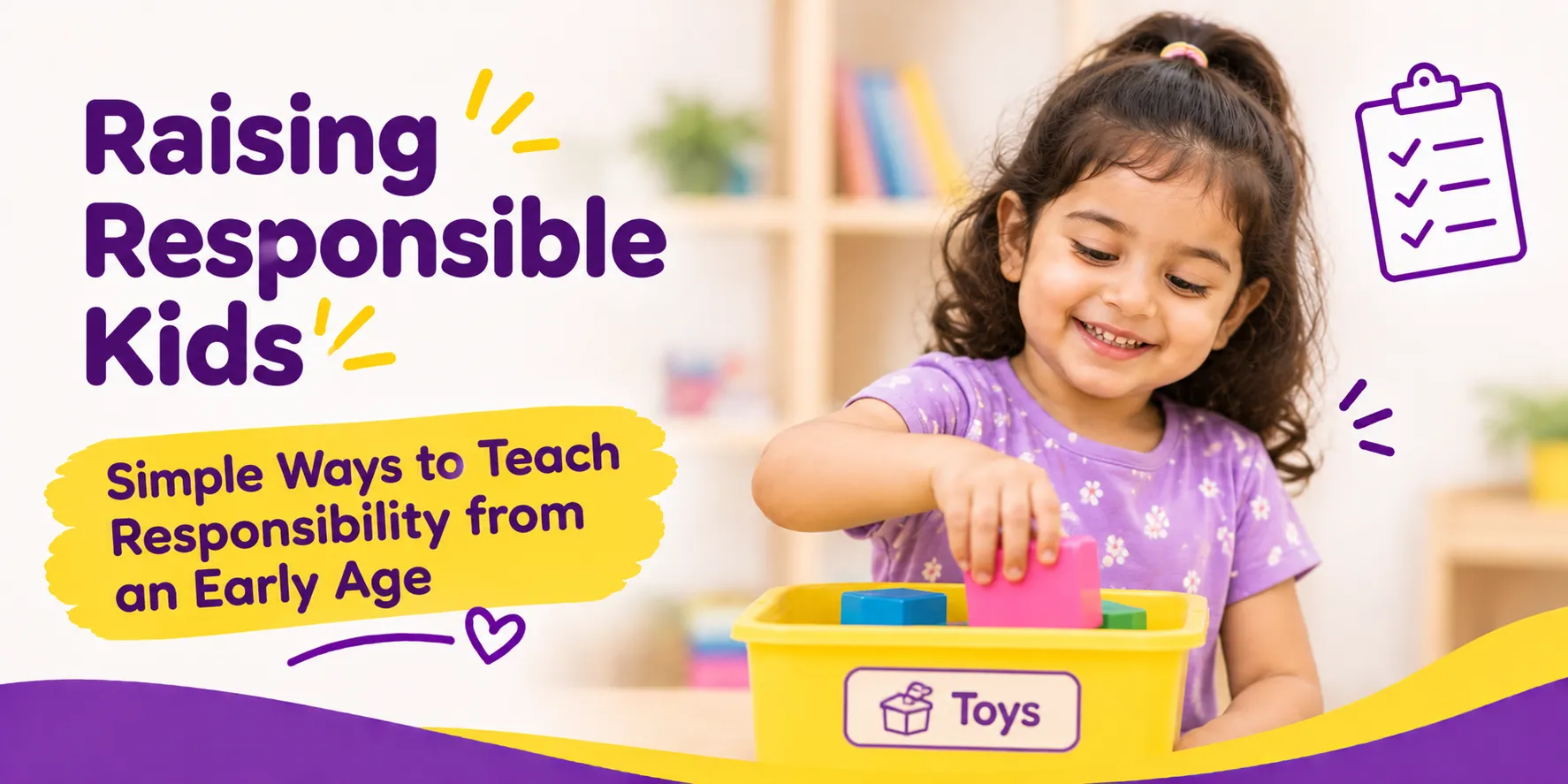
Young children don't need complicated tasks to learn responsibility. Simple activities such as putting toys back in their basket, placing dirty clothes in the laundry hamper, or carrying their own water bottle teach that everyone has a role to play.
Give children enough time to complete these tasks themselves, even if they take longer than expected. A toy may not go back in exactly the right place, and a water bottle may need a little help. What matters initially is that children begin understanding and participating in the task.
Small successes help children feel capable and encourage them to take on bigger responsibilities over time.
2. Give Age-Appropriate Chores
One of the easiest ways to build responsibility for children is through daily chores. Assigning simple, manageable tasks helps children understand that their contributions matter.
|
Age group |
Suitable responsibilities |
|
Toddlers (around 2–3 years) |
Put toys in a basket, place shoes in their spot, carry a light napkin. |
|
Younger preschoolers (around 3–4 years) |
Water plants with help, arrange books, put dirty clothes in a hamper. |
|
Older preschoolers (around 4–6 years) |
Help set the table, organise their school bag with guidance, sort toys and books. |
Start with one or two simple tasks and introduce more as your child becomes comfortable. Children should feel that they are contributing to the family, not being given a long list of chores.
Some easy chores for children include:
- Making their bed.
- Watering plants.
- Feeding a pet with supervision.
- Setting the dining table.
- Arranging books on a shelf.
- Packing their school bag.
- Wiping the table after meals.
These everyday tasks teach accountability while helping children develop independence.
3. Create Consistent Routines
Children learn responsibility more easily when they know what is expected each day. Morning, after-school, and bedtime routines help children remember their responsibilities without constant reminders.
A visual routine chart or checklist can make daily tasks more engaging and easier to follow.
For example, a simple after-play routine could be: put toys away, place books on the shelf and wash hands before snack time. Picture cards can help younger children remember each step.
4. Allow Natural Consequences
Children begin to understand responsibility when they experience the safe, natural results of their actions. If they leave their crayons scattered after drawing, they can help put them away before starting another activity. If they forget where they left their shoes, guide them to look for them and decide where to keep them next time.
Children learn valuable lessons when they experience the natural outcomes of their actions. For example, forgetting to pack a favourite toy means they won't have it during the day, or leaving art supplies out may mean cleaning them up later.
These experiences help children understand that choices have consequences and encourage them to think ahead.
Natural consequences should never involve compromising a child's safety, emotional well-being or basic needs. Young children still need calm guidance and support.
5. Encourage Problem-Solving
Instead of solving every problem for your child, guide them to find solutions independently.
Ask questions like:
- What do you think you can do?
- How can you fix this?
- What could you try next time?
This approach teaches responsibility while building confidence and decision-making skills.
If your child spills water while drinking, resist the urge to immediately clean it up yourself. Offer a small cloth and say, “Let's wipe this together.” This helps children understand that taking responsibility also means trying to put things right.
6. Praise Effort, Not Just Results
When children take responsibility, acknowledge their effort even if the task isn't completed perfectly.
For example:
- "You remembered to put your shoes away all by yourself!"
- "Thank you for helping set the table."
Positive encouragement motivates children to continue taking responsibility without feeling pressured to be perfect.
Be specific about what your child did rather than relying only on general praise. Saying, “You remembered to put your books back on the shelf” helps children understand which action they can repeat.
7. Teach Through Everyday Life
Responsibility also develops through shared experiences. When cooking together, children can help gather safe ingredients. While gardening, they can remember to water a plant. During play, they can take turns putting materials away and caring for shared toys. These experiences teach children to think about their role and how their actions affect others.
Many life skills for children can be learned during ordinary routines. Cooking together, folding laundry, organizing school supplies, gardening, or caring for a family pet all provide opportunities to practice responsibility in meaningful ways.
Children often learn best by doing rather than simply being told.
Activities to Build Responsibility
Looking for activities to build responsibility? Here are a few simple ideas:
- Create a daily responsibility chart with pictures.
- Give your child the role of "Plant Helper" to water plants.
- Let them pack their snack or school bag with guidance.
- Assign a weekly "Book Organizer" or "Toy Helper" role.
- Encourage them to care for a small garden or indoor plant.
- Rotate simple family helper jobs each week.
- Toy Care Captain: Help put toys back after playtime.
- Little Gardener: Water a plant with adult supervision.
- Book Buddy: Arrange storybooks on a shelf.
- Table Helper: Place napkins or spoons on the dining table.
- School Bag Checker: Help check that familiar items are in the school bag.
These small roles make responsibility feel like participation rather than a chore.
Be a Positive Role Model
Teaching responsibility to children does not begin with big expectations. It begins with small everyday moments—a child putting away a toy, remembering their water bottle or helping with a simple household task.
With patience, consistency and encouragement, these experiences help children understand that they are capable of contributing and making thoughtful choices. Over time, the little responsibilities they practise at home and at preschool become valuable life skills that support their growing independence.
How Do You Teach Responsibility to Young Children?
Teaching responsibility to young children starts with giving them small, age-appropriate tasks they can practise regularly. Parents can encourage children to put away toys, look after their belongings, follow simple routines, help with household activities and make small decisions. Consistent encouragement and positive role modelling help children gradually understand their responsibilities and become more independent.
How Does Preschool Help Children Develop Responsibility?
Preschool gives children opportunities to practise responsibility beyond their home routines. Simple classroom experiences such as putting learning materials away, taking turns, following group routines and caring for shared resources help children understand how their actions affect others.
Teachers can support this development by assigning small classroom roles, encouraging children to participate in group activities and recognising their efforts. These experiences help children practise cooperation, consideration and independence in a setting where they learn alongside their peers.

FAQs
At what age should children start learning responsibility?
What are some simple responsibilities for preschoolers?
How can parents teach responsibility without being too strict?
Why is responsibility important in early childhood?
How can preschool teachers encourage responsibility in children?
At what age should children start learning responsibility?
How can parents teach responsibility without being too strict?
How can preschool teachers encourage responsibility in children?
What are some simple responsibilities for preschoolers?
Why is responsibility important in early childhood?