

Indoor vs Outdoor Play: Why Kids Need Both for Better Brain & Body Development
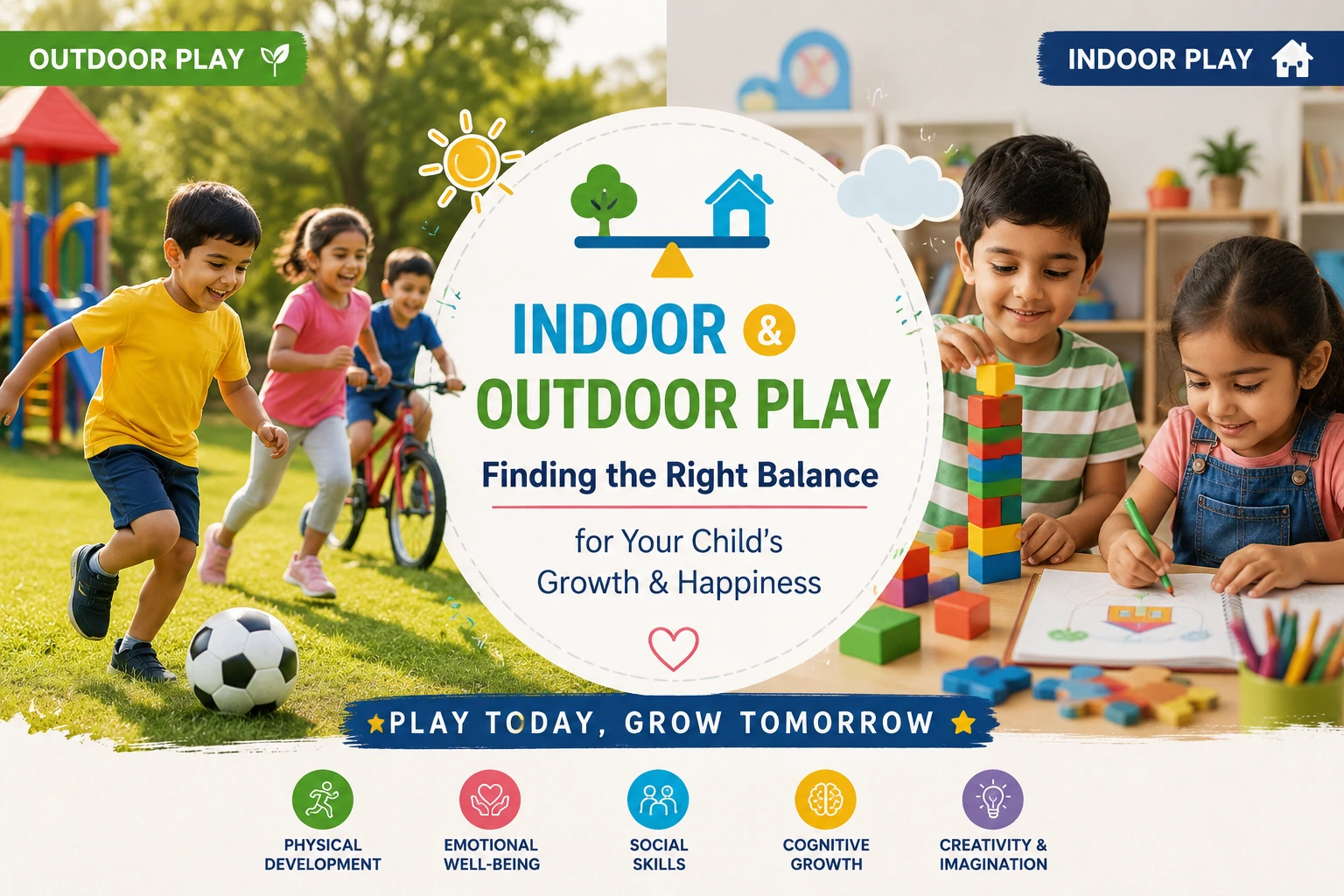
Discover the benefits of indoor and outdoor play for preschool children. Learn how balanced play supports physical, emotional, social, and cognitive development.




In today's modern world, children are constantly surrounded by screens, technology and an increasing number of indoor activities. With limited time spent outdoors, parents may wonder if their child is missing out on the benefits of outdoor play. On the other hand, indoor play offers a controlled and safe environment, making it a popular choice for many families. But what is the right balance between outdoor and indoor play for children?
Which is better indoor or outdoor play for your kids?
Let's explore the benefits of both and how to find the perfect balance.
Outdoor play has been an essential part of childhood for generations. It allows children to explore and discover the world around them in a natural setting. From climbing trees to playing in the dirt, outdoor play offers a wide range of experiences that cannot be replicated indoors. It also provides opportunities for physical activity, which is crucial for a child's development. Running, jumping, and playing sports help children develop gross motor skills, improve coordination and build strength
But outdoor play is not just about physical activity; it also has numerous benefits for a child's mental and emotional well-being. Being out in nature has a calming effect on children, reducing stress and anxiety levels. It also stimulates their senses and imagination, encouraging creativity and problem-solving skills. Outdoor play also allows children to take risks and learn valuable lessons about decision-making, resilience, and independence.
On the other hand, indoor play offers its own set of benefits for children. It provides a safe and controlled environment where parents can keep a close eye on their child's activities. With the rise of technology, many indoor activities such as educational games, puzzles, and building blocks offer educational benefits for children. These activities can improve cognitive skills, enhance problem-solving abilities and promote creativity.
Moreover, indoor play can be a fun bonding experience for families. From board games to movie nights, indoor activities provide opportunities for quality time together as a family. It also offers a break from the fast-paced and hectic lifestyle of today's world, allowing children to relax and recharge.
Striking a Balance between Indoor activities vs Outdoor activities
So, with both outdoor and indoor play offering numerous benefits, how do we find the right balance for our children? The key is to understand that both types of play are essential for a child's development. It's not about choosing one over the other but rather finding a balance between the two.
Firstly, it's crucial to prioritize outdoor play and make it a part of your child's daily routine. Set aside some time each day for your child to play outside, whether it's in your backyard, a nearby park or on a family hike. Let them run, jump, and explore their surroundings freely. Encourage them to use their imagination and engage in unstructured play. Unstructured outdoor play allows children to develop their problem-solving skills and fosters independence.
Secondly, make indoor playtime more engaging and interactive. Instead of relying solely on technology, provide your child with a variety of activities such as arts and crafts, building blocks, or even cooking together. These activities can be both educational and fun while promoting creativity and developing fine motor skills.
Lastly, involve your child in choosing their activities. Children are more likely to engage in activities they enjoy, so let them have a say in what they want to do. This can be a great opportunity for you as a parent to learn more about your child's interests and preferences.
It's also essential to remember that outdoor play doesn't have to be limited to just warm and sunny days. Encourage your child to play outside during all seasons, whether it's jumping in puddles on a rainy day or building a snowman in the winter. It's important for children to experience all types of weather and learn how to adapt to their surroundings.
In conclusion,
Finding the balance between outdoor and indoor play is crucial for a child's overall development. Both types of play offer unique benefits, and it's important to incorporate both into a child's routine. By prioritizing outdoor play, making indoor play more engaging, and involving children in choosing their activities, parents can help their children reap the benefits of both types of play. So, let's encourage our children to put down their screens and go outside to explore, create, and learn in the natural world around them.
FAQs
1. Why is outdoor play important for preschool children?
Outdoor play is important for preschool children because it supports physical fitness, emotional well-being, social interaction, and brain development together. Activities like running, jumping, cycling, and group games help children improve balance, coordination, muscle strength, and confidence. Outdoor environments also encourage curiosity, creativity, and problem-solving skills through exploration and free play. Many parents today look for ways to reduce screen time and improve focus in children, and regular outdoor play can positively support both. Early childhood educators also believe outdoor learning helps children become more independent and emotionally resilient.
2. What are the benefits of indoor play for young children?
Indoor play helps children develop creativity, concentration, communication skills, and imagination in a structured and safe environment. Activities like storytelling, puzzles, block building, pretend play, drawing, and sensory games strengthen fine motor skills and cognitive development. Indoor play is especially useful for improving attention span, emotional expression, and language development in preschoolers. It also gives children opportunities for independent learning and problem-solving. A healthy mix of indoor and outdoor activities helps support holistic child development during the early years.
3. Which is better for children: indoor play or outdoor play?
Indoor and outdoor play are both equally important for a child’s overall growth and development. Outdoor play mainly supports physical activity, social interaction, confidence, and sensory learning, while indoor play improves creativity, focus, imagination, and communication skills. Preschool children learn best when they experience a balance of active movement and calm creative activities throughout the day. Child development experts often recommend combining both types of play to encourage emotional, cognitive, social, and physical growth together.
4. How does outdoor play help brain development in children?
Outdoor play helps stimulate brain development by encouraging children to explore, observe, solve problems, and interact with their surroundings. Activities like climbing, balancing, nature walks, and group games improve decision-making, coordination, attention span, and critical thinking skills. Exposure to different outdoor environments also strengthens sensory processing and creativity. Studies in early childhood education suggest that active outdoor experiences can improve memory, emotional regulation, and learning readiness in preschool children.
5. Can indoor activities improve a child’s learning skills?
Yes, indoor activities play a major role in improving early learning skills in children. Educational games, puzzles, reading, arts and crafts, and storytelling activities help preschoolers develop language skills, concentration, creativity, and logical thinking. Indoor learning experiences also encourage patience, listening skills, and independent problem-solving. Many parents and teachers use structured indoor activities to build school readiness and support cognitive development in young learners.
6. How much outdoor play should preschool children get daily?
Most child development experts recommend at least one to two hours of active outdoor play every day for preschool children. Outdoor activities help improve physical health, sleep quality, emotional balance, and social skills. Even simple activities like running, playing in the park, or riding a bicycle can positively impact a child’s growth and development. Regular outdoor play also helps children stay active and reduces excessive screen exposure.
7. What are the best indoor activities for preschoolers?
Some of the best indoor activities for preschoolers include storytelling, pretend play, building blocks, colouring, clay modelling, puzzles, music activities, and sensory games. These activities improve creativity, fine motor skills, communication, and emotional expression. Indoor activities also provide excellent opportunities for parent-child bonding and interactive learning at home. Choosing age-appropriate and screen-free activities can help children stay engaged while supporting early childhood development.
8. What are the best outdoor games for young children?
Outdoor games like hide-and-seek, obstacle races, ball games, cycling, sand play, nature walks, and group activities are excellent for young children. These games improve physical coordination, teamwork, confidence, and social interaction. Outdoor play also gives children opportunities to explore their environment, solve challenges, and stay physically active. Early childhood educators often encourage free outdoor play because it supports both mental and physical development.
9. How does play support emotional development in children?
Play helps children understand and express emotions in a natural and healthy way. Through role play, group games, storytelling, and creative activities, children learn sharing, empathy, patience, and communication skills. Play also teaches children how to manage frustration, build confidence, and develop positive relationships with others. Emotional development through play is an important part of preschool education because it helps children become socially confident and emotionally secure.