
Is Preschool Franchise a Good Business in India? Here's the Honest Answer
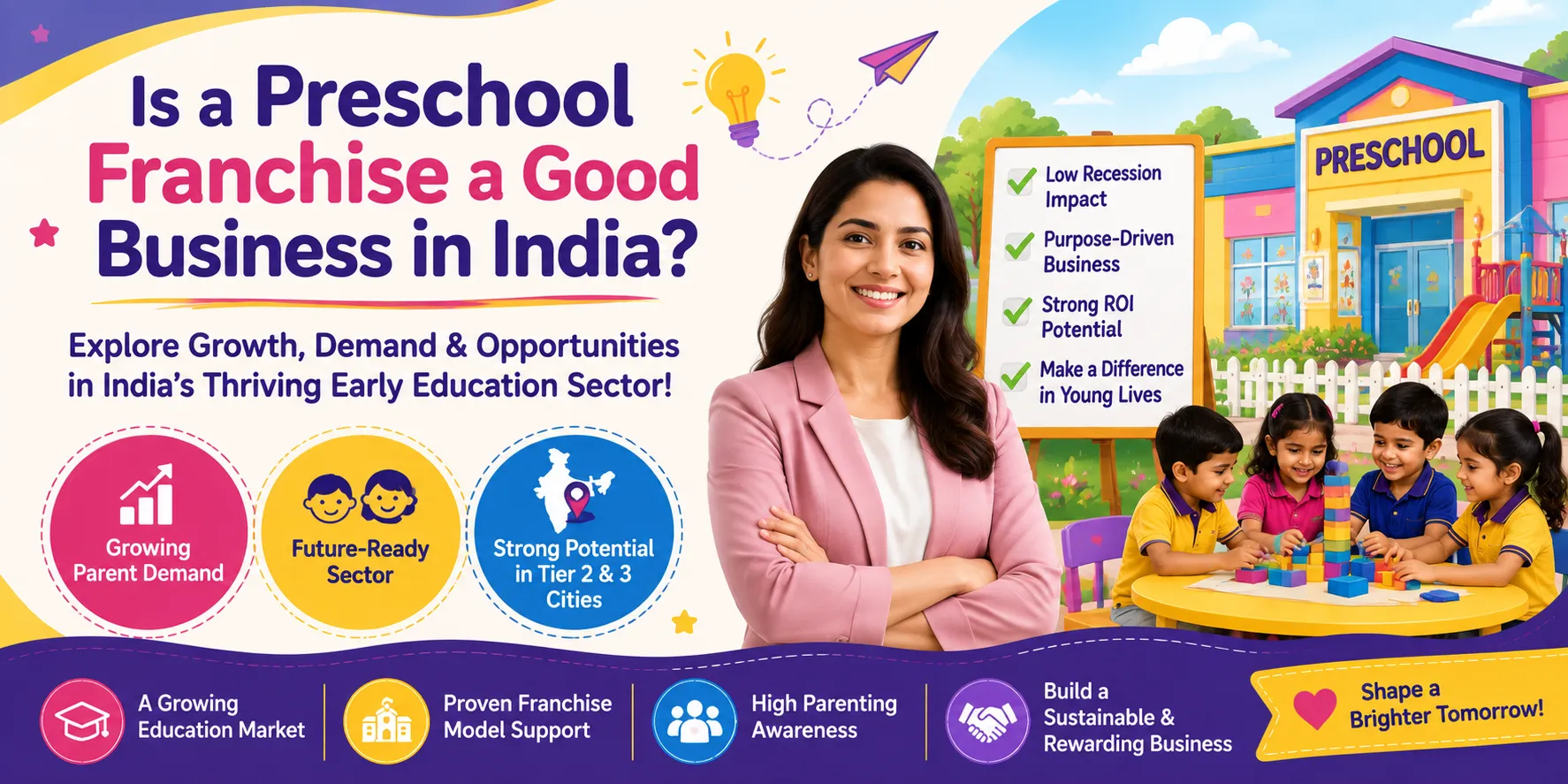
Weighing a preschool franchise as a business? Here's an honest look at the opportunity, the risks, and who it actually suits.




Preschool franchising gets pitched a lot as a "safe" or "low-risk" business opportunity. Whether that's true depends on the specific franchise and how realistic your expectations are. Here's a grounded look at what makes this business genuinely attractive — and what it doesn't guarantee.
Why the Category Is Attractive
Demand is real and durable. Early childhood education isn't a trend — it's tied to fundamental shifts like rising numbers of working parents, smaller nuclear families needing structured childcare, and growing awareness of the importance of early developmental years. This demand has been consistent across metro and non-metro cities alike.
It's a relationship-driven, community business. Unlike many franchise categories that compete purely on price, preschools compete on trust, safety, and outcomes — which rewards owners who genuinely engage with their local community rather than just running the numbers.
Franchise support reduces first-time-entrepreneur risk. You're not designing a curriculum, building teacher training from scratch, or figuring out child safety protocols on your own — an established brand has already solved these problems across many centers.
What It Doesn't Guarantee
It's not a passive investment. A preschool franchise still requires active, hands-on involvement — admissions, staff management, parent relationships, and day-to-day operations. This isn't a business you can run remotely with minimal oversight, especially in the early years.
Returns build gradually, not instantly. Enrollment typically grows year over year as the center builds local reputation — it's rare for a new center to be at full capacity in its first year. Anyone evaluating this as a business needs to plan for a ramp-up period rather than immediate returns.
Brand quality varies a lot. "Preschool franchise" isn't a single product — the strength of curriculum, training depth, marketing support, and franchisee track record differs significantly between brands. Due diligence on the specific franchisor matters as much as the category itself.
Location risk is real. Even a strong brand can underperform in the wrong location — poor visibility, wrong demographic fit, or oversaturated competition can all limit a center's success regardless of the franchise name above the door.
Who This Business Suits Best
This model tends to work well for people who:
- Want a structured, guided path into entrepreneurship rather than building something from zero
- Are genuinely willing to be hands-on, especially in the first 2–3 years
- Value community trust-building and don't mind a business that's relationship-heavy
- Can commit the full investment (space, setup, franchise fee, and working capital runway) without expecting immediate payback
The Honest Verdict
A preschool franchise can be a genuinely good business in India — the underlying demand is real, and franchise support meaningfully lowers the learning curve for first-time entrepreneurs. But it rewards patience, hands-on involvement, and careful franchise selection more than it rewards a purely passive, hands-off approach to investing.
If you want to evaluate a specific, established franchise opportunity, take a look at what Kidzee's franchise model offers in terms of training, curriculum, and support.