
Preschool Business Opportunities in Tier 2 and Tier 3
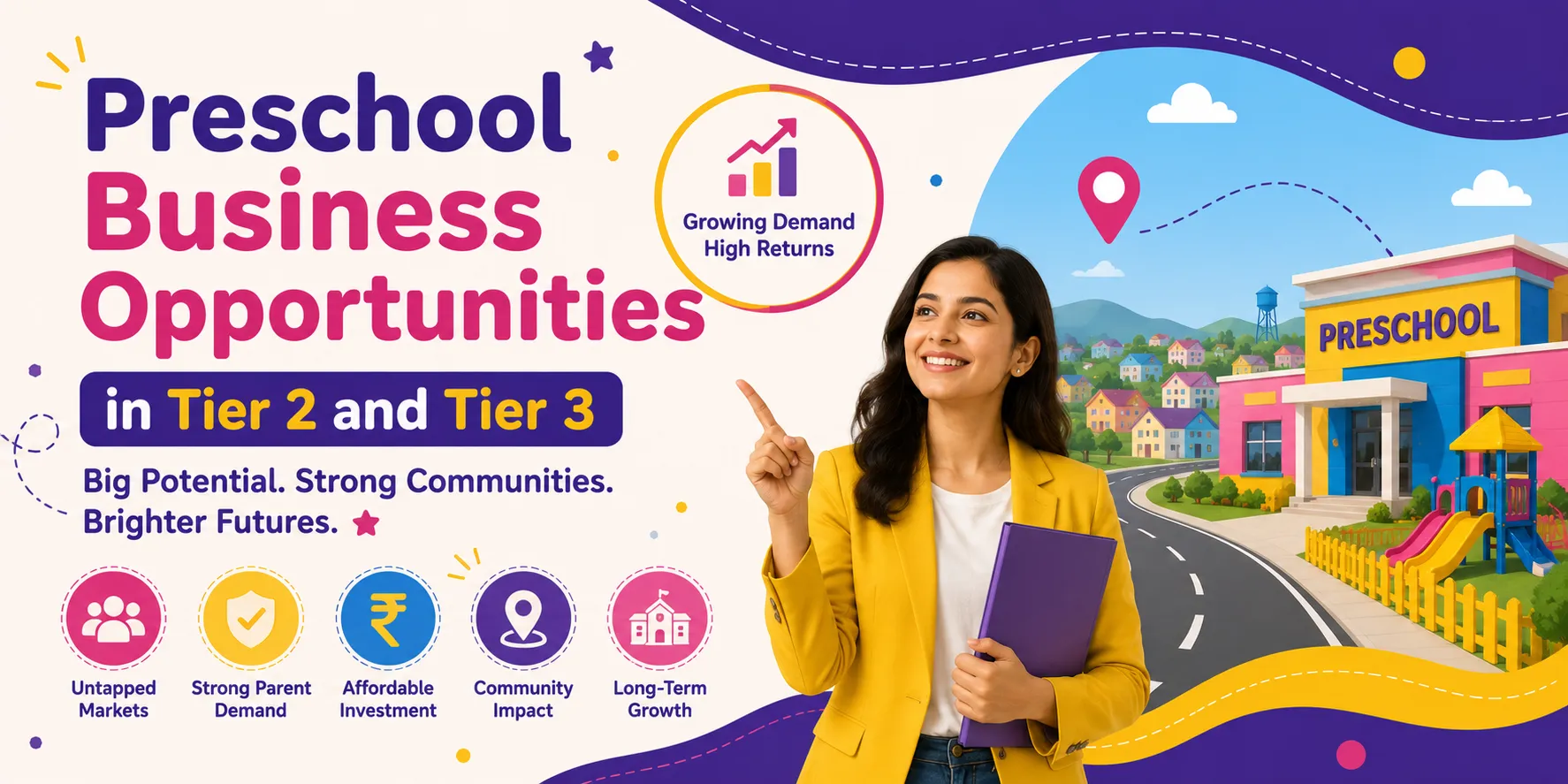
Tier 2 and Tier 3 cities are emerging as strong markets for preschool businesses. Here's why - and how to approach starting one.




For a long time, organized preschool chains concentrated on metro cities. That's changing. Smaller cities and towns are now seeing rising demand for structured early childhood education, making them genuinely attractive markets for new entrepreneurs — often with lower competition and lower setup costs than a metro.
Why Tier 2 & Tier 3 Cities Are a Growing Opportunity
A few underlying shifts are driving this:
- Rising incomes and aspiration: More families in smaller cities now have the disposable income to invest in structured early education, not just informal daycare.
- Working parents outside metros: Dual-income households aren't limited to big cities anymore, and that directly drives demand for reliable, structured childcare and learning.
- Awareness of early childhood development: Parents are increasingly informed — through media, social platforms, and peer networks — about the importance of early learning years.
- Lower real-estate and operating costs: Compared to metro cities, space and staffing costs in smaller towns are typically lower, which can make the unit economics of a preschool center more favorable.
- Less brand saturation: Many organized preschool brands haven't fully penetrated Tier 2/3 markets yet, which means less direct competition for an entrepreneur entering early.
What to Consider Before Starting
Local demand validation. Not every small city has the same appetite for a premium structured preschool. It's worth understanding the local competitive landscape — how many unorganized playschools or daycare setups already exist, and what parents are currently paying.
Pricing sensitivity. Fee structures that work in a metro won't necessarily transfer directly to a smaller city. Local income levels and willingness to pay for "branded" education matter.
Brand trust matters more, not less. In smaller cities, word-of-mouth and brand recognition can matter even more than in metros, since parents often rely heavily on community reputation when choosing where to send young children.
Talent availability. Hiring trained early-childhood educators can be harder outside major cities, which makes structured staff training support especially valuable in these markets.
Why a Franchise Model Fits This Opportunity Well
Because trust and structured training matter so much in smaller markets — and because building brand recognition from scratch in a new city takes time — many entrepreneurs in Tier 2/3 cities find a franchise model particularly effective. It brings an established brand name, a ready curriculum, and staff training support into a market where you'd otherwise have to build all of that credibility yourself.
The Opportunity Ahead
Tier 2 and Tier 3 cities represent one of the more promising frontiers in India's preschool sector precisely because demand is rising while organized competition is still relatively limited. For entrepreneurs willing to be early movers in their city, this can mean a meaningful head start.
Curious whether your city is a fit? Check current Kidzee Franchise availability and see what's needed to bring a trusted preschool brand to your market.