

How Storytelling Helps Children Understand Emotions and Build Emotional Intelligence
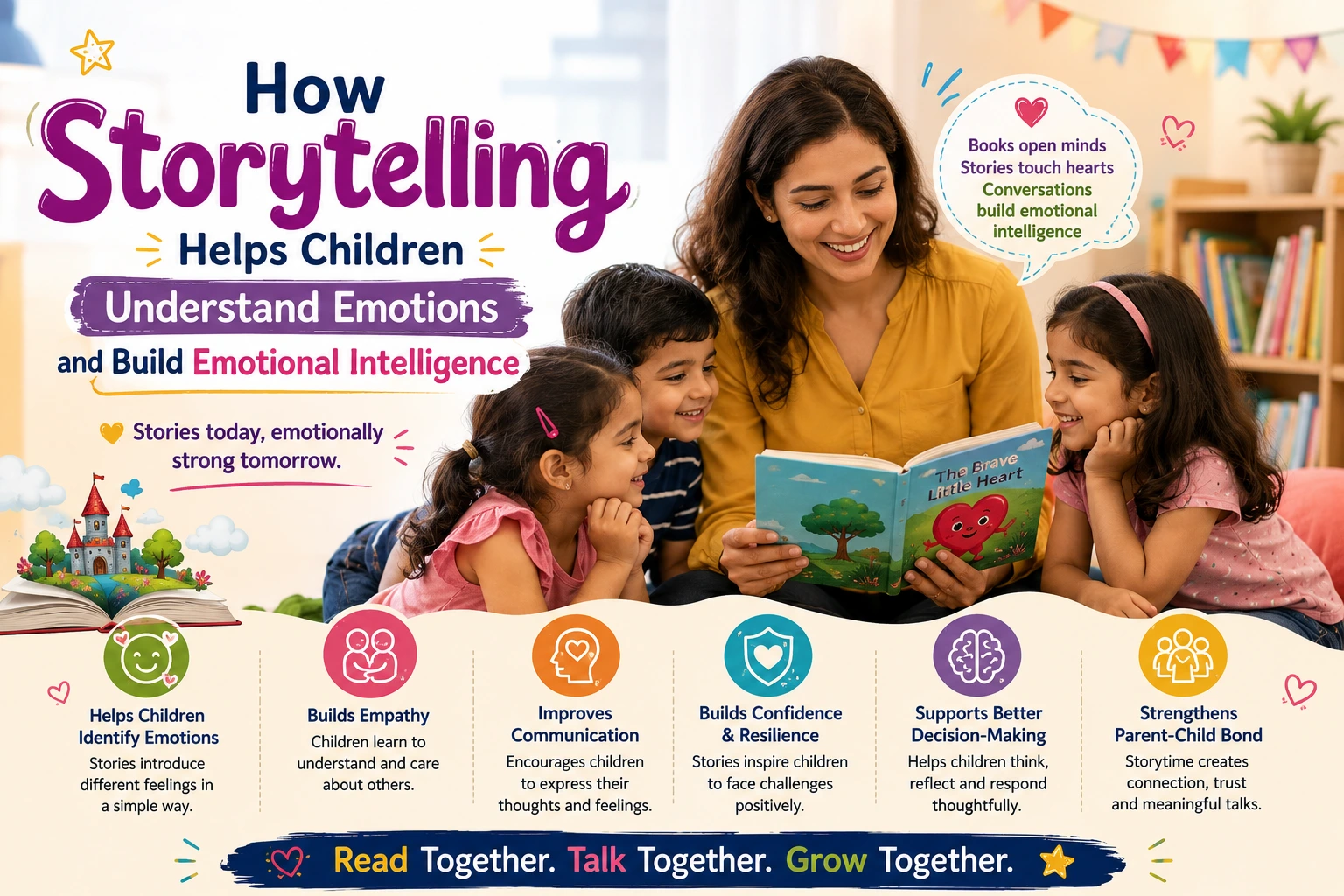
Discover how storytelling and books help children understand emotions, manage feelings, build empathy, and develop emotional intelligence from an early age.




As parents, one of our main goals is to raise emotionally intelligent and empathetic children who are able to understand, manage and express their emotions in a healthy way. However, with the fast-paced and technology-driven world we live in, it can be challenging to find the time and resources to teach our children about emotions.
Fortunately, books can be a powerful tool in teaching kids about emotions. Children's books are not only entertaining, but they also offer valuable life lessons and can serve as a platform for discussing emotions with our little ones. In this blog, we will discuss the importance of teaching kids about emotions and how books can help us in this crucial aspect of parenting.
Why is it important to teach kids about emotions?
Emotional intelligence is the ability to understand and manage one's own emotions, as well as recognize and empathize with the emotions of others. It is a critical skill that helps children navigate through life's challenges, form healthy relationships, and make responsible decisions.
Research has shown that emotional intelligence is linked to academic success, mental health, and overall well-being. Children who are emotionally intelligent are better equipped to handle stress, have higher self-esteem, and are more resilient in the face of adversity.
However, emotional intelligence is not something that comes naturally; it needs to be taught and developed. As parents, we play a crucial role in nurturing our children's emotional intelligence. By teaching them about emotions, we empower them with the necessary skills to navigate through life's ups and downs.
How can books help in teaching kids about emotions?
1. Books provide relatable characters and scenarios
Children's books often feature relatable characters that young readers can identify with. These characters go through various emotions and experiences, allowing children to understand that it is normal to feel different emotions. This helps children feel validated and less alone in their own emotional journey.
2. Books offer a safe space for discussing emotions
Children may find it challenging to express their emotions, especially if they are feeling overwhelmed or unsure about how to articulate their feelings. Books can serve as a safe space for children to explore and discuss different emotions without feeling judged or pressured.
3. Books teach children about empathy
Empathy is the ability to understand and share the feelings of others. By reading books, children are exposed to different characters and their unique experiences, which helps them develop empathy towards others. This is a crucial aspect of emotional intelligence and can help children form healthy relationships and communicate effectively with others.
4. Books provide concrete examples of emotions
Children may have a hard time understanding abstract concepts like emotions, especially when they are young. Books offer concrete examples of emotions through storytelling and illustrations, making it easier for children to grasp and identify different emotions.
5. Books encourage self-reflection
Many children's books have relatable characters that go through emotional struggles and come out stronger in the end. These stories can encourage children to reflect on their own emotions and how they can manage them in difficult situations.
How to choose books that teach kids about emotions?
When it comes to choosing books that teach kids about emotions, there are a few things to keep in mind:
1. Age-appropriateness: It is essential to choose books that are appropriate for your child's age and developmental stage. Younger children may benefit from books with simple language and relatable illustrations, while older children may enjoy more complex storylines and characters.
2. Diversity: Look for books that feature diverse characters from different backgrounds and cultures. This will help children understand that everyone experiences emotions, regardless of their race, gender, or ethnicity.
3. Positive messaging: Choose books with positive messaging that encourage healthy ways of managing emotions. Avoid books that glorify negative behaviour or stereotypes.
4. Interactive elements: Interactive elements like lift-the-flap pages or puzzles can make reading about emotions more engaging and fun for children.
5. Relevance: Choose books that are relevant to your child's current emotional struggles or experiences. This will make the reading experience more relatable and meaningful for them.
Some great books that can help teach kids about emotions are "The Color Monster" by Anna Llenas, "The Way I Feel" by Janan Cain, and "The Rabbit Listened" by Cori Doerrfeld.
In conclusion,
teaching kids about emotions is a crucial aspect of parenting that should not be overlooked. Books can be a valuable tool in this process, as they offer a safe space for children to explore and discuss their emotions. By incorporating books into our parenting, we can help our children develop emotional intelligence, empathy, and the necessary skills to lead happy and fulfilling lives. So let's grab a book and start teaching our little ones about emotions today!
FAQs
1. How do books help children understand emotions?
Books help children understand emotions by introducing them to relatable characters, situations, and feelings in a simple and engaging way. Through stories, children learn to identify emotions like happiness, sadness, anger, fear, excitement, and empathy. Reading also helps preschoolers understand how different actions affect others emotionally. Many early childhood educators use storytelling to encourage emotional awareness, communication skills, and healthy self-expression in young children.
2. What is emotional intelligence in children?
Emotional intelligence is a child’s ability to recognise, understand, express, and manage emotions effectively. It also includes understanding the feelings of others and responding with empathy and kindness. Children with strong emotional intelligence often communicate better, build healthy friendships, manage frustration positively, and adapt more easily to social situations. Emotional learning during the preschool years plays an important role in overall personality development and future relationship-building skills.
3. Why is emotional intelligence important in early childhood?
Emotional intelligence is important in early childhood because it helps children build confidence, empathy, communication skills, and emotional resilience from a young age. Preschool children who understand emotions are often better at expressing feelings, solving conflicts, and interacting positively with others. Emotional development also supports classroom behaviour, social learning, and mental well-being. Many parents today actively look for ways to help children become emotionally strong and socially confident.
4. Can storytelling improve emotional development in children?
Yes, storytelling is one of the most effective ways to improve emotional development in children. Stories help children connect with characters, understand emotional situations, and learn healthy ways to respond to feelings. Listening to stories also encourages empathy, active listening, imagination, and emotional expression. Preschool educators often use storytelling activities to support social-emotional learning and help children discuss emotions comfortably.
5. What are the best books for teaching emotions to preschoolers?
The best books for teaching emotions to preschoolers are stories that focus on friendship, kindness, sharing, confidence, empathy, anger management, and understanding feelings. Picture books with relatable characters and simple emotional situations help children recognise emotions more easily. Parents and teachers can also choose interactive storytelling books that encourage discussion and emotional reflection. Reading such books regularly helps children develop emotional vocabulary and self-awareness.
6. How can parents teach emotional intelligence through reading?
Parents can teach emotional intelligence through reading by discussing characters’ feelings, asking open-ended questions, and encouraging children to express their own emotions during storytime. Questions like “Why do you think the character felt sad?” or “What would you do in that situation?” help children think emotionally and empathetically. Shared reading also strengthens parent-child bonding and creates a safe space for emotional conversations at home.
7. At what age should emotional learning begin for children?
Emotional learning can begin during infancy and becomes especially important during the preschool years when children start recognising and expressing different emotions more clearly. Young children learn emotional behaviour through everyday interactions, storytelling, play, and observation. Early emotional education helps children build self-confidence, empathy, communication skills, and emotional regulation abilities that support long-term social development.
8. How does reading improve empathy in children?
Reading improves empathy by helping children understand different perspectives, emotions, and life experiences through story characters. When children relate to characters’ feelings and challenges, they learn compassion, kindness, and emotional understanding. Storytelling also encourages children to think about how their actions may affect others emotionally. This makes reading an important tool for developing social and emotional skills in preschool children.
9. Can bedtime stories help children manage emotions?
Yes, bedtime stories can help children process emotions and feel emotionally secure before sleep. Stories create a calming environment where children can talk about feelings, fears, worries, or exciting experiences in a comfortable way. Reading before bedtime also strengthens parent-child bonding and improves emotional communication. Many parents use bedtime storytelling to help children relax, reduce anxiety, and develop positive emotional habits.
10. What are signs of strong emotional intelligence in preschool children?
Children with strong emotional intelligence are often able to express feelings clearly, show empathy towards others, communicate calmly, and manage frustration more effectively. They may also demonstrate sharing behaviour, active listening, kindness, and confidence during social interactions. Emotional intelligence in preschoolers develops gradually through supportive parenting, storytelling, play-based learning, and positive communication experiences.