
Teaching Kids About Time & Seasons: 6 Fun, Easy Tips for Parents
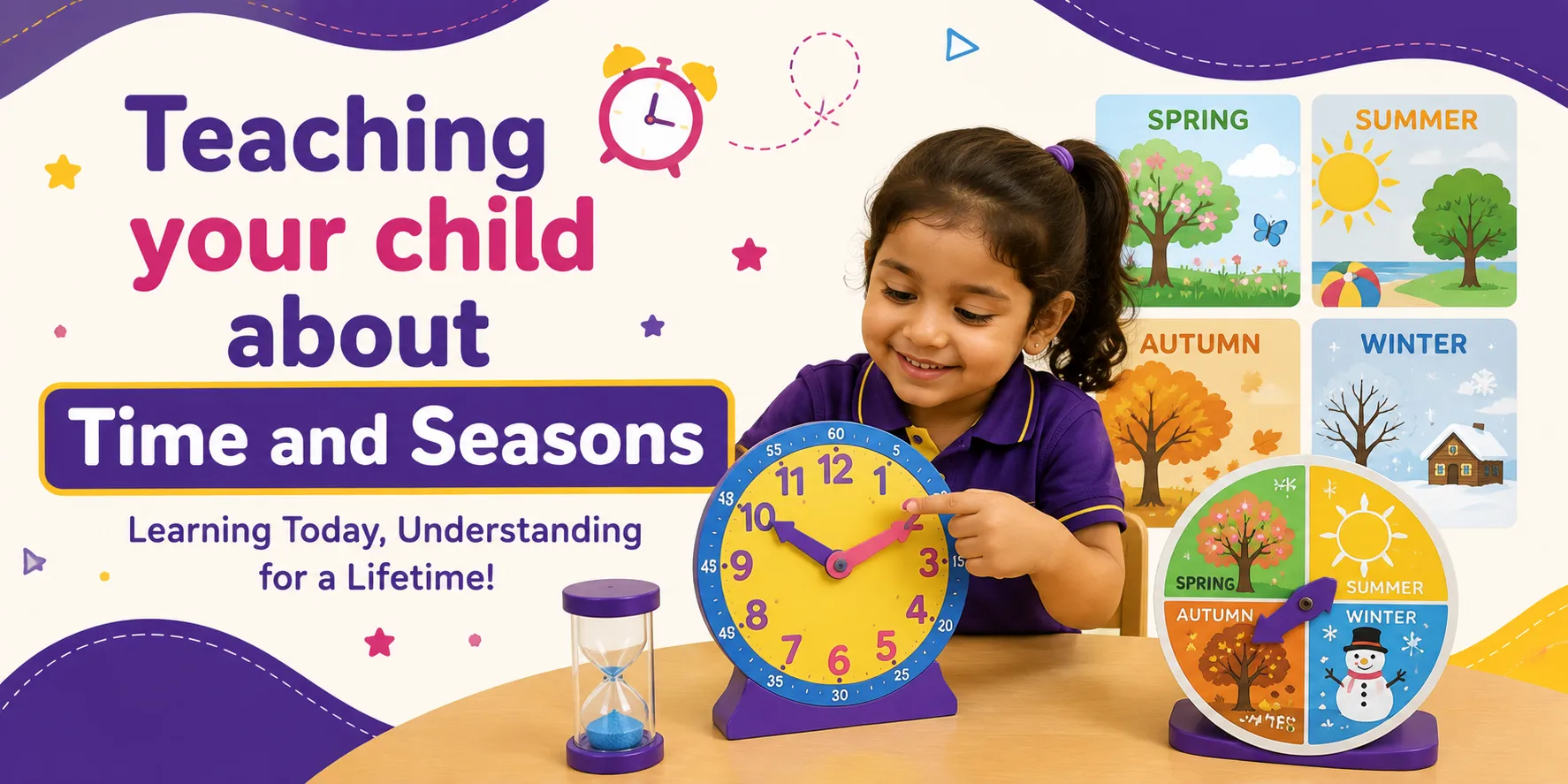
Learn how to teach your child about time and seasons with simple daily routines, hands-on activities, and real-life examples parents can start today.




Key Takeaways
|
• Start simple: teach time through daily routines (morning/afternoon/evening) and seasons through visible weather and nature changes. • Kids learn time and seasons best through hands-on activities — calendars, nature walks, and seasonal crafts — not just explanations. • Real-life examples ("On Mondays we go to school") and field trips (farms, orchards, parks) make abstract concepts concrete for children. • A consistent seasonal routine helps children internalise the passage of time naturally, without formal lessons. • Educational apps and videos can reinforce the concept, but should supplement — not replace — real-world observation. |
As parents, we are responsible for teaching our children about the world around them. One important aspect of this is teaching them about time and seasons. Understanding time and seasons not only helps children develop a sense of order and routine, but it also helps them to connect with their environment and the changes that occur throughout the year. In this blog, we'll discuss some tips on how to teach your child about time and seasons.
1. Start with the basics: Teaching Time to Toddlers and Preschoolers
Before diving into more complex concepts, it is important to start with the basics. For younger children, this can mean introducing them to the concept of time through daily routines. Talk to your child about what happens in the morning, afternoon, and evening and show them how time is divided into hours and minutes. You can also use a visual aid, such as a clock or a timer, to help them understand the passing of time.
Similarly, for seasons, you can start by pointing out the changes in weather and nature that occur throughout the year. For example, in summer, you can talk about how the days are longer, and it is warmer outside, while in winter, the days are shorter and colder. Encourage your child to observe and ask questions about these changes.
2. Use interactive activities: Fun Seasons Activities for Kids
Children learn best through hands-on activities and play. Incorporate fun and interactive activities into your lessons about time and seasons. For instance, you can create a calendar with your child and mark important dates such as birthdays, holidays, and special events. This will not only help them learn about days and months but also give them a sense of anticipation for upcoming events.
For teaching about seasons, you can do nature walks with your child to observe the changes in trees, plants, and animals throughout the year. You can also do arts and crafts projects that reflect each season. For example, in summer you can make a sun collage using yellow and orange paper, while in winter, you can create a snowman using cotton balls.
3. Use real-life examples
Children learn best when they can relate to what they are being taught. When teaching about time and seasons, use real-life examples that your child can see and experience. For instance, if you are teaching about the days of the week, incorporate daily activities such as "On Mondays, we go to school" or "On Saturdays, we have a family movie night." This will help your child understand the practical application of the concept.
Similarly, when teaching about seasons, take your child on a field trip to a local farm or orchard to see how different crops grow during different seasons. You can also take them to the park to observe how the leaves change colors in the fall. These first-hand experiences will make learning about time and seasons more meaningful for your child.
4. Use technology
In today's digital age, children are exposed to technology from a young age. While it is important to limit screen time, incorporating educational apps and games can be an effective way to teach your child about time and seasons. There are numerous apps available that use interactive games and visuals to teach concepts such as days of the week, months of the year, and seasons.
You can also use technology to watch educational videos or documentaries about time and seasons with your child. This will not only make learning fun but also provide visual aids to help them understand the concepts better.
5. Create a seasonal routine
Children thrive on routine and structure. By creating a seasonal routine, you can help your child understand and adapt to the changes that occur throughout the year. For example, in summer, you can establish a morning routine that includes getting up earlier to enjoy outdoor activities before it gets too hot. In winter, you can establish an evening routine that involves cozy indoor activities like reading books and drinking hot cocoa.
Having a seasonal routine will also help your child understand the concept of time. They will start to associate certain activities and events with specific seasons, making it easier for them to grasp the passing of time.
6. Encourage questions and exploration
Children are naturally curious, and it is important to encourage their curiosity when teaching them about time and seasons. Encourage them to ask questions and explore their surroundings. If they ask a question that you don't know the answer to, use it as an opportunity to learn together. This will not only strengthen your bond but also foster a love for learning in your child.
Additionally, let your child explore their environment and observe the changes that occur throughout the year. Encourage them to document these changes through drawings, photographs, or a nature journal. This will help them develop a deeper understanding and appreciation for time and seasons.
Conclusion
In conclusion, teaching your child about time and seasons is an important part of their education and development. By starting with the basics, using interactive activities, real-life examples, technology, creating a seasonal routine, and encouraging questions and exploration, you can make learning about time and seasons fun and meaningful for your child. Remember, every child learns at their own pace, so be patient and make sure to make learning a positive experience for them.

FAQs
At what age should I start teaching my child about time and seasons?
What is the easiest way to teach a child about seasons?
What activities help kids learn about time and seasons?
How can I teach my child to read a clock?
How much screen time is okay when using apps to teach time and seasons?
Why is teaching time and seasons important for early childhood development?
At what age should I start teaching my child about time and seasons?
What activities help kids learn about time and seasons?
How much screen time is okay when using apps to teach time and seasons?
What is the easiest way to teach a child about seasons?
How can I teach my child to read a clock?
Why is teaching time and seasons important for early childhood development?