
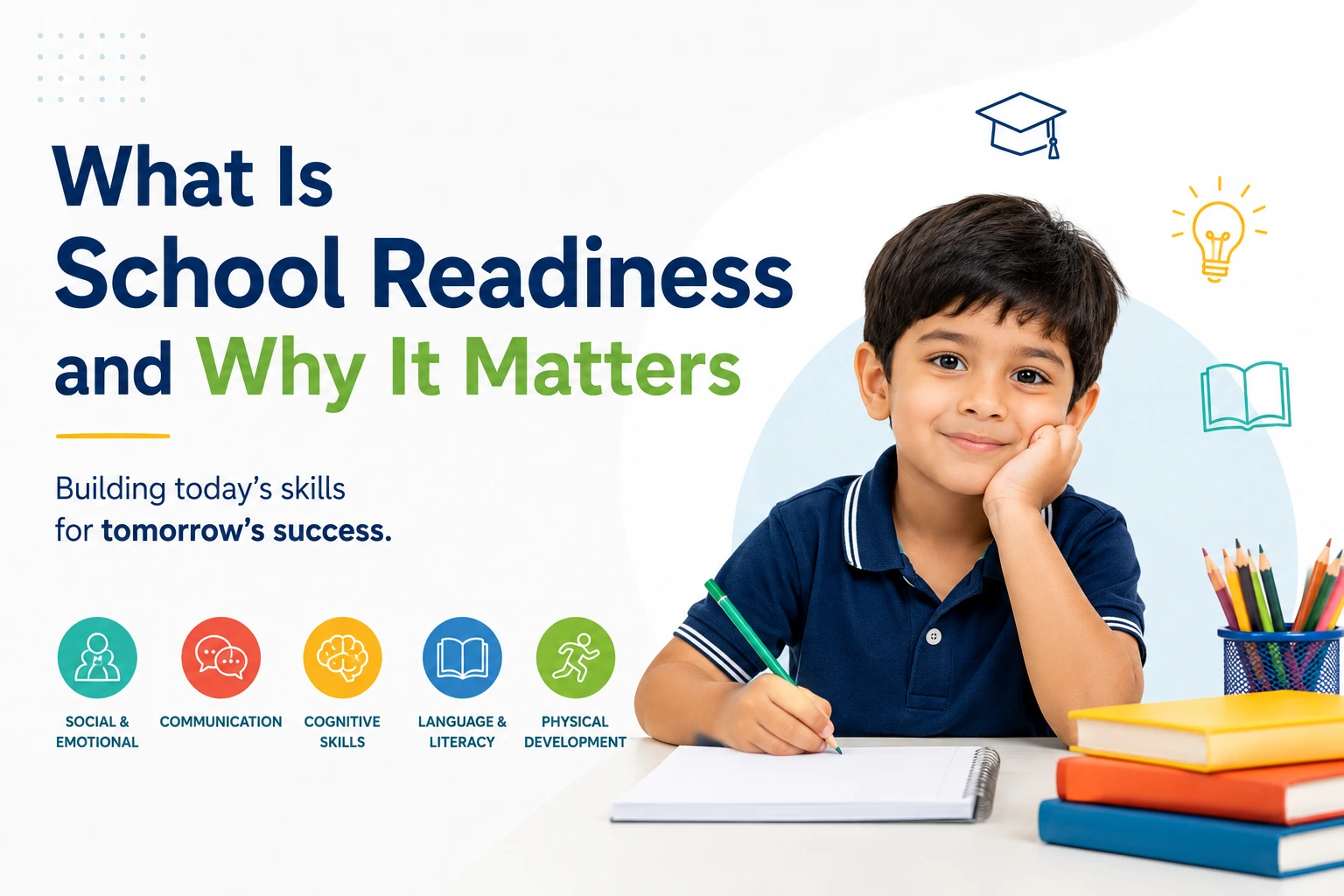
What Is School Readiness and Why It Matters for Your Child’s Early Development
Discover what school readiness means, why it matters, and how parents can help children build confidence, social skills, and learning habits before school.




As a parent or caregiver, one of the most crucial decisions you will make for your child is choosing the right preschool. Preschool is a significant milestone in a child's life and the foundation upon which their academic journey begins. However, the question that often arises is, "Is my child ready for preschool?" The answer lies in understanding school readiness and its importance for preschool children.
What is School Readiness?
School readiness refers to a child's level of preparedness to enter and succeed in formal education settings. It encompasses a range of skills, abilities, and behaviors that enable children to engage actively in learning experiences. It is not just about being academically prepared; it also involves social, emotional, and physical readiness.
School readiness is an ongoing process that starts at birth and continues to develop throughout a child's early years. It is influenced by various factors such as the child's environment, family dynamics, and opportunities for learning and growth.
Why does school readiness matter?
The early years of a child's life are crucial for their overall development. It is during this time that children's brains are rapidly developing, making it the optimal time to lay the foundation for future learning.
School readiness matters because it sets children up for success in their academic journey. Children who start school with a strong foundation are more likely to have positive learning experiences, build confidence, and have better academic outcomes.
Furthermore, research has shown that school readiness has a lasting impact on a child's future success. Children who are well-prepared for school are more likely to graduate high school, attend college, and have better job prospects.
So, what skills and behaviours contribute to school readiness?
1. Language and Communication Skills:
Language and communication skills are crucial for school readiness as they form the basis of all learning. Children should be able to understand and use language effectively to communicate their thoughts, needs, and feelings. They should also have a good vocabulary and be able to follow simple instructions.
2. Social and Emotional Skills:
Preschool is a place where children learn to interact with others, make friends, and regulate their emotions. Therefore, it is essential for children to have basic social and emotional skills such as sharing, taking turns, and managing their emotions.
3. Cognitive Skills:
Cognitive skills include memory, attention span, problem-solving, and critical thinking. These skills allow children to process information, make sense of their experiences, and learn new concepts.
4. Fine and Gross Motor Skills:
Both fine and gross motor skills are crucial for school readiness. Fine motor skills involve small muscle movements such as holding a pencil or using scissors, while gross motor skills involve larger muscle movements like running or jumping. These skills enable children to participate in classroom activities and develop handwriting skills.
5. Independence and Self-Help Skills:
Preschool requires children to be more independent and self-sufficient than they were before. Children should be able to dress themselves, use the bathroom independently, and follow basic rules and routines.
How can parents/caregivers promote school readiness?
The good news is that parents/caregivers play a vital role in promoting school readiness in their children. Here are some ways you can help your child prepare for preschool:
1. Engage in Conversation:
Talking to your child regularly helps develop their language skills. Use descriptive words, ask open-ended questions, and encourage them to express their thoughts and feelings.
2. Encourage Play:
Play is an essential aspect of learning for young children. Encourage your child to engage in imaginative play, puzzles, building blocks, or other hands-on activities that promote creativity and problem-solving.
3. Read Together:
Reading with your child is one of the best ways to promote school readiness. It helps develop language skills, builds vocabulary, and enhances memory and attention span.
4. Teach Independence:
As mentioned earlier, independence and self-help skills are crucial for school readiness. Allow your child to do age-appropriate tasks independently, such as dressing themselves, cleaning up toys, or helping with simple chores.
5. Positive Discipline:
Children who have a good understanding of rules and boundaries are better equipped to succeed in preschool. Use positive discipline techniques such as positive reinforcement, setting clear expectations, and being consistent.
In conclusion, school readiness is a vital aspect of a child's early development that should not be overlooked. It involves a range of skills and behaviours that enable children to thrive in a formal learning environment. As parents/caregivers, it is our responsibility to support our children's school readiness by providing them with opportunities for learning and growth, nurturing their development, and preparing them for this new journey. With the right foundation, our little ones can embark on their academic journey with confidence and set themselves up for future success.
Frequently Asked Questions
1. What does school readiness actually mean?
School readiness is not just about knowing numbers or the alphabet. It means a child is emotionally, socially, physically, and mentally prepared to adapt to a school environment. A school-ready child is able to communicate, follow simple instructions, interact with others, and participate confidently in classroom activities.
2. Why is school readiness important for children?
School readiness helps children transition into formal learning with confidence. When children are prepared for school, they tend to adjust more easily, build positive relationships, develop independence, and feel more comfortable learning new things. It also creates a strong foundation for future academic and emotional growth.
3. What skills are included in school readiness?
School readiness includes several important developmental skills such as:
-
Communication and language skills
-
Social and emotional development
-
Listening and attention skills
-
Basic motor skills and coordination
-
Early literacy and numeracy understanding
-
Ability to follow routines and instructions
These skills together help children feel more secure and confident in a classroom setting.
4. At what age should parents start preparing children for school?
School readiness begins much earlier than admission age. Everyday experiences during the preschool years help children gradually build confidence, curiosity, communication, and independence. Simple activities at home like reading, conversations, play, and routines can make a big difference.
5. How can parents improve school readiness at home?
Parents can support school readiness through small daily habits. Reading together, encouraging conversations, allowing independent tasks, maintaining routines, and giving children opportunities to play and interact with others all help develop essential readiness skills naturally.
6. Is school readiness only about academics?
No, academics are only one small part of school readiness. Emotional confidence, social interaction, self-control, communication, and independence are equally important. Children who feel emotionally secure and socially comfortable often adapt to school more successfully.
7. How do I know if my child is ready for school?
Every child develops at their own pace, but some common signs include showing curiosity, communicating basic needs clearly, following simple instructions, participating in group activities, and managing short periods away from parents comfortably.
8. What happens if a child is not fully school-ready?
It is completely normal for children to develop readiness skills gradually. With encouragement, supportive teaching, and positive experiences, children continue learning and adjusting over time. The focus should be on steady development rather than perfection before starting school.
9. How do preschools help with school readiness?
Good preschools focus on building confidence, communication, social interaction, creativity, and independence through structured play and guided learning activities. These experiences help children become comfortable with routines, teamwork, and classroom participation before formal schooling begins.
10. Can play help with school readiness?
Yes, play is one of the most effective ways children learn. Through play, children develop communication skills, problem-solving abilities, creativity, emotional regulation, and social confidence — all of which are essential for school readiness and long-term learning success.