

Everyday Learning for Kids: 8 Ways to Learn Through Daily Activities
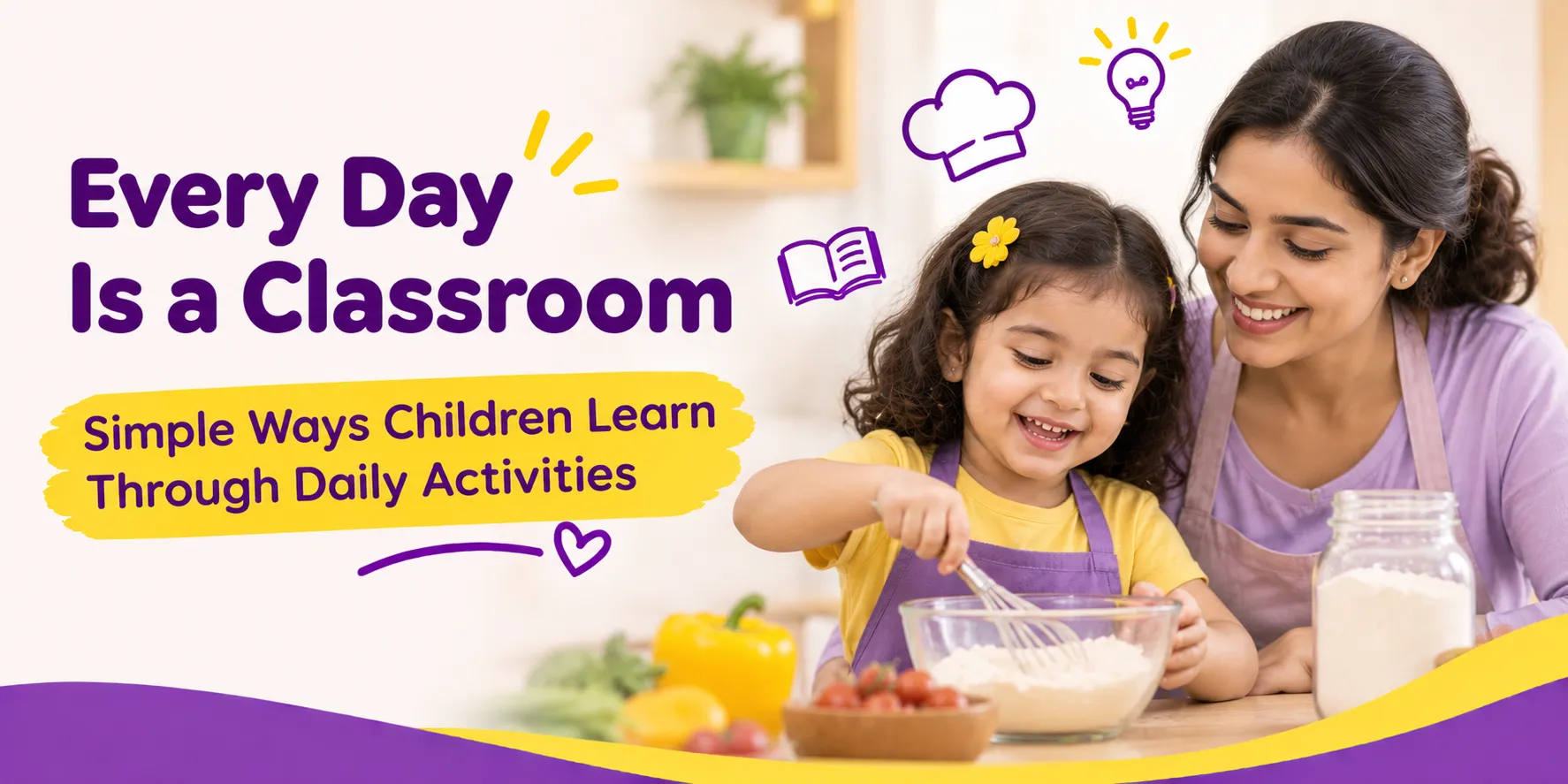
Everyday Learning for Kids: 8 Ways to Learn Through Daily Activities




Many parents believe that learning only happens with books, worksheets, or structured lessons. In reality, some of the most meaningful learning takes place during everyday routines. From cooking breakfast to watering plants or folding laundry, daily activities are full of opportunities to teach valuable life skills and concepts.
Teaching children at home doesn't require expensive materials or hours of preparation. By making the most of ordinary moments, parents can help children develop curiosity, confidence, and a lifelong love for learning.
Here's how everyday experiences can become powerful learning opportunities.
1. Turn Mealtime into a Learning Experience
Simple kitchen maths activities for preschoolers can help learning through daily activities. While preparing meals, children can help count vegetables, identify colours, compare sizes, or sort fruits and vegetables. Older preschoolers can even practice measuring ingredients using cups and spoons.
These simple activities naturally introduce early math, science, language, and problem-solving skills.
You can also invite your child to describe the smell, taste or texture of different foods. This introduces new words and encourages them to observe and compare.
2. Build Language Skills Through Conversations
Every conversation is an opportunity to expand your child's vocabulary.
Give your child time to think and answer. Instead of correcting every response, build on what they say by asking another question or sharing what you notice.
Whether you're driving to school, shopping for groceries, or taking a walk, ask open-ended questions such as:
- What do you notice?
- Why do you think that happened?
- What do you think will happen next?
These discussions strengthen communication, critical thinking, and storytelling abilities while encouraging children to express their ideas confidently.
3. Teach Maths During Daily Routines
Keep the numbers small and suited to your child's age. For younger preschoolers, counting a few objects is a good starting point; older children can compare quantities and spot simple patterns.
Math is everywhere! Encourage children to:
- Count steps while climbing stairs.
- Match socks while folding laundry.
- Sort toys by colour or size.
- Compare which container is bigger or smaller.
- Count plates while setting the table.
These hands-on experiences make numbers meaningful and fun.
4. Explore Science Through Nature
Nature provides endless opportunities for everyday learning for children. During a walk or while playing outside, encourage children to observe birds, insects, flowers, leaves, clouds, or changing weather.
Ask simple questions like:
- Which leaf is bigger?
- Why do flowers need water?
- What sounds do you hear?
These observations help develop curiosity, observation skills, and an understanding of the world around them.
Let children explore with supervision and encourage them to observe plants and insects without picking, touching or disturbing anything they are unsure about.
5. Encourage Responsibility Through Household Tasks
Daily chores are excellent practical learning ideas. Children can:
- Water plants.
- Arrange books.
- Put away toys.
- Wipe the table.
- Feed a pet.
These activities teach responsibility, independence, sequencing, and motor skills while helping children feel like valued members of the family.
Start with one small task at a time. A younger child might put toys into a basket, while an older preschooler may help sort laundry by colour. The goal is participation, not getting the task done perfectly.
6. Make Shopping a Learning Adventure
A trip to the grocery store can become an exciting lesson. Ask your child to:
- Find fruits of a certain colour.
- Count how many apples are in the basket.
- Identify letters on food labels.
- Compare prices or package sizes (for older preschoolers).
Shopping strengthens observation, early literacy, numeracy, and decision-making skills.
Younger children can identify colours, shapes and familiar items. Older preschoolers can count a few items, compare package sizes or notice numbers on price labels with an adult's help.
7. Read Everywhere, Not Just at Bedtime
Reading doesn't have to be limited to storybooks. Encourage children to notice:
- Street signs.
- Shop names.
- Food labels.
- Calendars.
- Menus.
- Simple instructions.
This helps children understand that reading is useful in everyday life and builds early literacy naturally.
You don't need to ask children to read words independently. Pointing out familiar letters, recognising their name or talking about pictures and signs are all valuable early literacy experiences.
8. Learn Through Play
Children learn best while having fun. Building blocks, pretend play, puzzles, drawing, and simple board games all develop creativity, language, social skills, and problem-solving.
Play allows children to explore ideas freely while strengthening multiple areas of development at the same time.
How Do Everyday Activities Help Children Learn?
Everyday activities help preschoolers learn by giving them opportunities to practise skills in familiar, real-life situations. Cooking can introduce counting and measurement, conversations can build vocabulary, household tasks can encourage independence, and outdoor exploration can develop observation and curiosity. These experiences help children connect what they learn with the world around them.
One of the easiest ways to support learning through daily routine is by involving children in everyday tasks instead of doing everything for them. Simple routines such as getting dressed, packing a school bag, brushing teeth, or arranging shoes teach sequencing, independence, and responsibility.
The key is to encourage participation rather than perfection. Every small task helps children build confidence and life skills.
Keep activities age-appropriate. Younger children may enjoy naming colours, matching objects and counting a few items. Older preschoolers may be ready to compare quantities, follow simple steps or explain what they notice. Every child develops at their own pace, so keep activities flexible and enjoyable.
Tips for Parents
- Follow your child's interests and curiosity.
- Ask open-ended questions instead of giving all the answers.
- Allow children time to explore and experiment.
- Celebrate effort rather than perfect results.
- Keep learning fun, relaxed, and pressure-free.
Remember, meaningful learning often happens through conversations, experiences, and exploration not just formal lessons.
Children don't need a classroom to learn something new every day. With a little creativity, ordinary routines can become extraordinary learning experiences. Whether you're cooking, shopping, gardening, or tidying up, every moment offers a chance to build knowledge, confidence, and independence.
Try giving your child a small role in one familiar routine. They could choose between two outfits, put their shoes in the right place, help arrange their school bag or place napkins on the table. Talk through the steps as you go: “First, let’s put the books in. What should go in next?” These small moments help children practise sequencing, decision-making and independence.
The beauty of teaching children at home lies in making learning a natural part of everyday life. When children learn through real experiences, they develop skills that stay with them long after the lesson is over. Small daily moments truly have the power to create lifelong learners.
Everyday experiences play an important role in a child's early learning journey. At Kidzee, children are encouraged to explore, interact and develop foundational skills through age-appropriate, play-based experiences. Discover how the Kidzee Playgroup programme supports children's early development.