

Power of Storytelling in Early Childhood Development | Kidzee
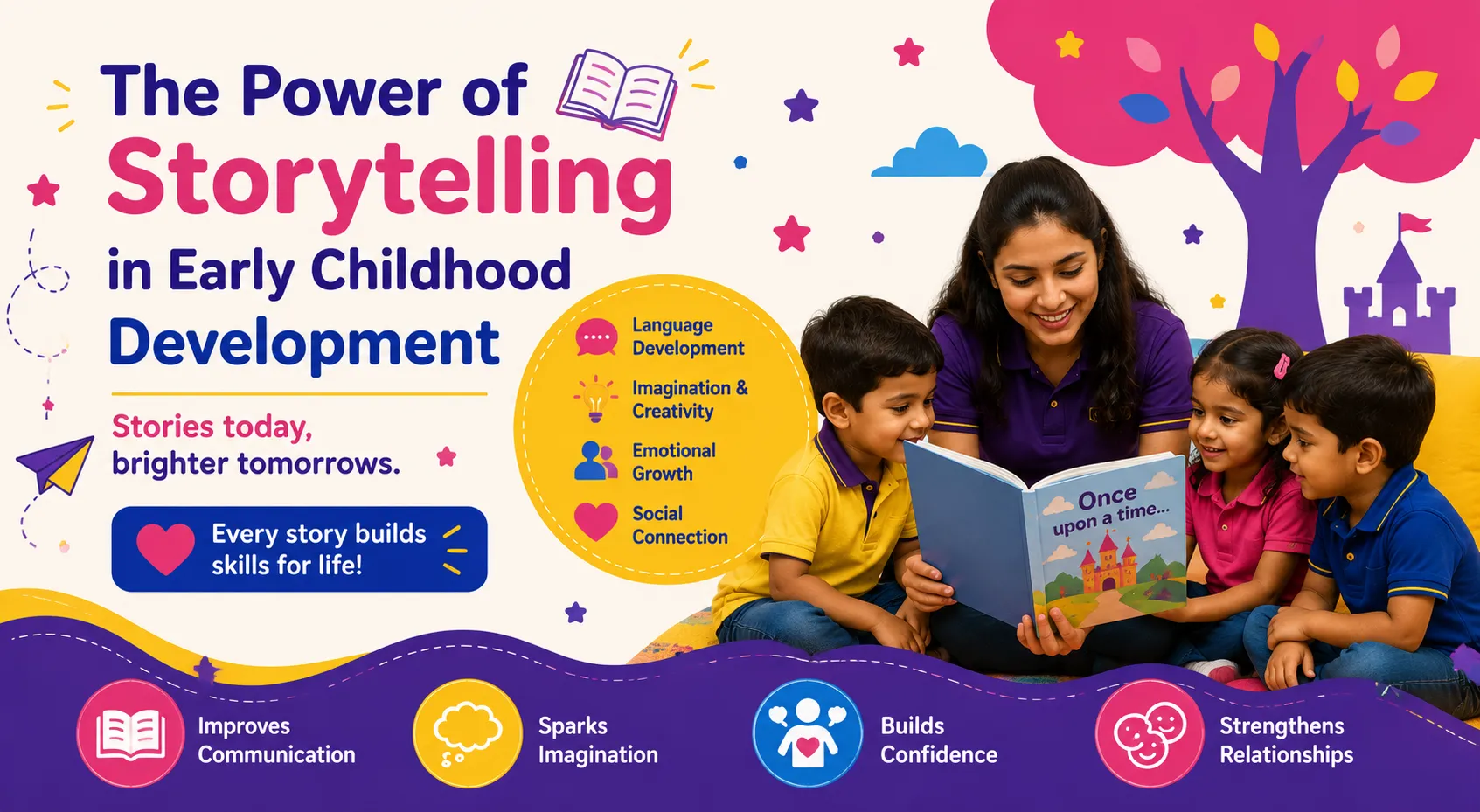
Discover how storytelling boosts language, cognitive, emotional, and social development in young children, plus simple ways to start today.




Key Takeaways
|
• Storytelling builds vocabulary, sentence structure, and pre-reading skills by exposing children to language beyond everyday conversation. • Listening to stories strengthens imagination, critical thinking, problem-solving, and understanding of cause and effect. • Relatable characters help children identify, express, and manage emotions — building empathy and compassion. • Shared stories deepen the parent-child bond and, in group settings, build communication and social skills. • Simple daily habits — reading aloud, made-up stories, audiobooks, and props — are enough to bring these benefits into everyday life. |
Storytelling has been a part of human culture since the beginning of time. From oral traditions to written literature, stories have played an integral role in shaping our understanding of the world. But did you know that storytelling also plays a crucial role in the early development of children?
In the early years of a child's life, their brains are rapidly developing and forming connections that will shape their future learning and behaviour. As parents, caregivers, and educators, we have a responsibility to provide children with stimulating experiences that promote healthy brain development. And storytelling is one of the most powerful tools we have in our arsenal.
So how does storytelling impact early childhood development?
Let's explore some of the ways in which storytelling can shape a child's growth and learning.
1. How Storytelling Builds Vocabulary in Toddlers
One of the most significant benefits of storytelling is its impact on language development. Children are like sponges, absorbing everything they hear and see around them. When they are exposed to stories, they are not only learning new vocabulary and sentence structures, but they are also developing an understanding of how language works.
Through storytelling, children are exposed to a wide range of words and phrases that they may not encounter in everyday conversation. This exposure to varied language helps expand their vocabulary and improves their ability to express themselves effectively. It also helps them understand the structure and rhythm of language, making it easier for them to learn to read and write later on.
2. Cognitive Development
Storytelling also plays a crucial role in cognitive development. Listening to stories requires children to use their imaginations, think critically, and make connections between events and characters. This process helps develop their problem-solving skills as well as their ability to understand cause and effect.
As children listen to stories, they are also learning about different cultures, traditions, and ways of life. This exposure to diversity helps them develop empathy and understanding towards others, an essential skill for healthy social and emotional development.
3. Emotional Development
Emotional development is another critical aspect of early childhood development that can be positively impacted by storytelling. Stories often revolve around relatable characters and their struggles, allowing children to see themselves in the story and empathize with the characters' emotions.
Through stories, children learn to identify and manage their own emotions as well as understand the emotions of others. They also learn valuable lessons about empathy, kindness, and compassion, which are essential for healthy emotional development.
4. Imagination and Creativity
Children have a natural curiosity and imagination that is further nurtured through storytelling. As they listen to stories, they are transported to different places, times, and realities, allowing them to explore the limits of their imagination.
Through storytelling, children also learn to be creative and think outside the box. They can come up with their own interpretations of stories and even create their own stories, allowing them to express themselves in a unique and creative way.
5. Parent-Child Bonding Through Storytelling
Apart from its developmental benefits, storytelling also plays a crucial role in building bonds and connections between children and adults. When a caregiver or parent tells a child a story, it creates a shared experience that strengthens the relationship between them.
Moreover, when children listen to stories together in a group setting, it fosters a sense of community and belonging. It also helps build communication skills as they listen to each other's ideas, opinions, and interpretations of the story.
How can we incorporate storytelling in early childhood development?
Now that we understand the importance of storytelling in early childhood development let's look at some practical ways we can incorporate it into our daily lives.
1. Read Aloud
Reading aloud to children is one of the most effective ways to introduce them to stories. Choose books with engaging illustrations and simple language that children can follow along with. As you read, encourage them to ask questions and make connections to the story.
2. Make Up and Share Stories
Encourage children to use their imaginations and create their own stories. This can be done through puppet shows, role-playing, or even drawing. Let them share their stories with you and others, promoting confidence and self-expression.
3. Listen to Audiobooks
Audiobooks are a great way to introduce children to longer stories that they may not have the attention span for when reading. It also allows them to listen to stories independently, promoting self-soothing and relaxation.
4. Use Props and Visual Aids
Props and visual aids can make storytelling even more engaging for young children. Use puppets, toys, or even real-life objects to bring the story to life and make it more interactive.
Conclusion
In conclusion, storytelling is a powerful tool in early childhood development that should not be overlooked. It has significant benefits for language, cognitive, emotional, and social development. So, let's embrace the power of storytelling and use it to help shape the minds and hearts of our little ones.

FAQs
Why is storytelling important in early childhood development?
At what age should I start reading stories to my child?
How does storytelling help language development in toddlers?
What are some fun storytelling activities for preschoolers?
How often should I read to my child?
What's the difference between reading aloud and storytelling?
Why is storytelling important in early childhood development?
How does storytelling help language development in toddlers?
How often should I read to my child?
At what age should I start reading stories to my child?
What are some fun storytelling activities for preschoolers?
What's the difference between reading aloud and storytelling?