

Why Is Play-Based Learning Important? Benefits, Examples & Expert Insights
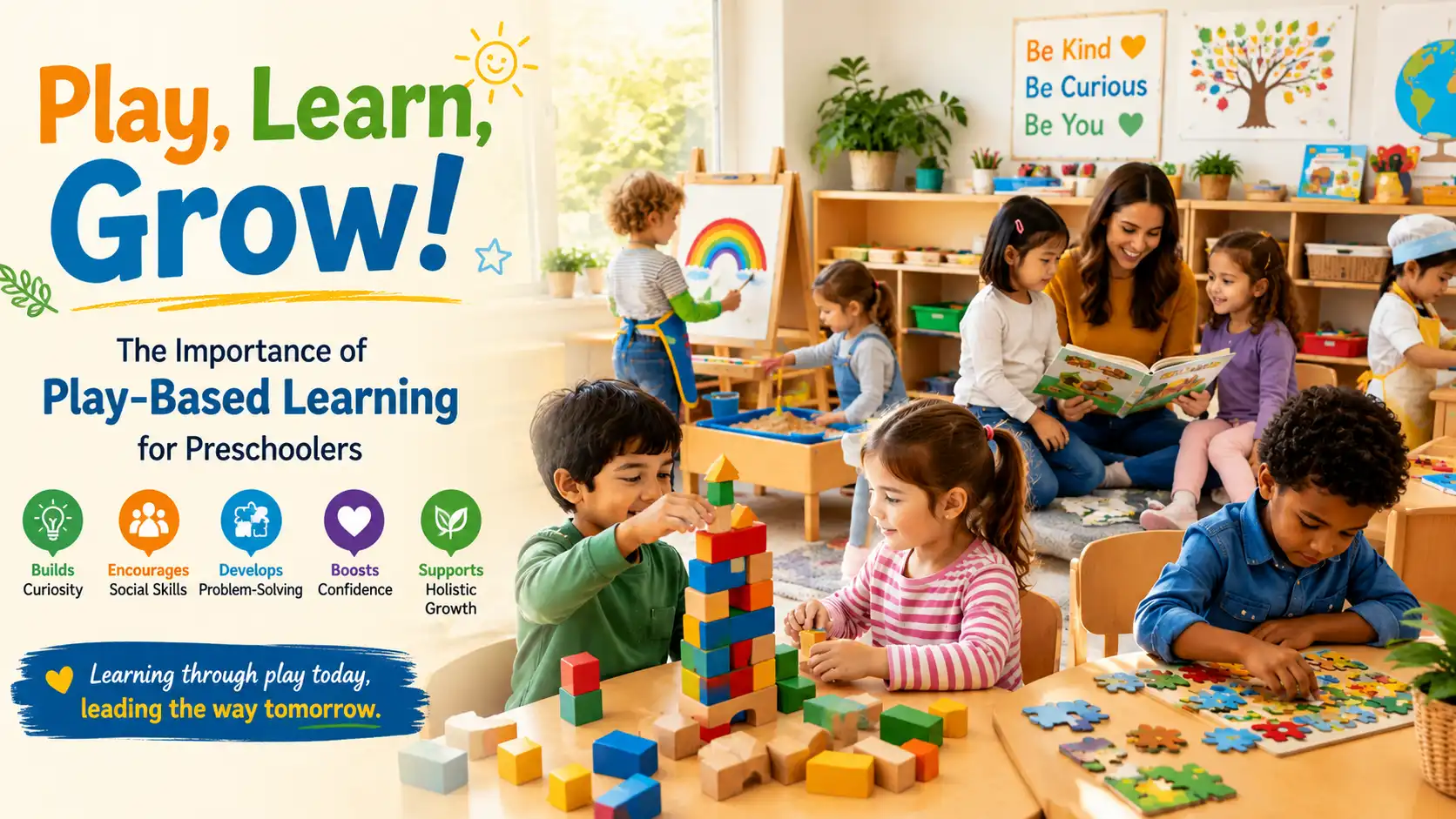
Discover why play-based learning is essential for preschoolers. Explore the benefits of play learning, real examples of learning through play, and how this preschool learning method supports lifelong development.




As parents and educators, we are constantly seeking ways to provide the best learning experience for our preschool children. We invest in the latest educational toys, books, and programs, but have we ever stopped to consider the importance of play-based learning?
In this blog, we will be exploring why play-based learning matters for preschool children and how it can enhance their overall development.
First and foremost, what exactly is play-based learning?
Play-based learning is an educational approach that focuses on learning through play. It involves hands-on activities, interactive games, and imaginative play that are designed to stimulate a child's curiosity, creativity, and problem-solving skills. This approach is commonly used in preschool settings because it aligns with young kid's natural inclination to explore and discover.
One of the primary reasons why play-based learning matters for preschool children is that it promotes holistic development. Unlike traditional teaching methods that focus on academic subjects, play-based learning addresses all aspects of a child's development – physical, social, emotional, and cognitive. As children engage in various play activities, they are simultaneously developing their motor skills, social skills, emotional regulation, and critical thinking abilities. This well-rounded approach allows children to grow and thrive in all aspects of their lives.
Moreover, play-based learning provides a safe and nurturing environment for preschool children to learn and grow. Children feel more comfortable and at ease when they are engaged in activities they enjoy. When they are relaxed and having fun, they are more likely to take risks and try new things without fear of failure. This type of environment also promotes a sense of belonging and encourages children to collaborate with their peers. By working together on a shared task or project, children learn valuable lessons in teamwork, communication, and problem-solving.
Another crucial aspect of play-based learning is that it fosters creativity and imagination. As children engage in imaginative play, they are free to express themselves without any restrictions. They can be whoever they want to be, go on adventures, and explore new worlds. This type of play encourages children to think outside the box, come up with unique solutions, and use their imagination to its full potential. These skills are not only essential for academic success but also for future endeavours and careers.
Furthermore, play-based learning allows children to develop self-regulation skills. As they engage in play activities, children are exposed to different emotions and situations. They learn to manage their feelings, understand the consequences of their actions, and make responsible decisions. Through play, children also develop empathy and learn to consider the feelings of others. These skills are crucial for building healthy relationships and social interactions.
Moreover, play-based learning can help children develop a positive attitude towards learning. When children are having fun while learning, they are more likely to be engaged and motivated to explore further. This approach instills a love for learning that can last a lifetime. As children grow older, they will associate learning with positive experiences and continue to seek out new knowledge and skills.
Play-based learning also promotes independence in children. As they engage in self-directed play, they learn to make choices, solve problems, and take responsibility for their actions. This sense of autonomy is crucial for building confidence and self-esteem in young children. When they feel capable and capable of making their own decisions, they are more likely to take on new challenges with enthusiasm.
Finally, play-based learning allows children to learn at their own pace. In a traditional classroom setting, the focus is on teaching a particular skill or concept within a set timeframe. However, every child is unique and learns at their own pace. In a play-based learning approach, children have the freedom to explore topics that interest them and learn at their own speed. This individualised approach ensures that no child is left behind or forced to move ahead before they are ready.
In conclusion,
play-based learning is essential for preschool children as it promotes holistic development, fosters creativity and imagination, develops self-regulation skills, instills a love for learning, encourages independence, and allows children to learn at their own pace.
Through play, children are able to explore their environment, develop important social and emotional skills, and enhance their cognitive abilities. It also fosters problem-solving skills, and a love for learning that will benefit them throughout their lives. As we continue to recognise the value of play in early childhood education, it is important for parents and educators to provide ample opportunities for children to engage in play-based learning. By doing so, we can ensure that our preschoolers grow into well-rounded individuals who are equipped with the necessary skills to navigate the world around them. Let us embrace play as an essential aspect of learning and give our children the best possible start in life.
FAQs: Play-Based Learning
1. What is play-based learning?
Play-based learning is an educational approach where children develop essential skills through enjoyable, hands-on activities. Instead of relying only on direct instruction, children learn by exploring, experimenting, creating, and interacting with others. This method supports cognitive, social, emotional, language, and physical development.
2. Why is play-based learning important for preschoolers?
Play-based learning is important because it matches the way young children naturally learn. It encourages curiosity, creativity, problem-solving, communication, and independence while building confidence and a lifelong love for learning. Research also shows that learning through play supports healthy brain development during the early years.
3. What are the benefits of play learning?
The benefits of play learning include:
-
Improved language and communication skills
-
Better problem-solving and critical thinking abilities
-
Enhanced creativity and imagination
-
Stronger social and emotional development
-
Improved motor skills and physical coordination
-
Greater confidence and independence
-
Increased motivation and engagement in learning
4. What are some examples of play learning?
Common examples of play learning include:
-
Building structures with blocks
-
Pretend play, such as running a shop or playing doctor
-
Arts and crafts activities
-
Outdoor games and obstacle courses
-
Sensory play with sand, water, or clay
-
Puzzles and matching games
-
Music, dance, and storytelling sessions
Each activity helps children develop different skills while making learning enjoyable.
5. How does learning through play improve child development?
Learning through play encourages children to explore new ideas, solve problems, express emotions, and interact with others. These experiences strengthen cognitive abilities, language development, social skills, emotional resilience, and physical coordination, contributing to holistic child development.
6. Is play-based learning better than traditional teaching methods?
Play-based learning and traditional teaching methods each have their place. For preschoolers, play-based learning is often more effective because it aligns with children's developmental needs and natural curiosity. A balanced approach that combines guided instruction with meaningful play provides the best learning outcomes.
7. At what age should children start play-based learning?
Children can begin play-based learning from infancy. As they grow into toddlerhood and preschool, activities become more structured to support age-appropriate milestones in language, motor skills, creativity, and social development.
8. How can parents encourage play-based learning at home?
Parents can support play-based learning by:
-
Providing open-ended toys like blocks and puzzles
-
Reading stories together
-
Encouraging imaginative play
-
Involving children in simple cooking or gardening activities
-
Offering arts and crafts materials
-
Spending time outdoors exploring nature
-
Allowing free play without constant direction
These everyday activities create meaningful learning experiences.
9. What skills do children develop through play-based learning?
Play-based learning helps children develop:
-
Critical thinking and problem-solving
-
Communication and language skills
-
Creativity and innovation
-
Collaboration and teamwork
-
Emotional intelligence
-
Self-regulation
-
Fine and gross motor skills
-
Decision-making and independence
These foundational skills prepare children for future academic success and everyday life.
10. Why do early childhood educators recommend learning through play?
Early childhood educators recommend learning through play because it keeps children actively engaged while supporting holistic development. Play encourages exploration, experimentation, and discovery, helping children understand concepts naturally while building confidence and resilience.
11. Does play-based learning prepare children for school?
Yes. Play-based learning helps children develop school readiness skills such as listening, following instructions, communication, early literacy and numeracy, concentration, social interaction, and emotional regulation. These skills make the transition to formal schooling smoother and more successful.
12. Can play-based learning improve academic performance?
Yes. Studies show that children who experience quality play-based learning often develop stronger language, literacy, mathematical thinking, executive functioning, and problem-solving skills. These foundational abilities support long-term academic achievement while fostering a positive attitude toward learning.