

10 Easy Ways to Improve Your Child's Vocabulary | Language Development Tips for Parents
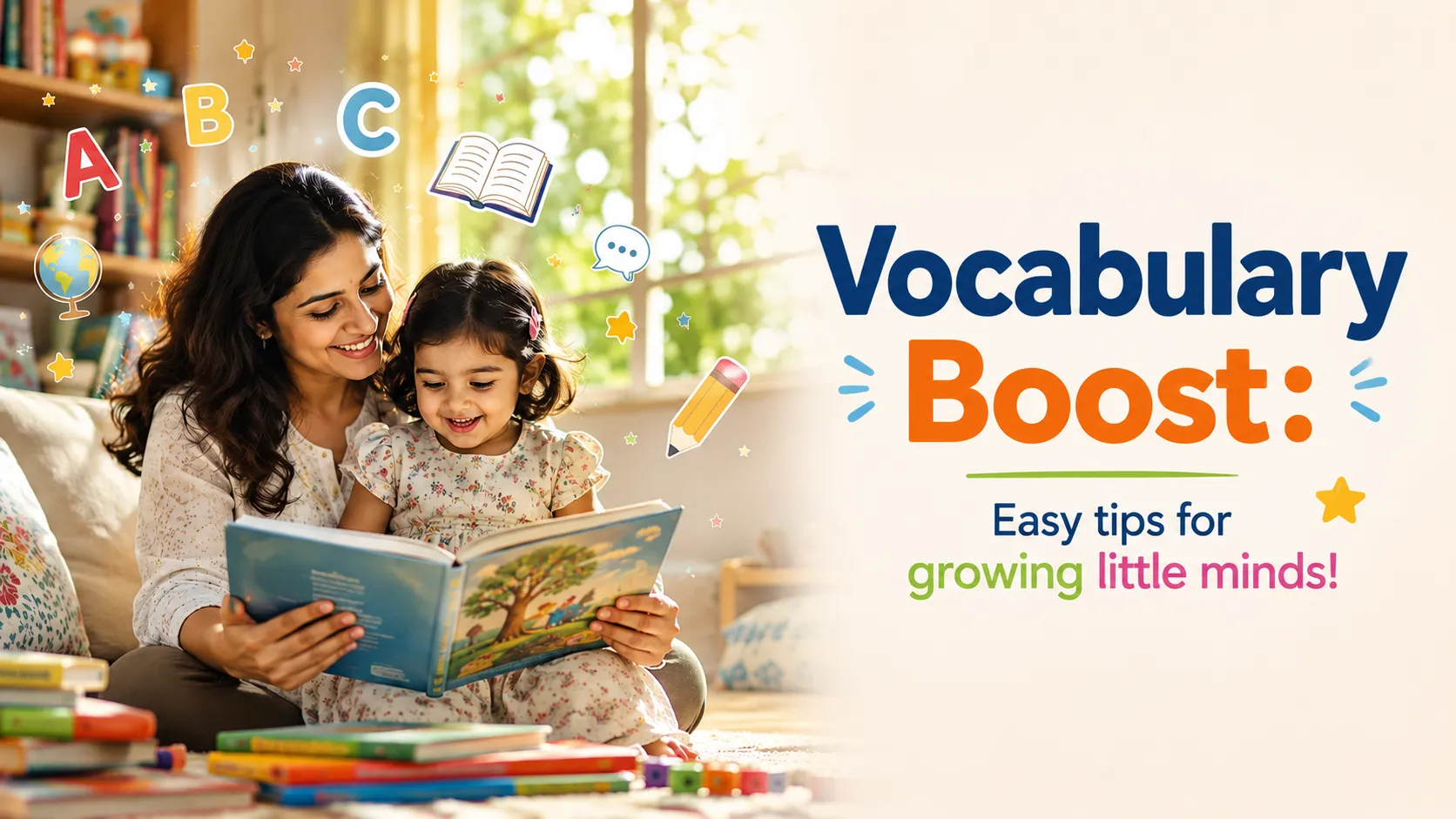
Discover 10 fun and practical ways to improve your child's vocabulary, language skills, communication, and confidence through reading, games, writing, and everyday activities.




As a parent, you want your child to excel in all aspects of their life, including their language skills. A strong vocabulary is crucial for a child's academic and social success. It not only helps them communicate effectively but also aids in their cognitive development. However, developing a rich vocabulary can be a daunting task for both children and parents. The good news is that there are simple and effective ways to boost your child's vocabulary from an early age.
A rich vocabulary supports early literacy, reading comprehension, communication skills, confidence, and overall language development. The earlier children are exposed to new words, the easier it becomes for them to express ideas, solve problems, and succeed in school.
In this blog, we will explore some of these methods that you can incorporate into your child's daily routine.
1. Read and Learn
One of the most effective ways to boost your child's vocabulary is by reading to them regularly. Reading introduces children to new words and exposes them to different sentence structures and contexts. It also helps them understand the meaning of words from the context in which they are used. Make reading a part of your daily routine, whether it's reading a bedtime story or setting aside time for reading together during the day. As your child grows older, encourage them to read independently and discuss new words they come across.
Pro Tip: Choose age-appropriate books with rich vocabulary and ask questions about the story to improve comprehension and language skills.
2. Play Word Games
Word games are not only fun but also great for developing vocabulary skills. Games like Scrabble, Boggle, and crossword puzzles require players to use their knowledge of words and their meanings to form words and solve clues. These games can be enjoyed as a family or with friends, making learning new words a fun and interactive experience for your child.
Other excellent vocabulary games include word searches, memory matching games, rhyming games, and storytelling challenges.
3. Use New Words in Conversations
A great way to reinforce new words is by using them in daily conversations with your child. Whenever you come across a new word while reading or playing word games, try to incorporate it into your conversations with your child. This will help them understand the meaning of the word in context and also remember it better.
Repeating new words naturally throughout the week helps children retain vocabulary more effectively.
4. Label Objects Around the House
Children learn best through visual aids, and labelling objects around the house can help them expand their vocabulary. Choose a few items in each room and label them with their names. This will not only introduce your child to new words but also help them associate the word with the corresponding object. You can also take it a step further and ask your child to match the object with its label to reinforce their learning.
This activity also strengthens word recognition and early reading skills.
5. Encourage Writing
Writing is an excellent way for children to practice and expand their vocabulary. Encourage your child to write short stories or letters to family and friends. This will not only improve their writing skills but also allow them to experiment with new words and expressions. You can also provide your child with a list of new words and ask them to use them in their writing.
Keeping a daily journal or vocabulary notebook can further improve language development and creative thinking.
6. Make Use of Technology
In today's digital age, there are many apps and websites that are designed specifically for building vocabulary skills in children. These interactive tools make learning new words fun and engaging for children. Some popular options include Duolingo, Vocabulary.com, and Word Joust Junior.
Parents should choose age-appropriate educational apps and balance screen time with reading and hands-on learning activities.
7. Teach Word Families
Word families are groups of words that have a similar structure or pattern. Teaching your child about word families can help them recognize patterns in language and expand their vocabulary. For example, the word family "-at" includes words like cat, hat, mat, bat, etc. You can create fun activities by asking your child to come up with as many words as they can in a particular word family.
Learning prefixes, suffixes, and root words also helps children decode unfamiliar words more easily.
8. Introduce Synonyms and Antonyms
Synonyms are words that have similar meanings, while antonyms are words with opposite meanings. Teaching your child about synonyms and antonyms can help them understand the nuances of language and enhance their vocabulary. You can play games like "word matching" or "opposites" to make learning these words more enjoyable.
This also improves reading comprehension, descriptive writing, and verbal communication skills.
9. Use Everyday Situations
Your child's daily experiences can also be used as opportunities to expand their vocabulary. For example, while grocery shopping, you can ask your child to name different types of fruits and vegetables they see or describe their colours, textures, and tastes. While taking a walk, you can point out different plants and trees and ask your child to identify them.
Cooking, travelling, visiting parks, museums, and family conversations all provide excellent opportunities for vocabulary building.
10. Be Patient and Encouraging
Lastly, it's essential to be patient and encouraging when helping your child develop their vocabulary. Learning new words takes time, and it's crucial to create a positive and nurturing environment for your child. Praise their efforts and be patient when they struggle with new words. Encourage them to ask questions and be curious about language.
Celebrating small milestones keeps children motivated and builds confidence in using new words every day.
In conclusion, building a strong vocabulary is an ongoing process that requires consistent effort from both parents and children. By incorporating these simple ways into your child's daily routine, you can help them develop a rich vocabulary that will benefit them in all aspects of their life. Remember to make learning new words fun and engaging for your child, and they will be well on their way to becoming proficient communicators.
A strong vocabulary forms the foundation for reading success, effective communication, academic achievement, and lifelong learning. By encouraging curiosity, conversation, reading, and everyday language experiences, parents can help children become confident learners and communicators. Small daily habits can make a lasting difference in your child's language development.
Frequently Asked Questions
Q. What is the fastest way to improve a child's vocabulary?
Reading daily, talking regularly, playing word games, and introducing new words in everyday conversations are among the most effective methods.
Q. At what age should vocabulary development begin?
Vocabulary development begins from infancy. Talking, singing, and reading to babies support early language development.
Q. Why is vocabulary important for children?
A strong vocabulary improves communication, reading comprehension, writing skills, confidence, and academic performance.
Q. How can parents help improve vocabulary at home?
Parents can read aloud, encourage storytelling, label household objects, play educational games, and introduce new words during everyday activities.
Q. Do educational apps help with vocabulary development?
Yes. When used in moderation alongside reading and real-life conversations, educational apps can reinforce vocabulary learning