
Top 5 Benefits of Early Childhood Education (ECE) for Preschoolers
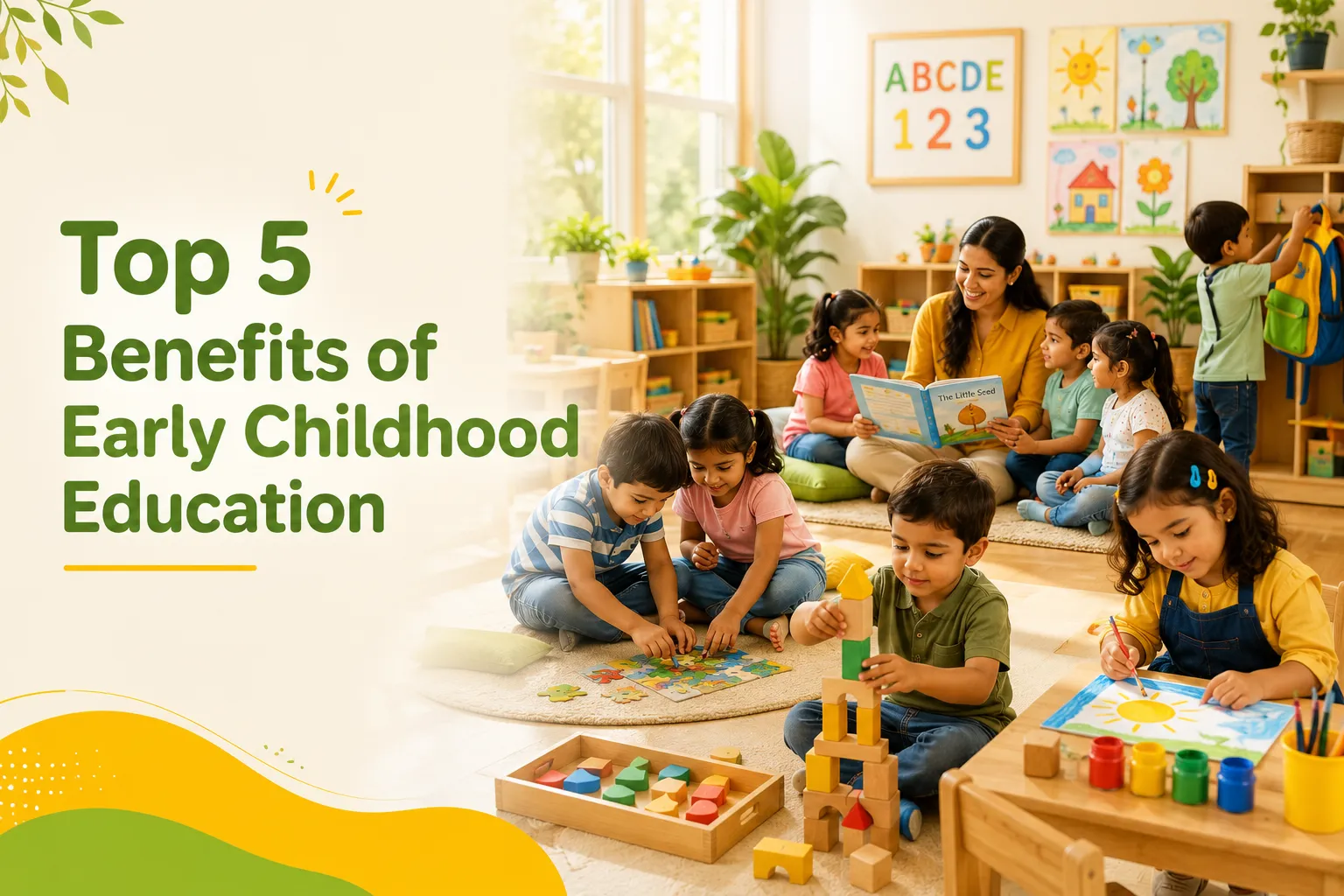
Discover the top 5 benefits of early childhood education, from building confidence and social skills to improving school readiness, emotional development, and lifelong learning.




Early Childhood Education (ECE) provides children with the strong foundation they need for lifelong learning, school readiness, emotional wellbeing, and overall development. Through play-based learning, nurturing relationships, and age-appropriate experiences, preschool helps children develop the confidence, communication, creativity, and independence needed to thrive in school and beyond.
Starting preschool is a huge milestone for young children still emotionally attached to kitchen utensils and offended by incorrectly cut sandwiches! For first-time parents, labelling belongings and packing snack boxes can feel like running a board meeting. Add in the usual family-function commentary — “Is preschool really necessary – it’s just colouring and rhymes?” or “Aren’t you sending them too early?” — and the doubts feel valid.
Many parents wonder whether preschool is necessary before formal schooling. Research consistently shows that high-quality early childhood education supports cognitive, social, emotional, language, and physical development during the years when a child's brain develops most rapidly.
Early Childhood Education (ECE) however, is not about creating tiny IIT aspirants with flashcards and packed schedules. It’s about giving children the right environment to grow emotionally, socially, physically, and intellectually during the most important developmental years of their life.
Rather than focusing solely on academics, quality preschool programmes nurture curiosity, resilience, creativity, independence, and a genuine love of learning through meaningful play and everyday experiences.
Let’s explore the top five benefits of ECE — without complicated jargon and with full understanding of what matters.
1. Develops Strong Communication and Social Skills
At home, toddlers are the centre of the universe. Their universe. Your universe. Grandparents’ universe. Preschool can come as a complete shock because suddenly:
- Other children also want the red car
- Everyone cannot speak at the same time
- Pulling the collar is apparently ‘not how you attract attention’
- Waiting for turns is now a ‘life skill’
Thus, ECE helps children develop communication, cooperation, empathy, emotional regulation, listening and attention span, among many other skills.
These early social experiences also help children build collaboration, conflict resolution, emotional awareness, confidence, and positive relationships that support future academic success.
Will your toddler immediately become calm and patient? Absolutely not. There will still be drama over sharing crayons and who got the bigger biscuit.
But slowly, they begin understanding that others also have feelings and opinions. This social exposure builds confidence and emotional intelligence in ways that simply cannot happen through family time or solo play.
Learning alongside peers teaches children valuable life skills that cannot be fully developed through adult interactions alone.
2. Builds independence (for child and parent)
One of the biggest benefits of preschool is that children learn independence through small tasks such as:
- Packing away toys
- Washing hands
- Carrying their own bag
- Feeding themselves
- Following simple instructions
These everyday responsibilities strengthen self-confidence, decision-making, problem-solving, and executive functioning skills.
At home, doing everything for toddlers is tempting because it’s simply faster than waiting hours for one shoe to be worn straight.
Preschool gently encourages this independence through repetition and routine.
As children gain confidence, parents also experience something equally important: the realisation that their child can function happily without them for a few hours – this is emotional growth for everyone involved.
Children who develop independence early often adapt more confidently to new routines, classroom environments, and future learning experiences.
3. Builds a strong foundation for future learning
Contrary to popular belief, ECE is not about memorising alphabets at record speed.
The focus of ECE is on how children learn, not just what they learn. For toddlers and young children, play is learning.
Play-based learning encourages children to explore, investigate, experiment, ask questions, and develop critical thinking in ways that are both meaningful and enjoyable.
Preschool activities revolve around play, stories, music, sensorial experiences, puzzles, movement, and conversations that encourage the child’s curiosity and hone:
- Language skills
- Cognitive skills and problem-solving abilities
- Motor skills
- Early literacy and numeracy concepts
These experiences prepare children for reading, writing, mathematics, communication, and problem-solving without placing unnecessary academic pressure on them.
That block tower they keep rebuilding? Problem-solving.
That endless “why?” phase? Cognitive development.
That obsession with dinosaurs, trucks, or insects? Deep scientific research for them.
The goal is not academic milestones but enjoying the process of learning and ensuring a smooth transition to formal schooling.
Research consistently shows that children who participate in quality early childhood education often demonstrate stronger school readiness, confidence, and learning outcomes in later years.
4. Encourages Routine, Resilience, and Adaptability
Toddlers thrive on predictability, even while actively resisting it.
Preschools gently build security through structure and routine in the form of:
- Circle time
- Snack time
- Play time
- Story time
- Rest time
- Outdoor time etc.
Consistent routines help children feel secure while developing responsibility, self-regulation, time awareness, and emotional stability.
At home, routines may be disrupted due to unplanned events:
- Guests arrive
- Parent’s schedules run late
- Someone rings the bell during nap time
- A neighbour gives your toddler chocolate just before a meal
Preschool provides consistency outside the home environment. Children begin to understand transitions, schedules, and expectations in a calm and supportive setting.
Over time, this structure often improves routines at home too.
Predictable daily routines also reduce anxiety and help children adapt more easily to new situations and changing environments.
5. Supports Emotional Development and Wellbeing
This is probably the most underrated benefit of ECE.
Preschool is often a child’s first experience navigating emotions outside their immediate family. They learn how to:
- Express feelings
- Manage frustration
- Ask for help
- Recover after disappointment
- Separate from parents and feel safe
Children also begin developing empathy, emotional intelligence, resilience, and healthy coping strategies through supportive relationships with teachers and peers.
At first, drops may involve tears. Sometimes your child cries. Sometimes you cry. Sometimes both of you cry while the teacher calmly reassures everyone.
Gradually, children build resilience and learn that goodbyes are temporary, new environments can feel safe, and they can handle small challenges independently.
These skills matter far beyond academics. They become the foundation for emotional security, coping skills, social awareness, and decision making.
These social-emotional skills form the foundation for positive mental wellbeing, healthy relationships, leadership, and lifelong success.
Final thoughts
ECE is not about rushing childhood, but supporting it by with space to explore, play, communicate, imagine, question, create, and grow at an individual pace.
High-quality early childhood education nurtures the whole child by supporting intellectual, emotional, physical, creative, and social development in a safe and engaging learning environment.
Yes, there will still be chaotic mornings. Your child may still insist on carrying a random toy to school daily like it’s a legal requirement. Lunchboxes may return untouched for mysterious reasons. And there will be days when your toddler suddenly remembers they ‘don’t like school or teacher’ exactly two minutes before leaving.
But underneath all that everyday chaos, something important is happening.
They are learning how to exist in the world with confidence, curiosity, kindness, and independence.
And honestly, that’s far more valuable than simply learning ABCs early.
Choosing the right preschool is not about giving children an academic head start—it is about helping them become confident, curious, compassionate, and capable learners who are ready for school and life.
Frequently Asked Questions
What are the benefits of early childhood education?
Early childhood education provides children with a strong foundation for lifelong learning by supporting their cognitive, social, emotional, physical, and language development. Through play-based learning and meaningful interactions, preschool helps children build confidence, communication skills, independence, creativity, and problem-solving abilities. High-quality early childhood education also prepares children for school while nurturing curiosity and a lifelong love of learning.
Why is preschool important for child development?
Preschool is important because it supports every aspect of a child's development during the years when the brain is growing most rapidly. Children learn how to communicate, cooperate, regulate emotions, solve problems, and build relationships through structured routines and play-based experiences. These early learning opportunities help children become confident, resilient, and ready to succeed both academically and socially.
How does preschool improve school readiness?
Preschool improves school readiness by helping children develop the skills they need before starting formal education. Along with early literacy and numeracy concepts, children learn to listen, follow routines, communicate effectively, work with others, and manage their emotions. These experiences make the transition to primary school smoother and help children approach learning with confidence and enthusiasm.
What skills do children learn in preschool?
Children learn a wide range of essential life skills in preschool, including communication, social interaction, emotional regulation, independence, problem-solving, creativity, and critical thinking. They also develop early literacy and numeracy skills, fine and gross motor coordination, and the ability to work collaboratively with others. These foundational skills support both academic achievement and personal growth.
At what age should a child start preschool?
Most children begin preschool between the ages of 2 and 4 years, depending on their developmental readiness, family preferences, and the preschool programme. Rather than focusing only on age, parents should consider whether their child is becoming more independent, curious, able to follow simple instructions, and comfortable spending short periods away from home. Every child develops at their own pace, so the right time may vary.
Does early childhood education improve social skills?
Yes. Early childhood education plays a significant role in developing social skills by giving children regular opportunities to interact with their peers in a supportive environment. Preschool helps children learn how to share, take turns, cooperate, communicate respectfully, resolve conflicts, and develop empathy. These everyday experiences build confidence and lay the foundation for healthy friendships and positive relationships throughout life.
How does play-based learning support child development?
Play-based learning supports child development by allowing children to explore, experiment, ask questions, and solve problems through hands-on experiences. While playing, children naturally develop language, creativity, critical thinking, emotional regulation, and social skills. Because young children learn best through active exploration, play-based learning makes education enjoyable while building the essential skills needed for future academic success.
How do I choose the right preschool for my child?
Choosing the right preschool involves looking beyond academics to find a nurturing environment that supports your child's overall development. Consider factors such as the curriculum, teacher-child ratios, safety measures, learning environment, play-based activities, communication with parents, and opportunities for social and emotional growth. Visiting the preschool, observing classroom interactions, and speaking with educators can help you determine whether the programme aligns with your child's needs and your family's values