

8 Fun Memory Games for Children to Boost Brain Development
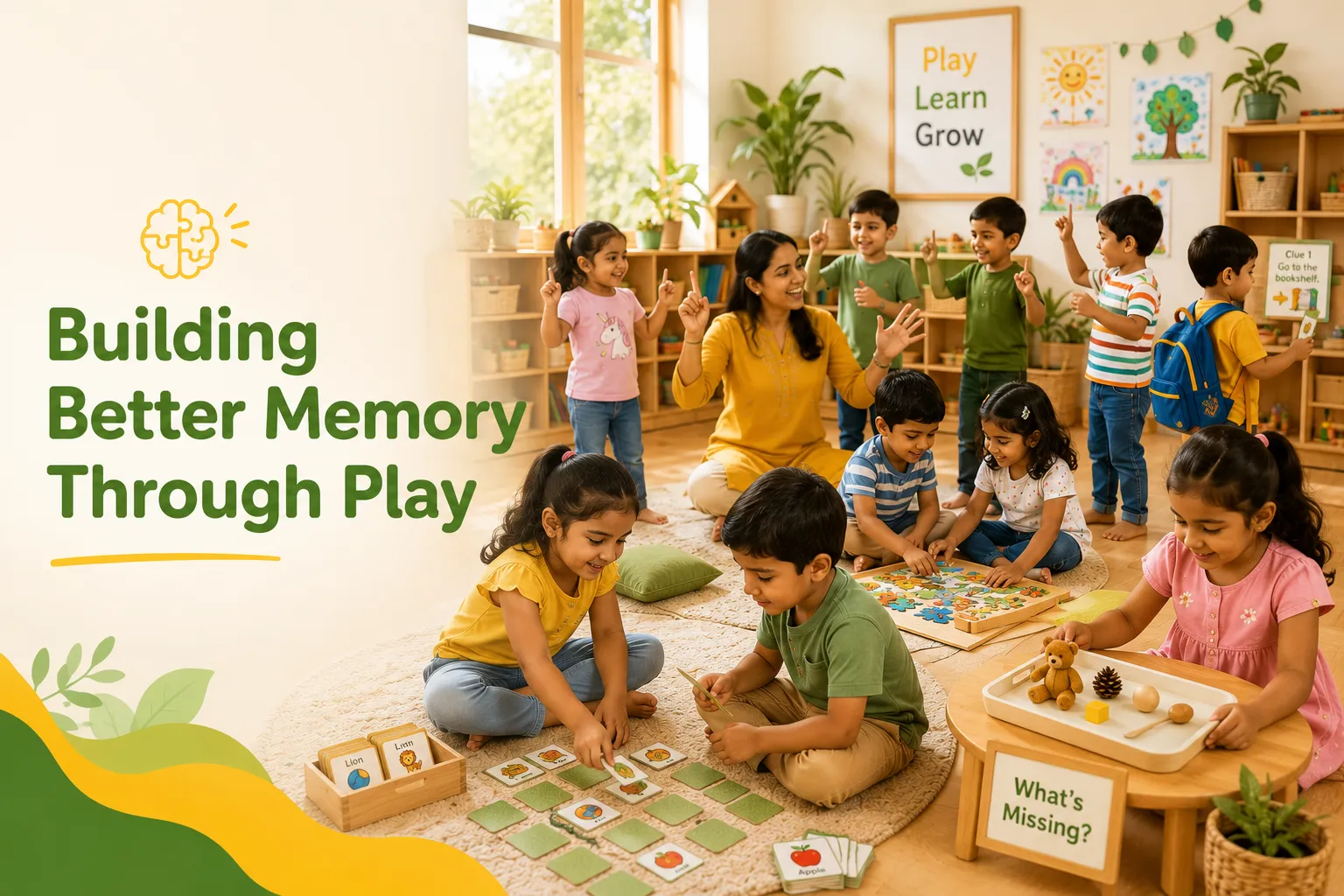
Discover fun memory games for children that improve concentration, working memory, attention, problem-solving, and cognitive development through playful learning.




Memory develops through meaningful experiences, repetition, and play. Fun memory games help children strengthen working memory, concentration, attention, problem-solving, language skills, and confidence while making learning enjoyable. Whether at home or in preschool, simple play-based activities can support healthy brain development and lifelong learning.
Every parent has watched their child forget where they left a toy or struggle to remember the next step in a simple activity. The good news? Memory is a skill that grows with practice and the best way to strengthen it is through play.
Memory games for children are more than just entertaining. They build concentration, attention, problem-solving abilities, and confidence while making learning enjoyable. The best part is that these games don't require expensive toys or screens. Everyday activities can become powerful brain games for children.
Research in early childhood education shows that play-based learning is one of the most effective ways to strengthen memory, cognitive development, and executive functioning during the early years.
Why Memory Games Are Important for Children?
A child's memory plays a vital role in learning. Whether it's remembering a story, following classroom instructions, recognizing letters, or recalling numbers, memory forms the foundation of academic success.
Strong memory skills help children absorb new information, follow routines, solve problems, and become more confident learners both inside and outside the classroom.
Fun memory activities for children help develop:
- Working memory
- Attention and focus
- Language development
- Logical thinking
- Problem-solving skills
- Confidence and independence
Memory games also strengthen executive functioning skills such as working memory, flexible thinking, and self-control, which are essential for school readiness and lifelong learning.
When children enjoy the activity, they naturally learn without feeling pressured.
8 Fun Memory Games Children Actually Love
1. Matching Card Game
Place picture cards face down and let children take turns flipping over two cards to find a matching pair.
Skills Developed: Visual memory, concentration, and observation.
As children improve, gradually increase the number of cards to challenge their memory and attention.
2. "What's Missing?"
Arrange a few familiar objects on a tray. Give your child a minute to observe them. Then ask them to close their eyes while you remove one object. Can they guess what's missing?
Skills Developed: Recall, observation, and attention to detail.
Using everyday household objects keeps the activity familiar, engaging, and easy to repeat.
3. Simon Says
This classic game challenges children to listen carefully and remember instructions.
Example:
- Simon says touch your nose.
- Simon says clap twice.
- Jump three times.
Skills Developed: Listening skills, working memory, and self-control.
This classic game also helps children develop impulse control, attention, and the ability to follow multi-step instructions.
4. Story Chain
Begin a story with one sentence. Each family member adds another sentence while remembering everything that came before.
This activity is perfect for long car rides or bedtime.
Skills Developed: Verbal memory, creativity, and sequencing.
Storytelling naturally strengthens listening comprehension, vocabulary, imagination, and communication skills alongside memory.
5. Shopping Basket Memory Game
Start with, "I'm going shopping, and I'm buying an apple."
The next player repeats the sentence and adds another item.
"I'm going shopping, and I'm buying an apple and bananas."
Continue until someone forgets an item.
Skills Developed: Sequential memory and language development.
Adding categories such as fruits, vegetables, or animals can make the game more challenging while expanding vocabulary.
6. Follow the Pattern
Clap, stomp, or tap a simple rhythm and ask your child to copy it. Gradually make the patterns longer.
Skills Developed: Auditory memory, coordination, and focus.
Music and rhythm activities are excellent for strengthening auditory processing, concentration, and pattern recognition.
7. Treasure Hunt
Hide a toy and give your child two or three clues to remember.
Example:
- Walk to the bookshelf.
- Turn left.
- Look under the chair.
As your child improves, increase the number of clues.
Skills Developed: Listening, recall, and spatial awareness.
Older preschoolers can enjoy more complex clue sequences that encourage planning and logical thinking.
8. Picture Tray Challenge
Show children a tray with 8–10 objects for 30 seconds. Cover the tray and ask them to name as many objects as they can remember.
This simple activity never gets old!
Try changing the objects or introducing themed trays to keep the activity fresh and encourage observation skills.
How to Improve Memory in Children?
Parents often ask, "How can I improve my child's memory?" The answer lies in consistency rather than complexity. Small, consistent opportunities to practise memory every day are more effective than occasional long learning sessions.
Here are a few simple tips:
- Read stories every day and ask questions afterward.
- Encourage children to retell events from their day.
- Play memory games regularly.
- Limit passive screen time and encourage hands-on play.
- Ensure children get enough sleep, healthy meals, and physical activity.
- Celebrate effort rather than expecting perfect recall.
Talking, reading, singing, storytelling, and imaginative play all contribute to stronger memory, language development, and cognitive growth.
Remember, memory develops gradually. Every child learns at their own pace. Creating a positive, pressure-free learning environment helps children build confidence while strengthening their memory naturally over time.
Make Memory Building Fun Every Day
The goal isn't to test your child it's to help them enjoy learning. Children remember best when they are relaxed, engaged, and having fun. A few minutes of playful memory activities each day can make a lasting difference in their cognitive development. When children associate learning with enjoyment, they are more likely to stay curious, motivated, and engaged in new experiences.
At preschool and at home, simple recall games for children create opportunities to build stronger thinking skills while sharing joyful moments together. The most effective memory activities are those that combine play, conversation, movement, and meaningful interaction with caring adults.
After all, the memories children treasure most aren't just the ones they remember they're the ones they create while playing with the people they love.
By making memory-building activities part of everyday family life, parents can nurture confident, curious learners while creating meaningful moments that children will cherish for years to come.
Frequently Asked Questions:
What are the best memory games for children?
The best memory games for children are simple, interactive activities that encourage them to observe, remember, and recall information while having fun. Popular games include matching card games, What's Missing?, Simon Says, story chains, treasure hunts, picture tray challenges, and rhythm-clapping games. These activities strengthen working memory, concentration, observation, and problem-solving skills while making learning enjoyable. The most effective memory games are those that encourage conversation, movement, and playful interaction with parents or teachers.
How do memory games improve brain development?
Memory games improve brain development by strengthening the neural connections responsible for learning, attention, language, and problem-solving. When children remember sequences, identify patterns, follow instructions, or recall information, they actively exercise their working memory and executive functioning skills. Regular play-based memory activities also support cognitive development, improve focus, and encourage flexible thinking, helping children become more confident learners both at home and in school.
At what age should children start memory games?
Children can begin enjoying simple memory games as early as 2 to 3 years of age. At this stage, activities such as matching pictures, remembering familiar objects, singing repetitive songs, and following simple instructions help develop memory naturally through play. As children grow older, games can gradually become more challenging to support their cognitive development, language skills, and school readiness. The key is to choose activities that are age-appropriate, enjoyable, and free from pressure.
How can I improve my child's memory naturally?
The best way to improve a child's memory naturally is through consistent, everyday experiences rather than formal lessons. Reading stories, asking children to retell events, playing memory games, solving puzzles, singing songs, encouraging imaginative play, and having regular conversations all strengthen memory and language development. Healthy habits such as getting enough sleep, eating a balanced diet, staying physically active, and limiting excessive screen time also support healthy brain development and improve memory over time.
Do memory games improve concentration and attention?
Yes. Memory games help children improve concentration and attention by encouraging them to listen carefully, observe details, remember information, and stay focused on completing a task. Activities like Simon Says, matching games, rhythm patterns, and treasure hunts gradually strengthen attention span, working memory, and self-control. As children practise these skills regularly, they often become better at following classroom instructions, completing activities, and solving problems independently.
Are memory games good for preschoolers?
Absolutely. Memory games are one of the most effective learning activities for preschoolers because they combine play with important developmental skills. They support brain development, language learning, early literacy, problem-solving, and social interaction while keeping children actively engaged. Because preschoolers learn best through hands-on experiences, memory games provide an enjoyable way to build confidence, curiosity, and essential cognitive skills without making learning feel like work.
Can memory games improve school readiness?
Yes. Memory games play an important role in school readiness by helping children develop the skills they need to succeed in a classroom environment. Strong working memory enables children to follow instructions, remember routines, recognise letters and numbers, solve problems, and participate confidently in learning activities. Combined with play-based learning, memory games also strengthen concentration, language development, and executive functioning, giving children a strong foundation for future academic success.
How often should children play memory games?
Children benefit most when memory games become a regular part of their daily routine. Even 10 to 15 minutes of playful memory activities each day can strengthen concentration, recall, and cognitive development over time. Short, enjoyable sessions are far more effective than occasional long practice. Mixing different games, storytelling, music, movement, and everyday conversations keeps children interested while supporting healthy brain development and a lifelong love of learning.